Wednesday, October 12, 2022

temporal


“It is not in vain that the fires of this divine discontent
have been kindled within.”


~ Thomas Aquinas, Summa Theologica ch. 1


1

In an attempt to regain a sense of normal creativity, I’ve glanced back at the recent weeks of my journal entries en route to this essay. Indeed the apartment house which had been my home for many years was sold by the progeny whose family had owned the property for a century. All nine apartments had to be evacuated, and my household was the penultimate departure. For every person, the experience was emotional, as nobody wanted to leave the elegant old landmark, but it was necessary, and none of us wanted to face eventual eviction. The extreme stresses revolving around hunting for a place to live during this state’s worst-ever housing crisis was as intense as the trauma has been for me. In my determination to climb out of despair, I’ve kept on writing, along with going to work every day. The emergency move finally happened 4 days after the sale of the building closed, so I can say I outlasted the former landlords. Being gentrified out of one’s home is a woefully common plight in present-day southern Maine.

Four months of scouring the region for an apartment acquainted me with dozens of stories that remain with my thoughts. The picking being slimmer than nil, due to my income, I found a painfully small place- two neighborhoods away- unsurprisingly and absurdly expensive. Strain and exhaustion led to the current disappointment. Of course, the entire scenario would have been positively cathartic, had I found something really nice. There was no choice but to move, and despite having to sign a litigious 13-page lease, this can only be considered temporary. As for the old place, which is now being gutted as I write these words, I’m grateful for all I enjoyed there: all the dinner parties, guests, space, and general tranquility. At the same time, it is critically important to remember that I never owned a square inch of the edifice. Finally leaving an empty building, depleted of all my neighbors, revealed to me that it was merely a tired old shell. Settled and caring souls are what make for a home. The music of life had disappeared. A row house that comprised the lives of doctors’ offices, writers, a piano teacher, families, eccentrics, and artists is now an object of investment real estate. Like covid, the housing crisis has struck far too many people. I tried my best to desensitize for the move. I find that I cannot call the present apartment home; it is referred to as the place.


2

Amidst times that force countless among us to absorb increasingly greater expenses with decreasing resources, shall we permit ourselves the luxury of ambition? Is it unreasonable to expect advancement and stability during economic recessions and housing crises? How costly is hope? These recent months have shown me that housing is essentially for the affluent, and better employment is for insiders. From my diminished perch, the currently propagated logic that says inflation will slow down when there are fewer jobs looks terribly twisted. I know that I’d have found appropriate housing with a much better salary. For anyone, that would exceed the obvious. My own experience is the juxtaposition of fighting on through underemployment and inferior housing, upon the din of temporality and glaring imperfections at all hands. Indeed, I am very far from alone in such circumstances- yet speaking for myself, there must be improvement. The urgency is crippling, but my awareness of the temporal is oddly assuring. It is nothing particularly new or unique to have to get used to detestable things. In a place so cramped and unappealing, I’ve only unpacked clothing and books- along with kitchen and bathroom contents. From the boxes to my bookshelves (thus clearing some rarified patches of floor space), I reached for Thomas Merton’s Life and Holiness. In the book, he described how people and institutions tend to “cling to subtle forms of inertia and mental paralysis.” Merton challenges his readers to actively see to it that a consistent sense of sanctity must prevail, while facing truths of the imperfections in our situations. Having this is mind, I set about scrubbing the floors of the oppressive little apartment- which is more like a compartment- to make things as livable as possible, and so that I can begin the work of repacking for another move.


3

Temporary, for many, is a convenience- such as a rented car or a nice hotel room. In my present case, it’s painful and anguishing. As I try to figure out any useful divine purpose in this, when I write my daily journal entries that are equivalent to surfacing for air, I try to recall the value of the dynamic of the provisional. I remember well enough how the temporal used to be hopeful and exciting- or at times a kind of fear that something held dear was about to reach an unwelcome end. Now with a visegrip of a living space, immediately after losing my home, I am beyond eager for this captivity to be short-lived. The tote I had labeled “desk drawer” prior to moving is still next my empty writing table, which took weeks for me to unearth from beneath piles of boxes. It is unavoidably a hold-pattern kind of life which I am striving to redeem. Where is home, when one cannot go home? If anything, this is a difficult and protracted learning about attachments to places and things. At worst a prelude to mortality, and at best an opportunity to muse about an open-ended future.


For someone like me that instinctively looks for solutions to problems and routine conundrums, I want reasons, purposes, and strategies to get me out of wheelspinning ruts. Thinking about transcendence is a much better distraction than to let stomping elephantine upstairs neighbors hijack my wellbeing. I used go home for the peace and quiet; now I run away from the place to seek peace and quiet outdoors. Illegitimi non carborundum, as the pseudo-Latin goes. The name Hosea, in actual Hebrew, means salvation. Hosea the Prophet (8th century B.C.) famously wrote (chapter 10):

“Sow for yourselves righteousness; reap in mercy; break up your fallow ground, for it is time to seek the Lord, ‘til He comes to you raining righteousness.”


The imagery of fallow ground never leaves my inquisitive thoughts. What is its meaning? Well, the biblical prophetic voices have always had the purpose of turning people to the Light of life: to God and to vocations of being instruments of holiness for the benefit of others. Hosea essentially bids the reader to self-reform, though it requires a broken and contrite spirit. He used the agrarian language of the ancients, “plowing up the fallow ground” to make the foundation of life receptive to renewal. Cultivate the ground such that heart and soul are cleansed of all that corrupts, removing weeds and thorns impairing the causes of uprightness and good works of generosity. Then my thoughts were drawn to the portion in Jeremiah, warning against “sowing among thorns.”

Me being me, I want a meaning, a message, something I can implement like a marching order. And like the Psalmist, I contemplate the words and digest them like food. What’s this about unproductive, fallow ground and sowing among thorns? Maybe life in the comfortable old place in the West End (which I could afford) was fallow ground that needed to be tilled. Maybe the moneycraving landlords and their doings (and misdoings) were part of this casting away into the abyss. Perhaps I live in a city and a state that amount to fallow ground, complete with thornridden recipients of one well-composed cover letter and résumé after another. If this is true, I want to know right away, before any more life forces are wasted. I could look back and grind away more in persistent defeatedness, or strain to look ahead for the miraculous.


4

While disciplining my thoughts to steer away from the brink of tempting despondence, I write my determination to leverage the temporal toward promising horizons. The pandemic era got most people to internalize “making the best of a bad situation.” Trauma lingers and anxiety remains: the latter due to the expense and unsuitability of the place. There needs to be another move, a liberation from such an oppressively claustrophobic environment. Last month’s emergency move notwithstanding, precious resources were sown in the wrong kind of soil, thus any sort of harvest I can salvage is out-of-joint.

My better musings return to gathering some functional thoughts to try recognizing Divine purpose in this intense trial. As I transfer my personal effects from cardboard to reclosable plastic totes (since the place is too small for unpacking, and I want to be better prepared for the next move), I’m reacquainted with treasures I haven’t seen in four months. I get to see what I’ve missed and what I did not miss. From a box of childhood keepsakes, I unpacked my Felix the Cat- the sight of which brought me to tears, and I apologized to him for these crabby confines. Felix is a keeper, though I am finding other things to give away or sell, as I make yet another comprehensive purge. It’s all unsatisfactory, yet coping is necessary, reconciling without settling.


In the midst of this continuing crisis, as I’ve surely seen throughout the last six months, multitudes cannot even find small places to stack their treasures, and still more are homeless. Along with the health crisis which has claimed almost 7 million lives worldwide, maintaining a sense of context is critical. An impartial observer that notices the fortunate that get good jobs and have nice places to live, must also keep an awareness of the less-fortunate. My definition of home has become elusively fluid. The best thing said to me came from one of the wonderful librarians at the Boston Athenaeum, who compassionately wished that I’d find a sense of home at the library, and at any time I open my journal to write. Having made decades of pilgrimages, it’s easy to call to mind how writing is a movable feast- even with just a morsel, a notebook, and a pencil. Still, the pride of place I had for many years in a lofty Victorian row-house has been brought to something lowly, clenched, and yet overpriced. It’s nothing to be proud of, and will be easy to leave behind.

Boston Athenaeum terrace


If ambition really is a luxury, then I stand flagrantly overdrawn. Aspirations are pearls of great price and I intend to invest with them, rather than to hoard my credentials. Even in these harsh circumstances, I insist upon enriching myself with studies and knowledge. These pursuits long predate this year, and there have been plenty of rewarding adventures. Why not anticipate more? Living against the barricades of canned confinement and treadmill workdays must amount to a launch into something healthful and lifegiving. Several years ago, a counselor to whom I described my work situation replied with a memorable turn of phrase: “Well, that burns the platform hotter, doesn’t it?” It’s not to say I feel that I’m owed anything; it’s more like a marrowdeep desire to live and work in better environs. The perseverance muscles are flexed, as is the longing for the fulfilment of two careers’ worth of cultivated abilities.


Monday, September 5, 2022

necessary sadness

“You have here no place of long abiding,
for wherever you have come you are but a
stranger and a pilgrim, and never will find perfect rest
until you are fully joined to God.
Why do you look to have rest here, since this is not
your resting place? Your full rest must be in heavenly things,
and you must behold all earthly things as transitory and shortly passing away.
And beware well not to cling to them overmuch...”


~ Thomas à Kempis, Imitatio Christi

1

Reminiscent of the sports situation in which a team is down by several goals late in the 3rd period, my furious and relentless five-month search for housing ran out of time. Watching my version of timed “regulation” fizzle, I was forced to choose between an emergency move or eviction. Losing my home of 37 years due to the gentrification of the apartment building is but one unfortunate story among many in a small city that has sold its own soul. A recent housing survey has tabulated that the Greater Portland area is short more than 9,000 housing units. True to the local fashion, years and years of talk do not lead to effective action. The pandemic era causes many of us to try making the better of a bad situation. Witnessing the misery and struggles of countless neighbors and colleagues, I have an idea that I’ve managed to defy some of the odds, albeit on a very modest income. Listening to dozens upon dozens of hardship stories- from sudden compounded rents, to evictions, to evacuations from condemned buildings- has generated a saturation factor causing an emotional wrenching now each time I encounter anything reminding me of housing instability. All the while, I’ve been flailing at creative networking, cold calling, traipsing through more than 30 apartments, and chafing at the unwinnable contest of answering online advertisements. Conceding defeat is essentially managing the losing. It’s also making efforts to insist upon recognizing any good I can find.

Many- too many- people are forced to endure the horrors of having their homes kicked out from under them. So many injured souls. The crisis extends far beyond this region and across the continent. Amidst this overspreading precariousness there is hunger for solidity and consolation. My vigilant searches and inquiries have painfully shown me how there is a severe deficit of compassion and mercy. Who will dare to not exploit? All the courage and fortitude I can conjure up cannot compensate enough. At the same time, what is past needs to be released to create space for the future. The loss of my home is also my farewell to the dwelling which accompanied my adult life up to now. These recent five months of purging, packing, and feverish searching have also comprised a protracted grieving. I’m eager for this to end, even though it means squeezing into a smaller and costlier space. The new chapter is forced by crisis, and the decision is surely a compromise.


2

The general, abiding impression is that of necessary sadness, hoping this is provisional and that I’ll transcend this. Indeed, I want to write about other things. Along with all my neighbors in the building, we did not want to leave. These conditions are equally sad and moving is necessary. The added overlay of a general housing crisis enhances the anguish. It is necessary to move; there are no alternatives. It is necessary to stay the course and insist upon hoping for better days and situations. It is especially necessary to continue cultivating ambition, even in the face of yet another recession. It is, alas, also necessary to compromise living conditions- albeit as civilly as possible. I have learned plenty about how little I can afford. Surviving this crucible is necessary, and the road traverses intense sadness. It is sad to be forced out of my home of many years, before I’ve been able to improve my fortunes. Loss of housing and neighborhood make for a sad equation. At the same time, I have witnessed the decline of my neighborhood’s resources, infrastructure, and quality of life. I also watched the building deteriorate into something unsafe. Sometimes you leave your neighborhood, and sometimes your neighborhood leaves you. In my case, I suppose it’s both. A major aspect of this sadness is connected to the people who have either left or passed away during my years in the building and vicinity. Loyalty is an effortless trait for me, and in these recent months I’ve seen a painful downside as it concerns loyalty to place. Uncertainty about the future is also a sadness, and I know many who share this sentiment. Being a supportive friend helps distract me from personal worries, and allows me to be more useful. Along with that, I have no intention to espouse the passivity of the regional culture- those who watch the sufferings of others, instead of doing something to help. There really is a mercy deficit.


3

By definition, necessity does not really go away; something is necessary until it isn’t. We all remember requirements from our school days. As for sadness, it may remain as a landmark, and that is preferable to being an enduring state of mind. Grief settles into the fibers of our being, if it must simply be an unresolved landmark in time and place. With this move, unsatisfactory and expensive as it is, there will be a beginning to the distance placed between now and the future. Everything is packed, that frightening lease has been signed, and my reimbursed security deposit for my current place will come from the invisible developers who bought the old building. I’ve been photographing parts of the building that I hadn’t previously documented, and writing at a few perches for the last time. A wise friend suggested that I find ways to break with the place, without regret, and thoroughly. For me, it’s always writing and photography. Of course, those crafts go with me.


While writing on the front stoop, the hallway steps, and at my old window, I am thinking about what proceeds with me from this long night. What will stay with me, after I return my keys and get used to different streets? The necessary sadness comes as a result of a lot of active struggle. Not being able to accomplish my housing preferences, such as with neighborhoods, spaces, and my hopes to continue renting from families, sadness is paralleled with disappointment. At the same time, I’ve actually found something, and that will have to do, for the time being. It has been difficult to separate my disappointment from the hundreds of conversations I’ve had around this metropolitan area. The word-of-mouth efforts failed, although I did meet a lot of people. During interspersed quiet moments, I’m telling myself that it is of critical value to not become angry or bitter toward anyone. Just don’t. Sure this is all rotten, but these times are rotten and desperate for a lot of people. Still more are homeless. As with the general pandemic, this city’s regional gentrification has taken down far too many people through no faults of their own. The cruel consequences are largely unavoidable. We are each left to commandeer our resources and wits. One of numerous leasing agents I met told me about a family she knows that had to live in a tent pitched in a friend’s backyard even though the head of the household had a job. They could not find an apartment, and wound up sinking themselves in an ill-timed mortgage. A neighbor saw me carrying donations out to my car, and we got to talking about this whole sad scenario. Amidst our conversation she asserted that the neighborhood and the building will always be part of me. A number of other neighbors have said this to me, as well. Yes, the memories go with me, and the better ones should stay with me. All the years of photographs will help. And still more valuable is to have it in mind to appreciate what was. A great deal of goodness to reflect back upon, while fully aware of what has finally run its course.


Tuesday, August 2, 2022

when

“They’re building a new gallows
For when You show up on the street.
Polishing the electric chair,
They're gonna give You a front row seat.
Heard a sneer outside the garden,
Salutation so well heeled;
‘final stop no points beyond struggleville.’”


~ Bill Mallonee and the Vigilantes of Love, Welcome to Struggleville


Humidity and thick, heavy, opaque clouds during a drought. The skies are remembering along with me, and they, too, want to weep yet somehow cannot. My notebook pages are weighted down with two rocks, as I perch to write in front of my desk fan during this heat wave. Neither fresh nor cold, the fanned air is at least moving. I’ve had a few months of living my farewell to the building that has been home for most of my adult life. Recollections and sadness are forcefully overshadowed by unrelenting, desperate searching for a place to live, as the building’s ownership changes. Equally unsure about the where, is the when. When do the multiple rows of dominos tip, with respect to the sale and dismembering of the apartment house, the finding of the next place, and the general big-picture future? Will the sequence of events permit for a dovetailing of addresses? Those multiple rows do not necessarily run in parallel formation, and surely not at identical paces. As for the professional work I’ve diligently cultivated and refined, the future is also unclear. When do the metaphorical yet solidly vital doors open? When do things tangibly improve, after so many hardworked years? When do the sown seeds come to fruition, and what has really been sown? How late is the hour?

My unceasing prayers are for Divine mercy, not solely for myself but for all. Where, and when? Indeed, persistent prayer meets its greatest adversity when there are no affirmative answers, when intentions and petitions remain ungranted. My own response to these perplexities is to soldier on; it is no passive matter. Long before and steadily throughout these pandemic times, the officium Divinum has been part of every day- especially the early mornings and at night. The movements of the day, regardless of quarantines, disruptions, isolation, and threats of displacement, can still be accentuated with the Psalms. Although I’ve seen this at four-week intervals, only last week I noticed this in the midday office: “Help us to be faithful to your word and to bravely endure our exile.” It takes strength to transcend passivity.


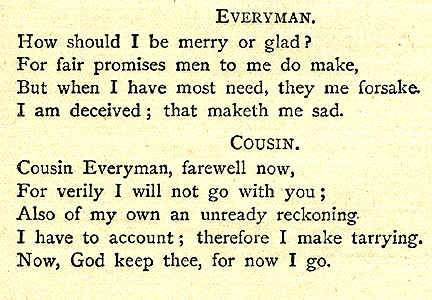
These recent three months have been much like the past thirty months of this pandemic era, annoyingly exemplifying the state of being at the mercies of too much and too many that are unmerciful. As the word empathy has come to be used in place of the more casual sympathy (or sympatico), the words mercy and pity are popularly interchanged. The pairings have their similarities, but each definition in their respective full strengths signify significant practical differences. Are you a watcher or a doer? The medieval morality play Everyman is about the journey of the character by the same name who is both tested and tests the intentions of his fairweather friends. After he is told that he must complete his life’s voyage to its destination, Everyman asks his various friends if they would accompany him. His old pal Fellowship starts out with pleasantries, but backs out at the prospect of a hard road. Even his familiar Cousin says his toe hurts, and adds he has an “unready reckoning” anyway, to which Everyman observes: “Fair promises men to me do make, but when I have most need, they me forsake.”

Everyman’s friends sound like Job’s, and like too many people all of us know, thus he falls upon his own stamina and spirit. Even his personal property failed him Adding insult to injury, his wavering buddy Good-Deeds may have just as well used a social media channel as he says, “Everyman, I am sorry of your fall, and fain would I help you, and I were able.” At last it is Knowledge who sticks with Everyman, introducing our protagonist to Strength, and Beauty, and the Angel. Upon reaching his hard-fought destination, Everyman stretches forth and says, “Here I cry God, mercy!” Having neither more nor less than his own soul to offer, Everyman affirms, “In manus tuas of might’s most; for ever commendo spiritum meum.”


“Hang in there” is something many of us hear quite a lot. Most of the time it reminds me of the desolate Everyman, but not always. When the manager of my local supermarket tells me this, after asking how the housing search is going, I can tell the wish is heartfelt. This morning I heard the words from my usual bank teller who also means it. She told me the story of her two years’ search for a house during the recession of circa 2000. Having endured the hardship illustrated her sense of understanding. The anxiety-laced dance of hypervigilant hunting for a place to live has removed relaxation from all parts of these months. My thirst is for the days I can go home to wherever my writing table will be, kick off my shoes, open the window for some fresh air, and just plain take the situation for granted. I believe many others do, as well. According to local news, southern Maine now has a shortage of at least 9,000 places to live. Not sure how that is measured, but I’m sure the number would be much smaller if not for the scourge of short-term rentals in residential neighborhoods. A recent local news article observed that “houses are no longer primarily thought of as homes, but as financial instruments and investment pieces.” In my neighborhood, I see town houses sold and resold and resold, without so much as a chair traversing a threshold. A major front-page article spotlighted an evicted family who live in a camper they park nightly at a Maine Turnpike rest stop. In response, concerned neighbors raised money to help, though the family’s search for a place to live continues. A social worker acknowledged the crisis conditions of the state’s housing shortage, adding, “If you’re on a limited income and have no other resources, you’re really at the mercy of the market.” Where is that mercy- and when?


This four-month tribulation which is embedded into the 2½ year pandemic is unresolved. At the still-unknown yet anticipated other side of these times, all of us will surely have tales to tell. In my daunted search for mercy, including my own Everyman experience, I wonder about misinterpreting life as transactional. Alas, mercy and respect cannot be purchased; you either have it or you don’t. A friend of mine who spent years trying to earn his tenure at an elite college talks about how “the good jobs get handed out” to cronies rather than to the most talented and accomplished. He said this even after he got his offer. Favors come to the privileged, to those who least need them. I’ve yet to figure out how to excavate good fortune, or to somehow generate it. Inevitably, all involved need to have their hearts in the game. I certainly do, but I’m not so naïve to assume that friendly territory abounds. Well, so does old Screwtape; I know. At the same time, I can choose to be merciful, and that comes through my willingness. Does that mean my pursuit of life and holiness continues independently of the Almighty? Or course not. Invoking the wagering philosopher Blaise Pascal, I don’t dare to do so. Like the character Everyman, the mind and soul are not to be compromised, even as the comforts of home and home itself are pulled away. In addition to holding fast to faith and mercy, another critical trajectory is openness to compassion- and even goodness. Openness means there may yet be good results. Lately, with an upward smirk, I refer to the rent-free realms of contemplation and devotion. I hear tell that parking and utilities are included.


Thursday, July 21, 2022

where

“My Lord God,
I have no idea where I am going.
I do not see the road ahead of me.
I cannot know for certain where it will end,
nor do I really know myself,
and the fact that I think I am following your will
does not mean that I am actually doing so.
But I believe that the desire to please you
does in fact please you.
And I hope I have that desire in all that I am doing.
I hope that I will never do anything apart from that desire.
And I know that if I do this you will lead me by the right road,
though I may know nothing about it.
Therefore will I trust you always,
though I may seem to be lost and in the shadow of death.
I will not fear, for you are ever with me,
and you will never leave me to face my perils alone.”


~ Thomas Merton, Thoughts in Solitude


Atypical of my gender stereotype, I’ve always been one to ask for directions. At every age, both time and energy are precious, and I try to make the best of my resources. Recalling a day replete with irony, after hearing from two different potential employers that I was overqualified, I drove to an interview to talk about a job for which I truly was overqualified. I could not find the place. Certain that I’d overshot the address, I stopped to ask for directions in a grocery store. Having given myself plenty of time, I wasn’t in danger of being late. Speaking with the grocery clerk got me out of my bubble, and reminded me that I was surely awake. Indeed, I found the place, and what followed amounted to something absurdly depressing. Once again the outlier, these adventures return to my thoughts. As my housing uncertainty continues, metaphors become threatening realities. The brevity of time in this liminal present is exemplified in the apartment building which steadily empties of the lives who have called it home. Everyone knows what’s coming, and we are all being as proactive as possible in this forbiddingly stratified housing market. Being forced out of my home of many years is an experience that combines instability, heartbreak, and exasperation. Incredulity and reluctance have led to an impatience to join my fellow evacuees. Coexisting with packed boxes of all my worldly goods is conducive to imagining moving a lot farther away than across town. Varying degrees of unease occasionally manifest as sparks of adventurousness. What is next, and where is next?


Living, working, and having been actively part of this city for decades, I’m doing plenty of asking for directions and advice from among the legions of people I’ve befriended. It is as though I don’t really know anyone, and am a refugee in my home town. Some are willing to help, but are unable; some are able to help, but are unwilling. Under the weight of desolation, it is as vital to persevere as it is to resist holding grudges. This city kid was raised to know better than to be bitter and reticent. Perhaps some day I’ll be in the role of helping a neighbor find housing, and I will not stand afar and snub. For now, things need to be taken at face- even as “good luck” has come to translate as “glad I’m not you.” Strolls around town are now mournful, being under the shellshock cloud of crisis, noticing the haves and the have-nots. When answering ads, I ask about how these apartments are heated, and if they’re making residents pay for their hot water (which never used to be done before). It’s a landlords’ market, without doubt. On my way to work the other day, I saw a homeless person sleeping in the doorway of an upscale real estate office that brokers idyllic coastal hamlets. The two Maines, and people like me are somewhere in between. As long as I stay in this city, having neither wealth nor influence, a nice place to live will be out of reach. Along with so very many, I’ve been exploring where my prospects can be better- but without surrendering this part of the world. For the moment, the urgency is in finding stability. Perhaps in the grand scheme of things, we’re all renters. When we think we’re “buying time,” we’re actually renting something we cannot own, and can at best pay for it.


The impending loss of housing has generated its own measurement of time. In a broader sense, the pandemic has caused a change in how the world has been perceiving recent years. The change is signified in how we’ll say pre and post, as the stream of normal life is diverted- or derailed. Speaking for myself, this year’s spring and summer have been lost seasons due to urgency. It is as though there are constantly more and more and wider rivers to traverse, en route to a clearing as yet unseen. There remains writing, and indeed I have found ways to write through life-threatening trials before. If language really is the house of being, then ambition must be the basement of aspiration.

The erosive symptoms of hopelessness are difficult to stave off. When suppression burns too much energy, I’ll simply entertain the notions in my journals, stepping through the minefields of the usual patterned and condemning responses en route to writing about hopes. Creativity and imagination are potential instruments for doing battle with futility. Amidst this indefinite wilderness of not knowing the when or the where, it is as imperative as ever to keep on doing the next right thing. The humblest measures, those of intention, can still be forward movements. Recently, having another among dozens of apartment viewings, I needed to take time off from work, and chose to walk to the address. Making the crosstown trek and seeing an unfamiliar neighborhood, the novel occasion caused me to notice skies, trees, street repairers, and sundry individuals being about their respective business. The doings of life are in motion while I try to find traction for mine. Does hope require proof? What forms of proof are convincing enough? Are hope and trust reciprocal complements? Such virtues exist in time, yet are not confined to place. In essence, there is no where.


Wednesday, June 29, 2022

see beyond

“We must accept finite disappointment,
but never lose infinite hope.”


~ Dr. Martin Luther King, Jr., 1968

This time of the year is especially conducive for outdoor writing. Perching on the sunwarmed granite front stoop to write and read has been consoling for many years. But now with the inevitability of losing my housing, even benign routines have become tainted with mournful tones. Necessity and survival demand that I force myself to see beyond these liminal times. While I witness the steady evacuations of my neighbors, as we are all anticipating the “redevelopment” by the next landlords, I am also wildly scouring the grounds for a place to call home. Yet, still, the stately Victorian architecture remains, as do roses, leafy trees, and ants scurrying across the stone steps. Occasionally, an ant will run right at my book, realize it’s an obstruction, and either climb over it or scramble around it. Then I’ll stand the book up, to see how it tries to figure out how to navigate, determined to hold its direction. Not wanting to antagonize the poor thing, I remove the barrier and let it scamper on. Like these small creatures, I am also trying to make sense of setbacks. Most of us have them; sometimes the hardships are compounded. Job hunting, apartment searching, seeking grace- all look the same, all pursued with the same desperation. Perhaps it’s all too similar, and this will require some thoughtful parsing. In crisis mode, too many things seem alike. All the begging, scraping, and strenuous attempting to impress are amounting to levels of humiliation unusual even to me. Yet the fight must not cease, neither should the refinements of my pitches. There is surely much more to lose by clutching a status quo, than in making a move.


Another annual summer reminder is my memory of arriving in Portland. After my hardworked endurance of the New York City school system, I graduated from the High School of Art and Design. Commencement was at nearby Carnegie Hall, and the speaker was alumnus Ralph Bakshi. I had saved my money to travel back to Paris so that I could spend the summer with family. I had missed everyone very, very much- especially my grandmother- and there was nothing I wanted more than to be there. It was undoubtedly a great decision in every way. By Labor Day weekend, with a great many thoughts and ambitions, I arrived in Maine. The building containing my first apartment is down the street from the place I will have to leave. Through eight different apartments, I remained close the center of the city.

I remember very well how desolate it was to be a seventeen-year-old stranger in town- even after beginning at Maine College of Art. I’ve since been active in numerous community efforts- creating, befriending, giving, serving, teaching, and working- but this housing crisis has me no less on the ropes than when I first arrived. A stranger in my own town. Maine is a wilderness at multiple levels: Yes there are thick and endless woods, as the state is mostly rural, with beautiful landscape. But it is also a hard culture. Somehow I wound up fitting in among kindred spirits, especially as I got more involved in civic and artistic life. The cultural differences surface as I seek advice and help from among the hundreds of people I know. A city person like me prefers to communicate directly and unabashedly (but with the best of manners). The stereotypic Yankee mindset is to go about things indirectly and laconically. People tell me about this-and-that empty apartment across the street from them, but they can’t tell me who owns the place because they either never speak- or the owner is an “avowed enemy.” I’ve heard that latter expression many times. Social media is well suited for such personalities, because they can suspiciously snoop around without directly communicating. I’d like to think I’ve evolved over the years, but never into that. My purpose in life is to be a doer, not a spectator. As much as I inhabit this world, I am not of it. Still, try making any progress with housing or employment without help from others- especially those “in the know,” and the “gatekeepers.” Even if you ask politely. Even if they know you.


I’m reminded of a Maine College of Art memory; a very subtle one that I somehow remember. I had written a paper for a literature course, and my professor wrote an interesting reflection after my last paragraph. Professor Aldrich concluded his positive comments with confessing there was something he couldn’t quite agree with, and then wrote “but maybe it’s just the mood I’m in today.” His candor was commendable enough, but the admission also taught me something about context. We tend to perceive according to our circumstances. The covid era is now 29 months running. We can look back across 2½ years of world-altering plague. While we all heard daily about fatality numbers and immunization, both the housing and job markets spiraled into merciless stratification. Before realizing how different everything became, everything began to look different. Like many others, I kept on working- setting up a remote space at my dining table with an extra laptop computer I had purchased, when not pitching in for various departments on-site. The imperative has been to keep on working. While I witnessed furloughs, layoffs, and countless voluntary departures- I kept on working. Lunch hours became isolated twenty-minute breaks, and vacations became impossible. All was subsumed for the causes of relevance and productivity. And survival. The mood I’m in today is that I’ve kept on working, obstacles notwithstanding.


One of my colleagues recently said to me, while discussing what we’ve been able to accomplish in the past fiscal year, “We’ve all been through a lot.” Stopping and looking up, I replied, “We have, indeed.” The covid era has weatherbeaten and accelerated the aging of most of us across all the generations. Ambitions held so preciously in the depths of our lockets, tenaciously carried through our school years, collide at the compromising crossroads of plague. The imperative is to survive, but what are the rewards of survival? Like the ants on the front stoop, it would be good to know that I’m scurrying to something better in this life. I seem to have met many of the descendants of the friends of the biblical character Job; they like to tell me I’m being tested, and that my life is a trial. And it’s much more than being on the brink of losing my home. Well, if this is indeed a protracted spiritual test, there isn’t much else I can do but to stick to my scruples. It means to believe without seeing, to pray insistently into the opacity, and to forgive all the tin-eared people from whom I’ve asked for help. Speaking with a wise friend, I mentioned the weight of some kind of bewildering punishment. He told me to do all in my power “not to go there,” and to be reminded of Divine compassion. Going further, he told me to be sure of that. Perhaps if this is a test, it’s about how I perceive God. Purposes are often discovered amidst struggles.


Maybe I’m not being punished. Maybe I’ve heard the expressions no-cause and at-will a few too many times to be reminded of my own humanity. Everything looks very different now. But while I continue straining to perceive through cluttered apartments and dilapidated buildings, my self-prescribed imperative is to see beyond reticent neighbors, see beyond this smallminded culture, see beyond constant setbacks, see beyond roadblocks and rejections, see beyond exclusivity, and see beyond all that tells me to just give up. Seeing and proceeding beyond limits may lead to a clearing, a pasture, a wellspring. That inner locket is still where it has always been, with me since my school years when I was thrashed around by bullies who outweighed and outnumbered me. It’s still kept safe, and the preserved spirit of forgiveness and devotion will repel the tarnish of these times.


Monday, June 20, 2022

shreds

“Where the Spirit of God is, our souls are set free.
And we all, who with unveiled faces contemplate the glory of God,
are being transformed into the Divine image with ever-increasing glory,
which comes from God, who is Spirit.”

~ 2nd Corinthians 3 :17, 18


My “off-duty” time, through the recent three months, has been more hectic than during my job hours. Following a solid six weeks of purging and packing, yet another weekend of apartment-searching has now passed. The impending loss of my decades of housing, due to the landlords’ liquidating the building, is an alienating- even a disenfranchising- ordeal. Indeed, it never leaves my thoughts that numerous others are embroiled in similar struggles. My daily journal entries are filled with descriptions of things I’ve seen and heard, including my astonishment at persistent slum conditions in too many overpriced southern Maine apartments. While trying to vigilantly persevere with arranging for viewings, along with preparedness for an unknown move to an unknown place, it is impossible not to hear the unnerving stomping and thudding caused by people dislodging their things out of the building. At least I’ve got my household downsized, crated up, and ready. But there isn’t a place to go, yet. That latter adverb represents evidence of lingering optimism. Adding to that, I hope and pray the next place has a window next to which I can place my writing desk. Natural light and fresh air are two things I cannot experience at the job. Maybe a perch that is even better than the old one. Dreaming is assumingly permissible, atop the daring pursuit of stability.


Recently, I’ve heard myself say that I miss taking things for granted. For years and years, I’d walk home from work (yes, I’m a Mainer who walks to work), kick off my shoes, sit down and say, “It’s good to be home.” The walking commute is likely to disappear in this gentrified area, and my definition of home has been jarred out of joint. My sense of home has become a sense of the past without a clear future. This uncertainty of physical place has sent me fleeing further to the solidity of the interior life, a foundation long-established.


Contemplation encompasses more than writing, study, and reflection; there is imagination, visual art, and listening. I’ve left two radios unpacked, one for the kitchen counter, and the other for my desk. Hearing classical music, along with various spoken broadcasts, provide for some healthy distraction, as well as connecting me with that elusive sense of home. A shred of familiarity among all the packed boxes is my pared-down writing perch. I’m keeping this somewhat intact, until the as-yet-unknown thirty day countdown. My desk is empty, and a translucent Sterilite box labeled Desk Drawer is among the nearby crated personal effects. The din of my days is one of homesickness, but the sentiment is overshadowed by an impatience to move to a stable and safer place. If anything, something in a much better state of repair, without the funereal ambience.


In this bizarre race against time and economics, my instincts try to find ways to be reminded of the ground of my being. At best, this is to find solidity for the present while thirsting for a good future. The housing market is an unfortunate ocean of piranhas, and I’m getting a close view of an underworld of which I hadn’t been fully aware of before. But the present is relegated to little more than a launching pad replete with shards, shreds, and shavings. And this sort of status-quo is easy to leave, especially as I step through dilapidated halls to reach the habitat of my boxes. Witnessing neglect and decay is its own brand of exhaustion. Surely there must be many others (at least I’d like to think so) who long to see something good, some signs of general improvement in these times. Having met with dozens of people during this ongoing search, I hope to be part of some kind of neighborly effort that connects those who struggle as I am now. Not one of the community or municipal agencies I’ve approached for advice or advocacy have helped. I don’t wish this sort of scenario upon any person. Circled wagons and closed doors serve only to stratify things even more. If I’m able to transcend these ashes, perhaps this experience may become a helpful component for others, later on.


Sunday, June 5, 2022

beautify


“Love of beauty is taste... The creation of beauty is art.”

~ Ralph Waldo Emerson, Nature, ch. 3


1

Years ago, I had a friend named Robert Park. He was an elderly neighbor, and I would run errands and shovel snow for him; then we would enjoy great conversations over coffee in his very cluttered and book-filled living room. He was originally from Cambridge, Massachusetts- and he pronounced his name without sounding the R’s. Invariably, we would talk about politics. With exasperation, he would say, “It just gets worser all the time; worser and worser.” It was difficult to completely agree with him, wishing so much to follow my aspirations. Even though he’s gone now, I continue to muse about his sad admittance. Is it true? If it is, would I start saying this? These are brutish and grim times, all around. Globally and personally. While I flail at my dubious career and strive against the brink of losing my housing, I remain at heart an artist who thinks about hopeful aesthetics. For a long time, I’ve been crafting things that accentuate beauty in the midst of ugly times. There is profound worth, understated as it may be, in beautifying the commonplace and the daily components of living. Having inherited aesthetic tastes from my family, I think of them when I create things and decorate, using good materials. Cooking and baking, I choose my ingredients with care, and set out meals as I was raised to do. Presenting sensitively made objects and foods to others is a way to demonstrate compassion, even if it is modest and simple.


2


Ralph Waldo Emerson observed that “beauty is a wayside sacrament.” Tangible signs of invisible grace are to be respected, and that itself is a reverence for aesthetics. Indeed, beautification and its appreciation directly affect the life of the spirit. Moreover, in such destructive and violent times, spiritual health is all the more imperative. I am well aware of the greater need for balance, eloquence, good reading, and sundry reminders of the sacred now more than ever. Recently, in the Boston Athenaeum manuscripts room, I read the words of Philip Doddridge (18th century) which include: “The care of the soul is the one thing needful, because without it you cannot avoid a state of eternal misery,” adding that- as we all know- misery can be aggravated if we aren’t paying attention to the health of our spirits. Of the topic of the One Thing Needful, as coined in the Bible, Ezra Stiles Gannett (19th century) wrote that it would be a living and active personal faith. Gannett observed that a conscientious and practical faith provides foundations for our pursuits and our work, as it can:

“...endue a person with a divine spirit, can clothe them with an invincible energy, can empower them to go on their course rejoicing through good report and through evil report, through labor and sickness and penury, through loss of friendship and of home even, till death closing this scene shall introduce them to the reward of their faith and patience. The feebleness of our faith prevents our experiencing or illustrating the full efficacy of religion. O Lord, increase our faith; that it may triumph over every obstacle, and may preserve us in obedience to thy holy will, and in hope of thine everlasting favor.”


Handmade box, which I also lined, for my typewritten manuscripts.


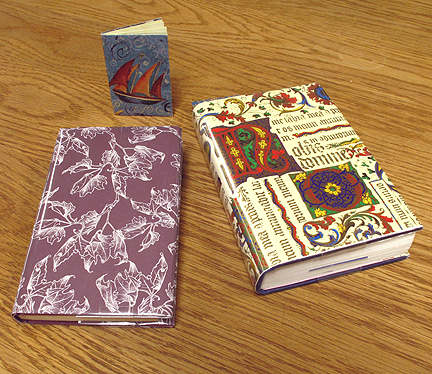
In my pursuits of continuing my artisanry and active faith, while desperately trying to find a place to live, I’ve decided to keep on being creative. The life of purging, packing, searching, and going to work amount to a wall of hurry-up-and-wait. Writing needn’t cease to be important; in fact, my journals and thoughts have increased as sheltering venues. Having already packed up most of my things, various loose papers accompany me through my daily rounds. I thought I’d design and create folios made with beautiful materials, for carrying and organizing my projects.

Large sheets of Tassotti paper which arrived damaged, and my attempt to remedy the paper.


Months ago, I had purchased large sheets of Tassotti paper which had arrived from Europe damaged by the shipping. The sheets were meant to be for bookbinding projects, but creased and dented as they were, the paper seemed perfect for “welding” via adhesives to rigid chipboard stock- though I still needed to flatten the damaged paper as well as possible. Trimming and designing the folios, the nautical motifs looked all the more appropriate, as I am striving to persevere in forward motions. Matching the colors of the paper, I used brown bookcloth and ribbon which were among my conservation and binding supplies. Reinforcing the folios with strong and acid-free components, I lined the interiors with thick, handmade paper: blue for the ocean and sky. I tried two different sizes, and made a few extras with an additional nautical-themed paper.


__________________________________________


Making these, and giving some as gifts, further reminded me about my love of beautifying the ordinary. Ironically, devotional books and Bibles tend to be made with drab covers and poor-quality bindings. I remake these, too, since I regularly carry such books with me, and tend to keep them for long periods of time- often personalizing their structures.

Sacred texts with sanctified bindings.


3

My toolbox which I use every day in the Archives, and I lined the trays with handmade paper.


About as ironic as drab-looking production bookbindings that are filled with inspiring words, I currently experience more stability at work than at home. The latter was always the other way around. These intensely anxious times tinge and threaten the most routine of activities. When my errands cause me to drive along pretty residential streets that are lined with neat houses and tidy lawns, my grief surfaces with the intensity of an exile. Surely a broadbrush observation, I see an ocean of haves from the excluded vantage point of a have-not. The gentrified-out are driven east of Eden. And far, far too many have much less than even my modest means and employment. So very many are homeless, subjected to misery and injustices that are unconscionable. I wonder what tourists think, when they see people sleeping in doorways and along the sidewalks of this now-blatantly stratified small city.


While I’ve been pushed to the brink, I also bear witness to the present landscape along with the years that led to these prohibitive conditions. Mere observations with open eyes reveal the sicknesses of these times. But alongside sensitivity and acts of compassion, mental strength is vital. But we must also attend to the immediacy of our midst, particularly as it involves matters such as housing and sustenance. While distracting myself with slivers of creativity in a wilderness of undetectable mercy, my thoughts ponder the question of what to do when something beautiful comes to an end. It has long been in my nature to preserve, to restore, to reinforce. Perhaps the wider question is to consider that which should be designed to last.