Showing posts with label home. Show all posts

Sunday, March 31, 2024

liminal trails

“Cultivating hope
means strengthening the will.”


~ Josemaría Escrivá, Furrow (780)


The liminal season I call winter-into-spring is often more striking than a New England autumn. But subtly, those housepaint skies are atop fifty-degree middays as well as ice storms. These extremes happen hours apart. Liminality represents threshold space, margins between paragraphs. If you can find yourself the luxury of pausing between obligations and demands, there you’ll find those mental spaces to muse. I remember a professor from graduate school, a brilliant lecturer, who would occasionally stop speaking and look out the window. I admired that, realizing he was reflecting in mid-flight. Because the constantly streaming media in our midst obstructs our natural musing tendencies, misconstrued as unproductive, threshold thinking becomes intentional.


Within the mercurial fluctuations of this unpredictable season, I’m amidst moving my household across town to a better abode. Two extremely difficult years of apartment-searching while tolerating an intensely oppressive and nightmarish place became impetus to make a sudden, cold-weather move. Transition is itself a jarring, liminal circumstance- yet it is much better to make a move by choice than to be forced to move (as with two years ago). The move will get its written due, but for the moment I’ll express liminality by noting how the past month has straddled two apartments. When I needed a sponge-scrubber or various tools in one place, having left them in the other place, I took to using my car as a kind of trolley for cleaning and packing material. At least the distances have been just a few miles apart, and true to the transitional the straddling is short-lived. The reward is a more peaceful place that I can better afford. Though I know all the neighborhoods of this small city, it’s threshold life nonetheless, having to find my bearings between the known and the unfamiliar.

My father gave me this radio as a birthday gift when I was 15.
Now it's perched on a red formica kitchen counter.


Through all the shuttling between living spaces, employment, and errands, I’ve maintained such constants as journaling- and a beloved icon of the transitory: radio. A listener all my life, and in this part of the country I know where all the frequencies are. When I’ve test-driven cars, I’ve always checked to make sure the radio can at least pull in AM1030 WBZ. Having several radios, plus the one in my car (and another at work), I’ve subconsciously maintained such threads of continuity. From the basis of the familiar, transcendence springs. Drowsily dozing among boxes in the soon-to-be former place, my radio was tuned to a commentator talking about the implications of contemplative prayer. It is subtle, understated, yet far-reaching. When he said, “ten minutes can reverberate into eternity,” I made sure to write this down. From liminal vantage points, horizons are abstract at best. I particularly liked the radio commentator’s remarks- simple and unostentatious, unlike that which too often dominates the airwaves. Many know the unpronounceable simplicity of enduring faith, and how it often seems unsubstantiated. But perseverance in the liminal is vital. My several-times-daily journal entries represent perseverance, as well as provide private space to express frustration. Much of the writing really is about hope, tedious as the repetition might be, it’s as critically necessary as air. Or a sane living space. I continue to consider writing to be my documented pilgrimage into the future, longing for better living and working situations. This current move is an intentional step in the right direction, while fully aware of the need for improvement and how there is nearly nothing left of the “old life,” or the city I used to enjoy so much. The liminal trail from winter into spring, combined with new slants of light, must lead to renewal. A life of hardworked prep must give way to practical application. A life of readying is ripe for followthrough. Why this has been taking so long is beyond my comprehension, thus it is necessary to believe better times are ahead.


Getting the place clean enough to move in
(and unpack my philosophy books).

Wednesday, October 12, 2022

temporal


“It is not in vain that the fires of this divine discontent
have been kindled within.”


~ Thomas Aquinas, Summa Theologica ch. 1


1

In an attempt to regain a sense of normal creativity, I’ve glanced back at the recent weeks of my journal entries en route to this essay. Indeed the apartment house which had been my home for many years was sold by the progeny whose family had owned the property for a century. All nine apartments had to be evacuated, and my household was the penultimate departure. For every person, the experience was emotional, as nobody wanted to leave the elegant old landmark, but it was necessary, and none of us wanted to face eventual eviction. The extreme stresses revolving around hunting for a place to live during this state’s worst-ever housing crisis was as intense as the trauma has been for me. In my determination to climb out of despair, I’ve kept on writing, along with going to work every day. The emergency move finally happened 4 days after the sale of the building closed, so I can say I outlasted the former landlords. Being gentrified out of one’s home is a woefully common plight in present-day southern Maine.

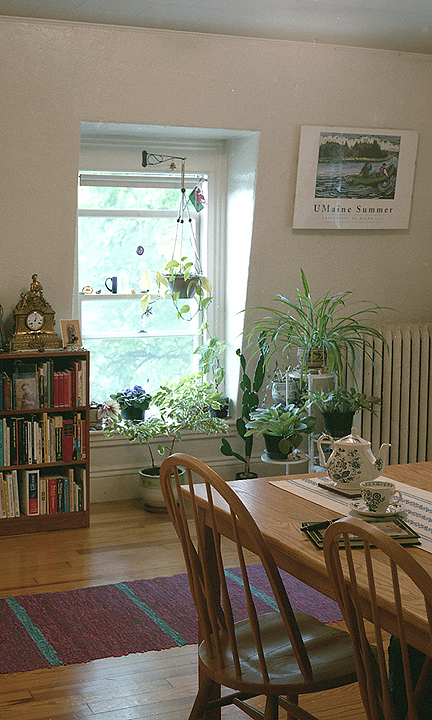
Four months of scouring the region for an apartment acquainted me with dozens of stories that remain with my thoughts. The picking being slimmer than nil, due to my income, I found a painfully small place- two neighborhoods away- unsurprisingly and absurdly expensive. Strain and exhaustion led to the current disappointment. Of course, the entire scenario would have been positively cathartic, had I found something really nice. There was no choice but to move, and despite having to sign a litigious 13-page lease, this can only be considered temporary. As for the old place, which is now being gutted as I write these words, I’m grateful for all I enjoyed there: all the dinner parties, guests, space, and general tranquility. At the same time, it is critically important to remember that I never owned a square inch of the edifice. Finally leaving an empty building, depleted of all my neighbors, revealed to me that it was merely a tired old shell. Settled and caring souls are what make for a home. The music of life had disappeared. A row house that comprised the lives of doctors’ offices, writers, a piano teacher, families, eccentrics, and artists is now an object of investment real estate. Like covid, the housing crisis has struck far too many people. I tried my best to desensitize for the move. I find that I cannot call the present apartment home; it is referred to as the place.


2

Amidst times that force countless among us to absorb increasingly greater expenses with decreasing resources, shall we permit ourselves the luxury of ambition? Is it unreasonable to expect advancement and stability during economic recessions and housing crises? How costly is hope? These recent months have shown me that housing is essentially for the affluent, and better employment is for insiders. From my diminished perch, the currently propagated logic that says inflation will slow down when there are fewer jobs looks terribly twisted. I know that I’d have found appropriate housing with a much better salary. For anyone, that would exceed the obvious. My own experience is the juxtaposition of fighting on through underemployment and inferior housing, upon the din of temporality and glaring imperfections at all hands. Indeed, I am very far from alone in such circumstances- yet speaking for myself, there must be improvement. The urgency is crippling, but my awareness of the temporal is oddly assuring. It is nothing particularly new or unique to have to get used to detestable things. In a place so cramped and unappealing, I’ve only unpacked clothing and books- along with kitchen and bathroom contents. From the boxes to my bookshelves (thus clearing some rarified patches of floor space), I reached for Thomas Merton’s Life and Holiness. In the book, he described how people and institutions tend to “cling to subtle forms of inertia and mental paralysis.” Merton challenges his readers to actively see to it that a consistent sense of sanctity must prevail, while facing truths of the imperfections in our situations. Having this is mind, I set about scrubbing the floors of the oppressive little apartment- which is more like a compartment- to make things as livable as possible, and so that I can begin the work of repacking for another move.


3

Temporary, for many, is a convenience- such as a rented car or a nice hotel room. In my present case, it’s painful and anguishing. As I try to figure out any useful divine purpose in this, when I write my daily journal entries that are equivalent to surfacing for air, I try to recall the value of the dynamic of the provisional. I remember well enough how the temporal used to be hopeful and exciting- or at times a kind of fear that something held dear was about to reach an unwelcome end. Now with a visegrip of a living space, immediately after losing my home, I am beyond eager for this captivity to be short-lived. The tote I had labeled “desk drawer” prior to moving is still next my empty writing table, which took weeks for me to unearth from beneath piles of boxes. It is unavoidably a hold-pattern kind of life which I am striving to redeem. Where is home, when one cannot go home? If anything, this is a difficult and protracted learning about attachments to places and things. At worst a prelude to mortality, and at best an opportunity to muse about an open-ended future.


For someone like me that instinctively looks for solutions to problems and routine conundrums, I want reasons, purposes, and strategies to get me out of wheelspinning ruts. Thinking about transcendence is a much better distraction than to let stomping elephantine upstairs neighbors hijack my wellbeing. I used go home for the peace and quiet; now I run away from the place to seek peace and quiet outdoors. Illegitimi non carborundum, as the pseudo-Latin goes. The name Hosea, in actual Hebrew, means salvation. Hosea the Prophet (8th century B.C.) famously wrote (chapter 10):

“Sow for yourselves righteousness; reap in mercy; break up your fallow ground, for it is time to seek the Lord, ‘til He comes to you raining righteousness.”


The imagery of fallow ground never leaves my inquisitive thoughts. What is its meaning? Well, the biblical prophetic voices have always had the purpose of turning people to the Light of life: to God and to vocations of being instruments of holiness for the benefit of others. Hosea essentially bids the reader to self-reform, though it requires a broken and contrite spirit. He used the agrarian language of the ancients, “plowing up the fallow ground” to make the foundation of life receptive to renewal. Cultivate the ground such that heart and soul are cleansed of all that corrupts, removing weeds and thorns impairing the causes of uprightness and good works of generosity. Then my thoughts were drawn to the portion in Jeremiah, warning against “sowing among thorns.”

Me being me, I want a meaning, a message, something I can implement like a marching order. And like the Psalmist, I contemplate the words and digest them like food. What’s this about unproductive, fallow ground and sowing among thorns? Maybe life in the comfortable old place in the West End (which I could afford) was fallow ground that needed to be tilled. Maybe the moneycraving landlords and their doings (and misdoings) were part of this casting away into the abyss. Perhaps I live in a city and a state that amount to fallow ground, complete with thornridden recipients of one well-composed cover letter and résumé after another. If this is true, I want to know right away, before any more life forces are wasted. I could look back and grind away more in persistent defeatedness, or strain to look ahead for the miraculous.


4

While disciplining my thoughts to steer away from the brink of tempting despondence, I write my determination to leverage the temporal toward promising horizons. The pandemic era got most people to internalize “making the best of a bad situation.” Trauma lingers and anxiety remains: the latter due to the expense and unsuitability of the place. There needs to be another move, a liberation from such an oppressively claustrophobic environment. Last month’s emergency move notwithstanding, precious resources were sown in the wrong kind of soil, thus any sort of harvest I can salvage is out-of-joint.

My better musings return to gathering some functional thoughts to try recognizing Divine purpose in this intense trial. As I transfer my personal effects from cardboard to reclosable plastic totes (since the place is too small for unpacking, and I want to be better prepared for the next move), I’m reacquainted with treasures I haven’t seen in four months. I get to see what I’ve missed and what I did not miss. From a box of childhood keepsakes, I unpacked my Felix the Cat- the sight of which brought me to tears, and I apologized to him for these crabby confines. Felix is a keeper, though I am finding other things to give away or sell, as I make yet another comprehensive purge. It’s all unsatisfactory, yet coping is necessary, reconciling without settling.


In the midst of this continuing crisis, as I’ve surely seen throughout the last six months, multitudes cannot even find small places to stack their treasures, and still more are homeless. Along with the health crisis which has claimed almost 7 million lives worldwide, maintaining a sense of context is critical. An impartial observer that notices the fortunate that get good jobs and have nice places to live, must also keep an awareness of the less-fortunate. My definition of home has become elusively fluid. The best thing said to me came from one of the wonderful librarians at the Boston Athenaeum, who compassionately wished that I’d find a sense of home at the library, and at any time I open my journal to write. Having made decades of pilgrimages, it’s easy to call to mind how writing is a movable feast- even with just a morsel, a notebook, and a pencil. Still, the pride of place I had for many years in a lofty Victorian row-house has been brought to something lowly, clenched, and yet overpriced. It’s nothing to be proud of, and will be easy to leave behind.

Boston Athenaeum terrace


If ambition really is a luxury, then I stand flagrantly overdrawn. Aspirations are pearls of great price and I intend to invest with them, rather than to hoard my credentials. Even in these harsh circumstances, I insist upon enriching myself with studies and knowledge. These pursuits long predate this year, and there have been plenty of rewarding adventures. Why not anticipate more? Living against the barricades of canned confinement and treadmill workdays must amount to a launch into something healthful and lifegiving. Several years ago, a counselor to whom I described my work situation replied with a memorable turn of phrase: “Well, that burns the platform hotter, doesn’t it?” It’s not to say I feel that I’m owed anything; it’s more like a marrowdeep desire to live and work in better environs. The perseverance muscles are flexed, as is the longing for the fulfilment of two careers’ worth of cultivated abilities.


Monday, September 5, 2022

necessary sadness

“You have here no place of long abiding,
for wherever you have come you are but a
stranger and a pilgrim, and never will find perfect rest
until you are fully joined to God.
Why do you look to have rest here, since this is not
your resting place? Your full rest must be in heavenly things,
and you must behold all earthly things as transitory and shortly passing away.
And beware well not to cling to them overmuch...”


~ Thomas à Kempis, Imitatio Christi

1

Reminiscent of the sports situation in which a team is down by several goals late in the 3rd period, my furious and relentless five-month search for housing ran out of time. Watching my version of timed “regulation” fizzle, I was forced to choose between an emergency move or eviction. Losing my home of 37 years due to the gentrification of the apartment building is but one unfortunate story among many in a small city that has sold its own soul. A recent housing survey has tabulated that the Greater Portland area is short more than 9,000 housing units. True to the local fashion, years and years of talk do not lead to effective action. The pandemic era causes many of us to try making the better of a bad situation. Witnessing the misery and struggles of countless neighbors and colleagues, I have an idea that I’ve managed to defy some of the odds, albeit on a very modest income. Listening to dozens upon dozens of hardship stories- from sudden compounded rents, to evictions, to evacuations from condemned buildings- has generated a saturation factor causing an emotional wrenching now each time I encounter anything reminding me of housing instability. All the while, I’ve been flailing at creative networking, cold calling, traipsing through more than 30 apartments, and chafing at the unwinnable contest of answering online advertisements. Conceding defeat is essentially managing the losing. It’s also making efforts to insist upon recognizing any good I can find.

Many- too many- people are forced to endure the horrors of having their homes kicked out from under them. So many injured souls. The crisis extends far beyond this region and across the continent. Amidst this overspreading precariousness there is hunger for solidity and consolation. My vigilant searches and inquiries have painfully shown me how there is a severe deficit of compassion and mercy. Who will dare to not exploit? All the courage and fortitude I can conjure up cannot compensate enough. At the same time, what is past needs to be released to create space for the future. The loss of my home is also my farewell to the dwelling which accompanied my adult life up to now. These recent five months of purging, packing, and feverish searching have also comprised a protracted grieving. I’m eager for this to end, even though it means squeezing into a smaller and costlier space. The new chapter is forced by crisis, and the decision is surely a compromise.


2

The general, abiding impression is that of necessary sadness, hoping this is provisional and that I’ll transcend this. Indeed, I want to write about other things. Along with all my neighbors in the building, we did not want to leave. These conditions are equally sad and moving is necessary. The added overlay of a general housing crisis enhances the anguish. It is necessary to move; there are no alternatives. It is necessary to stay the course and insist upon hoping for better days and situations. It is especially necessary to continue cultivating ambition, even in the face of yet another recession. It is, alas, also necessary to compromise living conditions- albeit as civilly as possible. I have learned plenty about how little I can afford. Surviving this crucible is necessary, and the road traverses intense sadness. It is sad to be forced out of my home of many years, before I’ve been able to improve my fortunes. Loss of housing and neighborhood make for a sad equation. At the same time, I have witnessed the decline of my neighborhood’s resources, infrastructure, and quality of life. I also watched the building deteriorate into something unsafe. Sometimes you leave your neighborhood, and sometimes your neighborhood leaves you. In my case, I suppose it’s both. A major aspect of this sadness is connected to the people who have either left or passed away during my years in the building and vicinity. Loyalty is an effortless trait for me, and in these recent months I’ve seen a painful downside as it concerns loyalty to place. Uncertainty about the future is also a sadness, and I know many who share this sentiment. Being a supportive friend helps distract me from personal worries, and allows me to be more useful. Along with that, I have no intention to espouse the passivity of the regional culture- those who watch the sufferings of others, instead of doing something to help. There really is a mercy deficit.


3

By definition, necessity does not really go away; something is necessary until it isn’t. We all remember requirements from our school days. As for sadness, it may remain as a landmark, and that is preferable to being an enduring state of mind. Grief settles into the fibers of our being, if it must simply be an unresolved landmark in time and place. With this move, unsatisfactory and expensive as it is, there will be a beginning to the distance placed between now and the future. Everything is packed, that frightening lease has been signed, and my reimbursed security deposit for my current place will come from the invisible developers who bought the old building. I’ve been photographing parts of the building that I hadn’t previously documented, and writing at a few perches for the last time. A wise friend suggested that I find ways to break with the place, without regret, and thoroughly. For me, it’s always writing and photography. Of course, those crafts go with me.


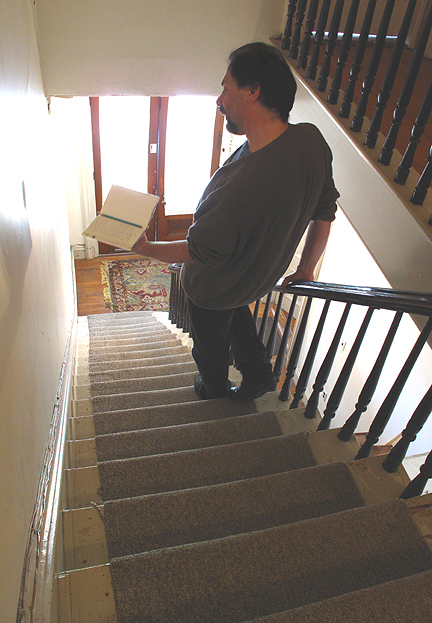
While writing on the front stoop, the hallway steps, and at my old window, I am thinking about what proceeds with me from this long night. What will stay with me, after I return my keys and get used to different streets? The necessary sadness comes as a result of a lot of active struggle. Not being able to accomplish my housing preferences, such as with neighborhoods, spaces, and my hopes to continue renting from families, sadness is paralleled with disappointment. At the same time, I’ve actually found something, and that will have to do, for the time being. It has been difficult to separate my disappointment from the hundreds of conversations I’ve had around this metropolitan area. The word-of-mouth efforts failed, although I did meet a lot of people. During interspersed quiet moments, I’m telling myself that it is of critical value to not become angry or bitter toward anyone. Just don’t. Sure this is all rotten, but these times are rotten and desperate for a lot of people. Still more are homeless. As with the general pandemic, this city’s regional gentrification has taken down far too many people through no faults of their own. The cruel consequences are largely unavoidable. We are each left to commandeer our resources and wits. One of numerous leasing agents I met told me about a family she knows that had to live in a tent pitched in a friend’s backyard even though the head of the household had a job. They could not find an apartment, and wound up sinking themselves in an ill-timed mortgage. A neighbor saw me carrying donations out to my car, and we got to talking about this whole sad scenario. Amidst our conversation she asserted that the neighborhood and the building will always be part of me. A number of other neighbors have said this to me, as well. Yes, the memories go with me, and the better ones should stay with me. All the years of photographs will help. And still more valuable is to have it in mind to appreciate what was. A great deal of goodness to reflect back upon, while fully aware of what has finally run its course.


Friday, May 20, 2022

unsettled

“There is to be action to accompany faith:
we are to struggle and fight on, but while we yield to the Spirit’s impulse,
it is God who works within us to do what is honorable.
If we will but resign ourselves, and no longer be obstacles in the divine way,
we will be carried to greater heights of grace,
and be transformed more fully into the likeness of Christ.”


~ Charles Haddon Spurgeon, Unconditional Surrender


1

My previous essay discreetly made reference to the impending loss of my housing of several decades. If functioning productively through the ongoing pandemic hadn’t been enough, my nightmarish fog is thickened by not knowing where home will be. Often through the years, my place of residence has been the steadfast sanctuary amidst turbulence and trials. Now, the very ground beneath my humble and reliable perch is being shaken away by the sale of the building amidst the city’s scourging gentrification. My neighbors and I talk about how frightened and frustrated we’ve been. And we are far from the only ones dealing with this sort of displacement in Maine, or throughout New England for that matter. I’ve reflected about the subject of pilgrimage throughout my years of writing; the whole of life is an earthly pilgrimage of trust. In the spiritual expression of making a journey, there is typically the journey home. Ordinarily there are intentional travels- sometimes quite arduous- to a place of communion and community, or solitude, or all aforementioned, during which there are heartening experiences followed by voyages of return. In my case, I have been returning to my same apartment through most of these years. But pilgrimage, being a physical form of contemplative enquiry, can surely tunnel into undefined darkness. Understood principles of the momentary are put to perilous manifestation.


2

My father used to say that hunting for housing is in that same category of horror as hunting for employment and hunting for a worthwhile automobile. I’ve known all three. The former two are more than both armsful, and the latter is something I stave off with the help of a good mechanic. As it has been for just about every aspect of life, short of the teleconferencing and remote-work software businesses, this is an egregious time to be hunting for a place to live. The pandemic economy has untethered workers from physical confines of large cities, prompting many to relocate to fresh-air places such as northern New England. Maine has been gutted by closures of local businesses, while the resort-style economy has exponentially inflated everyone’s costs of living. The outmigration of displaced and discouraged locals has been more than equaled by incoming remote workers and retirees; these factors, combined with successions of local officials who typically look the other way, serve to exacerbate the housing shortage. Having witnessed these phenomena through the decades, I have seen how constructed residences are either six to seven-figure condominiums, or compartments for the destitute. The rest of us claw for our lives and livelihoods. A good friend of mine manages a well-regarded downtown restaurant, and he recently told me that in spite of how he has helped his employees find housing, he constantly loses staff due to their losses of their homes. Now that I am forced into the battlefield, I’m experiencing what has happened to the process of searching for an apartment: much as it is with job-hunting, but acutely worse, it is a combination of lotteries and beauty pageants. On top of that, there is a disturbing prevalence of scamming and fraud, leading searchers to have to verify if the places in the online pictures are really those of the addresses listed. The days of cardboard “For Rent” signs in windows are long past.


3

Negotiating this uncertainty oscillates between trepidation and open horizons. Purging, packing, selling, and giving away things are all part of a protracted farewell. The load is lightened. I’ve seen some repulsively squalid apartments, and a couple of better and more liveable places. Determination and desperation drive the search forward. The behaviors and decisions of landlords, much as with workplace administrators, are out of the reach of an ordinary person of modest means. What is more within reach is to be prepared and ready to make that necessary move. Perseverance is running up against daunting odds. As yet, there are no conclusions.


The unsettling uncertainty is as intense as what I’ve begun referring to as The Glaze. For those of you who have had to force yourselves to sift through every single thing you own, at the most rapid pace you can manage, you know The Glaze. It is a kind of emotional and intellectual disorientation and exhaustion that results from the overwhelm of examining personal effects. Being a lifelong apartment-dweller, I don’t consider myself as having an enormous amount of things. I noticed it when I began purging paper-based material. The experience was such that I decided to categorize all my material by genre, as I do when I curate archival collections in professional life.


I made lists, based upon assessing my accumulations; in curatorial language, it would be series and subseries as the materials dictate. Going after my largest categories, photo-related material (prints and camera gear), papers, and books, I found that it was necessary to intersperse the work with smaller categories. That dizzying glaze was especially powerful and daunting, particularly on weekends when I was cramming in as much purging as I could. Eventually, I took time off from my job (“vacation time”) so that I could systematically march down my lists, adding in various intermissions so that I could back away from The Glaze as needed. Still, that stifling and stagnating stupor continued to slow my progress. After I packed all my music recordings, I kept the radio on, to help me keep going. I also took breathers to drive donations to charity shops. Inevitably, I collated all that I own, either for retention or for deaccessioning, in seven painstaking and restless weeks. On one particular Sunday night, I experienced a glazing that was so intense that I could neither write in my journal nor sleep. But the purging is done, and the packing is complete save for day-to-day necessities in anticipation of a thirty-day evacuation notice in the unknown near future.


Part of what made the covid era so life-altering was the forced change of all our perspectives. Lockdowns, social distancing, and wearing masks all became habits that worked their ways into unspoken daily life. My proactive readiness to be as mobile as possible is actually a preparedness to be reactive when my present housing comes to its inevitable end. My perspective of many years about the meaning of home has had to change. Another stark reminder of perspective occurred during a glazing day of purging last week. Down the street from my living room window there are several public benches which are mainly used by street people, and by smokers who cannot indulge in their buildings. Getting outside to divert my anxious glaze, I noticed the flashing lights of emergency vehicles and at least a dozen medics trying to revive a fallen man. They were rotating their administering of CPR for a long time, making great effort to rescue this unfortunate, ragged man who may have been homeless. I refrained from staring, but intermittently went outside joining some of my neighbors hoping to see that he would be all right. After what seemed close to an hour, the large group of first responders finally stopped. It was gut-wrenching to realize the man had passed away, and the valiant medics looked depleted. Then more city officials arrived on the scene of this unsettling sight. Someone like me being put out of my home still has a life and can at least find another place. I needed to get out and look at some different scenery, and the sky. It occurred to me that I hadn’t been out of town in nearly two months, because of this crisis. Rolling tape and tying string around boxes, one after another, marking the contents with a big squeaky marker that smells like shoe polish, I thought about how I will miss my crated prized possessions. To be sure, I left some selected writing materials and a few beloved books such as The Cloud of Unknowing unpacked, to be handy right up to crunch time. It’s the burying of treasure, with struggling hopes that I’ll be able to park, unpack, and regather in a better place.


Saturday, April 30, 2022

crises are opportunities

“You pass the doors of the library,
and the smell of thousands of well-kept books
makes your head swim with a clean and subtle pleasure.”


~ Thomas Merton, The Seven Storey Mountain


Recent weeks of this nascent spring reveal to me how the passage of time combines newness and anguish all at once. Amidst the ragged persistence of pandemic, there are crocuses along the sidewalks. Which of these do we deserve more? In the struggles of these times, it seems more consistent to live against turbulence than to abide alongside the bucolic. Crunching over the leftover detritus of winter, I recently made one of my routine sojourns to Boston. Alighting from the Red Line and emerging to a notably snowless Tremont Street, tangible signs of spring looked novel to me.


The pandemic-era Boston Athenaeum, as with all libraries, has had to apply varying degrees of public health restrictions. Following the changes in regulations, I’ve reacquainted myself with how I use the library as a place of study and writing- even adhering a laser copy of my immunization card to the flyleaf of my journal, for easy presentation. On my March visit, face masks were no longer required for the members-only upper floors, and once more the place that has been familiar to me for more than two decades looked new to me. Merton’s words about entering the splendor of imagination and potential in the library of his visiting came to mind. The Athenaeum’s collections, community, and physical spaces have never lost those aspects for me. For this particular visit, I carried my selections and writing material up through mazes of stairs to the quiet of the “third floor gallery” perch. There are times to be social, but this was a time to be silent. In this part of the world, the Lenten season parallels the austerity of late-winter. Looking up from my writing, out toward the Granary Yard and Tremont Street, the line from Psalm 51 came to mind, “renew a steadfast spirit within me.” So long as I live, fresh starts must be implicit. More often than not, these are as subtle and overlooked as morning routines of waking and washing.

Above: Boston Athenaeum


Above: View from seaport area & University of Massachusetts-Boston


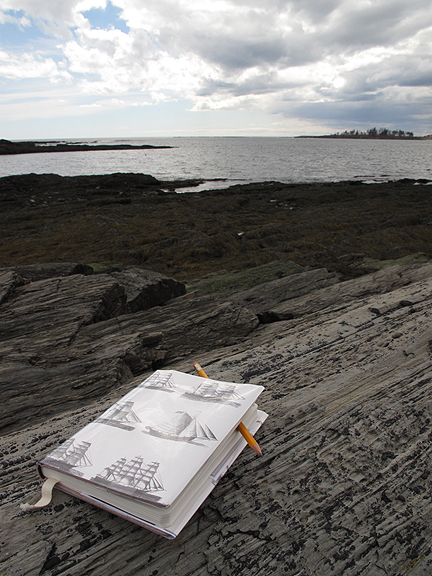
With the Maine temperatures vaulting into the forties and lengthened daylight, long walks and light clothing make for some welcome changes. My lifelong habit of strolling with a camera goes with my coined expression, “I’m going out to find photographs” sends me outdoors. Lately, it’s been sufficient to simply be outside, merely reacquainting with the milder elements, and absorbing what is good about being aperch outdoors. Another enduring memory which continues to educate me, comes from my year at UMass-Boston when I sought out the chaplain for desperately consoling advice. That was one of the most difficult and traumatizing years I’ve ever lived through. The chaplain evidently could see that, and in her wisdom and grasping for words she walked me outside. It happened to be a strikingly bright spring day, and we walked along Columbia Point, overlooking Boston harbor. The chaplain pointed heavenward and instructed me to notice. “Look up,” she said to me; “Look at that sky.” More than a clever directive to distract me from my miseries, looking up at the blue and the clouds above the sparkling water and city structures immediately expanded my perspective. We talked about the sky, and then about wishes for the future. A turning point I’ve never forgotten, and advice I have offered to others and applied to my own self many, many times since. The vast firmament can be as significant above cities as above any environment. The other day, I went out to find photographs at a spot I’ve long cherished here in Maine, and noticed the signs of the skies. There remains a raw chill in the air, and the landscape is invitingly unrefined. Writing outside in early spring is an early awakening with a sense of starting anew. Somehow, commonplace things can still make first impressions.


With time comes repetition, and with recurrence comes the question about whether there are limitations to fresh starts. How many resets are possible? It may not be knowable. What can one reasonably anticipate? Or perhaps it is not in the nature of forward-looking to think reasonably, while dreaming up to the skies. The will to continue has a faith in fresh starts built into it. We have all seen tragic imagery and heard about the Ukrainians’ anguish and ache for new beginnings amidst unimaginable ruins. War and destruction strike a terrible contrast against the burgeoning season of growth. Yet in the face of world events and economics, I notice people gardening, walking and dining together, creating art works. Who wouldn’t want to reset their lives, given the opportunity? I continue helping those around me with their work and their hopes for success. Of late, I am turning to my friends for their help. Quite suddenly, my landlords of many years are selling their building within which is my home. The eventuality of losing my steadfast home has launched a tireless marathon of purging and packing for the as yet unknown. The ache for new and solid beginnings has struck my little writing table, now precariously nestled at the center of numbered days.


My current journal book has an imprinted motto; though roughly translated from the original Chinese, it is poignantly appropriate. I’ve been paraphrasing the motto as, “everyone needs a sense of beginning.” Trying to keep on writing amidst working, the search for better work, and now downsizing and packing, I am striving to try to see opportunities in these crises. It is yet another Lenten season. Let there be fair skies.


Friday, June 22, 2012

swansea


“Oh yes, I remember him well,
the boy you are searching for:
he looked like most boys, no better, brighter,
or more respectful;
he cribbed, mitched, spilt ink, rattled his desk
and garbled his lessons
with the worst of them...”

~ Dylan Thomas, Return Journey


While planning my travels to Wales, the prospect of exploring the places frequented and inhabited by Dylan Thomas became yet an additional pilgrimage. A lifetime of reading and admiring the brilliantly innovative poet from Swansea led to a thirst to know more. In this recent decade, I’ve regularly read Dylan Thomas’ work to audiences, notably his colorful narrative Child’s Christmas in Wales annually. Known simply as Dylan in his hometown, I had the supreme pleasure of a week’s worth of tracing the poet’s steps, seeing the places of so many of his words, and actually living and writing in his home. Enquiring of the Dylan Thomas Centre about regional places to visit, I was put in touch with the curators of both the Centre and of the famous birthplace and home at 5 Cwmdonkin Drive. As our long-distance communications evolved into collegial friendships, I’d sent portions of La Vie Graphite abroad, particularly with my many references to Dylan. Warm and spirited invitations grew out of these written conversations.


The Dylan Thomas Centre, Swansea.


Following two weeks in north Wales, my pilgrim travels to south Wales were met with an extraordinary welcome in Swansea. Months of correspondence helped strengthen bonds of friendship, leading to the most beautifully unlikely “welcome home” I’ve ever experienced- beginning at the Swansea central train station, and continuing to Dylan’s home, which is in the Uplands neighborhood.


Dylan Thomas' birthplace and home : 5 Cwmdonkin Drive, Swansea.


Imagine being enthusiastically and genuinely welcomed home to a place you had never seen before. As these images linger, it seems to me this reception is a taste of heavenly spheres in eternity: the welcoming embraces, an extraordinary sense of familiarity, and all in places I had never visited until having arrived. As a Portland Mainer in Swansea, the many tastes of home include steep streets ascending from rock-ribbed shores, the seaport, and hospitable shopkeepers. As Henry Wadsworth Longfellow’s stamp is indelibly on Portland, so Dylan Thomas is everpresent in Swansea. Dylan’s likeness and his words appear enshrined around town. Swansea was his birthplace and the city to which he returned after occasions in which he experienced life away from the region, and the returns permitted his continuum with Swansea to deepen as his voice seasoned with time.


Longfellow mused about his “dear old town” of Portland, “seated by the sea.” Dylan referred to Swansea as his “ugly, lovely town,” and I recognize endearment in his expression. Port cities are gritty, yet when they are located on beautiful seacoasts loveliness abounds with their pervasive rainy gusts. “The fishingboat-bobbing sea” may have come to Dylan in nearby Laugharne, but it is indeed the same sea as Swansea. Settling into Dylan’s home was accompanied by the parallel gifts of vantage points. Peering from the same windows, I looked out to the same locations as he did. His paths, his childhood’s Cwmdonkin Park across the street, his back garden, and his front steps.


Cwmdonkin Park, Swansea.


The neighborhood streets are clutch-straining steep, with railings along some of the sidewalks. Though the Uplands district of town is surely more now than Dylan’s description of, “a square, a handful of shops and a pub," in the first half of the last century, the terraced hilltop neighborhood evinces an intimate sense of self-sufficiency. Essentials around the square include bakeries, eateries, grocers, and a great stationer. Any neighborhood ought to be so fortunate. The view out to Swansea Bay and The Mumbles can be enjoyed from most streets, and this aspect immediately brought Portland’s sloping Munjoy Hill to mind.


Above photo: Dylan Thomas wrote about this window view. As a child he said the ships rode over the rooftops.


Living for a week at Number Five, I greatly cherished writing in Dylan’s house, and making myself at home. The curator of the house, who lovingly maintains Dylan’s home in its circa-1920 splendor, encouraged me to live in the house- to use the rooms, furniture, kitchen, larder, and tiny scullery. The gramophone in the parlor works. Dylan’s father’s study has his typewriter- an Imperial Good Companion- and it works just fine. I installed a fresh new ribbon on it, as I’d brought along a spare for the long journey. After all, it’s home. On the study desk, next to Dylan’s typewriter, I found the century-old inkstand intact and ready with two dip pens. The curator had filled the glass inkwell with new India ink. With great respect, I wrote with these tools, often looking to the back garden from the door near the desk.


The sojourn was surely as social as it was introspective. After arriving to a rousing writers’ event out at Dylan’s boat-house in Laugharne, steeped in misty chilled air, festivities followed the next day at Number Five. I read some of my own writing, along with a portion of Dylan’s Under Milk Wood to two audiences. Between readings, with my typewriter placed at the center of the room, we all spoke about creative processes. Some people asked me about why I came to Swansea and about my history with Dylan’s poetry. A few asked about my Olympia Splendid 33, gleaming on its perch; I was asked if it was brand-new, and replied that it wasn’t, but rather had been spruced-up at a typewriter shop back in Boston. I spoke at some length to both audiences about pilgrimage, drawing parallels between visiting Dylan’s home, along with his favorite places, and visiting the Walden Pond and Concord of Henry David Thoreau. Exploring where the words came from, appreciation becomes a lived and beautiful adventure. Discovering the sources of words reveals their contextual colors. When written words are spoken, their native sounds are set forth. With this in mind, I told the audiences that the sounds of words are as important as their very meanings.


Through the week in Dylan’s house, which was his birthplace as well as childhood-into-adulthood home, I found a few favorite perches of my own. Among his books, it was impossible not to smile when I saw a well-used and thick volume of Longfellow’s poems among his shelves of classic English and Welsh literature. As I like to do at home in Portland, I brought my writing out to Number Five’s front steps. Indoors, it was the palpable warmth of Dylan’s dining room that captivated me most. It is at the heart of the ground floor, between the bottom of the stairs and the kitchen, with a side door leading to a side walkway to the back garden. The entire house has an overspreading and welcoming warmth. It had been pointed out to me that Dylan’s mother, of warm and religious temperament, made the home especially hospitable. It was easy to imagine them together, while remembering my mother and my childhood self. Then I realized I was actually in the very home that is so tenderly described in A Child’s Christmas in Wales.


Foyer at midnight.


Dylan's childhood bedroom.


Above: Kitchen; Below: Scullery.


Above: Study; Below: Corner of Parlor.


Kitchen door to back garden.


Though the entire experience is something I will treasure all my days, I especially relished staying up late at night and writing at Dylan’s dining table. Cwmdonkin Drive is a very quiet street, and the house stands peacefully at ease. The curators added a bottle of wine, along with my other provisions for the week. At night, I would toast Dylan in his home, while writing at the dining table. On one occasion, I wrote my toast of gratitude to the poet right in my journal. After visiting many places and listening to numerous stories, all with Dylan’s steps in common, I penned my words of thanks to the bard of Swansea who continues to bless others, long after his earthly life has passed.


Writing at Dylan's family dining table.