Showing posts with label Dylan Thomas. Show all posts

Sunday, January 24, 2021

have words

“A human is not any inborn image of itself,
but many images coming in from the outside.”


~ Giovanni Pico della Mirandola, 15th c. (quoted in Ymage of Love, 1532)

The wilderness of this pandemic is now entering its eleventh month. While the end is not in sight, the beginning is long out of view, and the passage of time generates its own mirages about progress. It’s too easy to be fooled by distances covered and changes in seasons, thinking all will be resolved soon. Joining the popular parlance has been the expression “covid fatigue,” and it speaks for the weariness of many. This kind of exhaustion can deceive anyone into thinking the nightmare will end as a film does when the credits roll and the house lights come up again. But a global pandemic is not quickly resolved- even if it materialized as a rip tide. Yet in the midst of chaos and misery, the imperative to keep working and responsibly run a tight ship remains. Admittedly, there are many instances at which I stop in my tracks, in the middle of a work day, and feel the subtly deep-seated grief of these times. It’s difficult to have something with which to compare this. I often go to my street-facing windows, looking for signs of life such as pedestrian humanity and a tempo that exceeds that of my apartment. Very many recollections have heartbreaking undertones, as I remember casually traveling to visit interesting places of beauty and intricacy, seeing friends, and enjoying savoury meals. I remember the suddenness of closures last March, known in my thoughts as “when the curtain came down.” Right away, I struggled with boredom and tedium. Far too many struggle with much worse. Indeed, the entire world is in crisis. These are grievously sad times. Perhaps these things get to you, too. When humanity finally traverses this wilderness, there will be many notes to compare in person.


noting the words


Ever the observer- even through quarantine life- and always writing and photographing, I continue to notice the words of this era. Documenting these times, I’ve made note of the strangeness of such terms as social distancing, self-isolating, masking-up, contact tracing, curve-flattening, covidiots, doomscrolling, and the quickly overused unprecedented. Then there are cultural expressions of dismay. Of course many are shocked at what has been transpiring before our eyes; so am I. We can express it, or we can say, “I have no words.” Of course you have words. There are always words, especially in a language as pinpont specific as ours. Just reach for the words. We can be as elaborate or as concise as we choose- but it takes a bit of thought to dodge the clichés and assert observing and inventive words of our own. Another verbal response of incredulity is now to say, “this is not what we are.” There are variations, such as “this is not who we are,” and “this is not what we’re about.” The spirit of this expression is understandable enough, but why not be more direct and responsible and say something like, “we know better than to do this,” or “that was not right and we were wrong.” As actions so often speak louder than words, saying “this is not what we are,” is actually saying “look at what we are.” Yes, these are words, but they are also determinants of our convictions.


having words and having minds


Navigating and surviving the pandemic brings most of us into a lot more solitude than we’ve previously known. Liking one’s own company can help a great deal. Amidst the suddenness of all the closures and curfews, even in the shock-response, I noticed myself immediately tapping into practices I learned in monastic life. Although pandemic quarantining has tensions and anxious undertones that do not resemble contemplative solitude, I’ve been trying to redeem this exile-like continuum in employment and “downtime.” The ora et labora adopted from my Benedictine friends manifests daily with the divine hours and journaling threaded through my self-propelled work days. Whether in professional communications, online teaching, or personal writing, words and inflection have greater implications than they had before the covid era. Our powers of expression and presentation have become more tightly funneled through verbal applications. Expression means saying what one is moved to say. Presentation demands the discipline of selective restraint, appropriate to the situation. It takes patience, as well, and necessary isolation seems to be forcing that all-too-forgotten virtue upon us.


Along with the challenge to flex those articulation muscles, cultivating the healthful during daunting stretches of silence is equally a test of mindfulness. Both spheres make demands of an individual’s intentions, but both must also give way to unstructured musing. If I am the sole proponent of puttering, the lone such voice that crieth in the wilderness, then so be it. Perhaps by reading this, you may be inspired to your own recollective puttering around your living space. Paradoxically, by scattering the contents of my desk, I inevitably gather my thoughts. And though I haven’t got a mind anything like Albert Einstein’s, I undoubtedly comprehend his sentiment about loosening the valves of thought. Einstein wrote about how he would “think [about something] ninety-nine times and find nothing. Then I stop thinking, swim in silence, and the truth comes to me.”

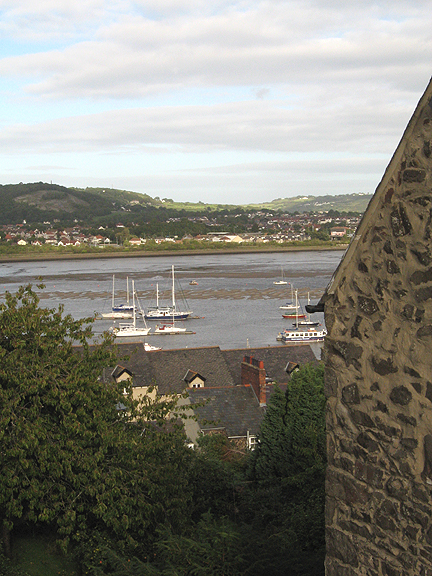
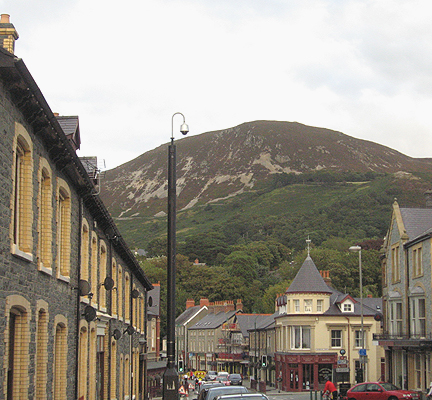
Wales


Philosopher Martin Heidegger famously said that language is the house of being. This is to say it is where the soul lives. Indeed worth considering while attempting to rise to the level of one’s own uniqueness, each one of us. Another overused word in the past year is resilience. It’s actually quite a good and useful word, made of the Latin assemblage of re-seliens, or “the act of rebounding” (the action of continually leaping ahead). Good words can be worn down into background noise, but its spirit can still inform and take shape. I can be resilient without using the word, finding other ways to describe being persuaded to persevere. The need to be inventively originative is especially enhanced in these times. The pandemic has scattered physical communities and muffled the arts, but that needn’t cause our creative minds to become dormant. We’re capable of finding ways to encourage one another, and we still have the potential to better our minds. We have words and we have minds.


At the author's request, I provided this cover photo.


Earlier this month, my principal mentor and advisor from my undergrad years in college passed away. He was a well-published poet, as well as an inspiring and challenging educator. Brilliant in words and deeds. I studied writing, literature, poetry, and drama (including analysis of cinema) in Professor Aldrich’s memorable classes. Among the written arts, poetry in particular allows for the assemblage of words without the added constraints of sentence structure. Of course it is a craft of its own, just as essay-writing is also a distinct art form. A poet’s choices of words and their arrangements are the cutting edges for the expression of the artistic message. For me, there is no master as compelling as Dylan Thomas, whom I’ve loved since childhood, and whose configurations of words defy the rigidities of any predictable meter. Thomas was known to say that the sound of a word is as vital as its meaning; and it shows in his work. His written lines are filled with imagery. During my decade as a professor of photography, I regularly read Dylan Thomas to my classes- right before we would critique visual works. I would say, “Dylan’s words are giving us images, now we’re going to look at the images you see on the walls and provide some words.” Doing this always, always, always broke the ice that would be oh-so-typical in college art critiquing. When he wrote:

See, on gravel paths under the harpstrung trees
He steps so near the water that a swan’s wing
Might play upon his lank locks with its wind...*


Dylan gave us a self-portrait, just as we photographers do when we set off the timers on our tripodded cameras for just long enough so that we can enter the picture. An opportunity of a lifetime became possible when I was invited to live in the Thomas’ home, in Wales, immerse in Dylan’s native colors, and write. Swansea and its region really did resemble the imagery I found in his words. The whole experience was profoundly meaningful in every way for me, encouraging my continuation of bonding images and words. No doubt, upon returning home to Maine, I visited with Aldrich and described some of these adventures while we were catching up. It was also a chance to express my gratitude for his encouragement. May I recommend that you cultivate your words; don’t say you have no words, because you do. It’s like when someone calls me and says, “Can I ask you a question?” In so doing, you’ve done so. Ask that question. Have those words.

So shall he step till summer loosens its hold
On the canvas sky, and all hot colours melt
Into the browns of autumn and the sharp whites of winter,
And so complain,
In a vain voice,
to the stars.*


I had the supreme honor of calling this place home.


__ * Poet: 1935, by Dylan Thomas

Tuesday, October 14, 2014

i’r awyr


“The sky gathered again
And the sun grew round that very day,
So it must have been
after the birth of the simple light
In the first, spinning place,
the spellbound horses walking warm
Out of the whinnying green stable
On to the fields of praise.”


~ Dylan Thomas, Fern Hill.


skyward (i’r awyr)


Menai Straits.


After having considered the elemental presence of the landscape and waterways in north Wales, this trilogy culminates with the skies. As well, this essay also completes the series of 14 reflections from my sojourns at Oxford and in northwestern Wales, this recent year. While hiking at a variety of surface elevations, I consciously noticed the skies and made sure to photograph changes over ocean and mountains. Texture and fluidity of formation caught my attention. Mountaintops and sky interlocked as form and counterform. At times, both sky and landscape appeared equally solid.


Snowdonia.


Along with these eventful skies, seasides and heights are accompanied by aromatic air. Being a Mainer, the assuring scents of pine trees and salt air have a familiarity equal to my home environment on the North Atlantic. The Welsh coast gave me plenty of reminders, with rain clouds and strong wind currents. Like the Maine weather, the skies above Wales are quickly changeable: rainstorms give way to brightness. Attuned to the subtleties of natural elements, and having time to appreciate them, it is possible to sense fine perfumes such as those of trees, earth, water, and distant woodsmoke. Even sunshine; the sky itself seems to have aromas. Moving air currents generate sounds, especially on windswept hills and mountaintops. An old favorite sound experience is that of wind currents sifted by tree branches; the effect can be astonishingly similar to the sound of ocean surf.


Snowdonia, near Penmaenmawr.


seeing the infinite


Noticing skies reminds me to exercise broader perspective. Matching the contrast between intricacy and vastness, the seen and unseen, is the distinction between lightness and weight. Gaius Glenn Atkins wisely observed how life’s course imposes “the immense burden of finding somewhere beyond its restlessness and contradictions healing regions of unity and stability.” As kindredship with the ocean and landscape helps provide context to my steps, gazing skyward gives reference points to finite paths. Ironically, the heavens give ground to our souls.


As expanse and proximate interchange, making note of sky and air finds a deeply personal connotation in that of one’s very own breathing. My deeply-embedded upbringing and life experiences in densely urban places has influenced the way I tend to perceive scenery. I remember an occasion during which I was able to see art gallery walls lined with my photographs. It surprised me to see the forest scenes and city views had in common vantage points between 2 and 50 feet from the subjects- looking straight or down. It seemed I had been recording motifs along the Appalachian Trail as though I had been looking across streets in New York. That amusing observation caused me to vary my angles of view. Over the recent years, I’ve learned to look upward. The skies are not to be missed. There is great value in seeing beyond our close confines; that is an abiding lesson demonstrated by the mountains and ocean. From very close and structured quarters, knowing to make note of the sky reminds me of transcendent immensity.


Isle of Anglesey


Looking to the skies, and knowing to do so, is part of my training to be undauntedly hopeful. And, indeed, perseverance is easier to say than to successfully practice. Steadfastly looking forward and upward, without seeing results, is hope’s trying crucible. The biblical apostle Peter bids the readers of his first letter* to look heavenward to blessed hope. He begins by referencing historic predecessors who aspired to holiness, guided and aided by the Holy Spirit. In poetic perspective, Peter adds that “angels long to stoop and look into these things.” He then returns to his reading audience, exhorting us to “fix our hopes calmly and unfalteringly” upon the grace that comes to those who hold fast by faith. In affixing our hopes deep within, we express certainty in finding purpose to our many rugged steps and days.


Above views: Isle of Anglesey,
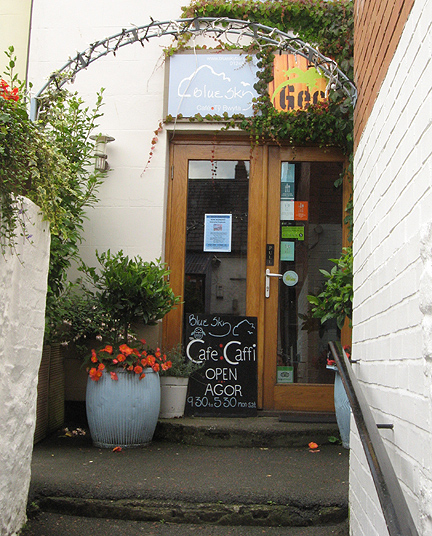
Below: Blue Sky Café, Bangor (Wales).


Perhaps when we gaze skyward, we see the same skies the ancients saw. They noticed the same sun, spheres, and constellations we can see now. When I teach architectural history, I instruct my classes to approach historic buildings with interpreters’ eyes. “Look up for the past; look down for the present.” This is to say that by looking to upper levels they will see much about when and how the building was built, and by looking at the sidewalk level they will see today’s commerce. Many throughout history have considered wide open space as forbidding and empty of life. By contrast, when I look skyward to uncontainable vastness- even to the nighttime void- it is consoling to behold something so much greater and grander than the reach of a human being. Looking to the timeless offsets the habitual fixation with the temporal.


intimate vastness

Isle of Anglesey.


Bringing these elements together, my travels back to New England traversed land and water, via air. As with many westward transatlantic flights, my return trip spanned daytime hours, allowing for views above and through clouds. Iceland was damp and heavily overcast. The Gulf of Maine and Massachusetts Bay were calmly welcoming.


Above: Iceland.
Below: Massachusetts Bay.


From my busy Oxford residency to my retreat and return to north Wales, I understood among many things not to let my thoughts narrow or become too earthbound. The ancient Psalmist whose words** translate as “look to God and be radiant,” may as well have said, “look skyward and be assured.” To be awed by what is grand and unfathomable is at once fearsome and sustaining. Accepting mystery in the forces of creation remind us of our participation as mere ingredients in an immeasurable continuum, pursuing knowledge, beauty, and grace.


Bangor Cathedral.


Penmaenmawr, with Dwygyfylchi in the background.


Bangor Pier, on the Menai Straits.


_________

* 1st Peter 1:12,13
** Psalm 34


Wednesday, July 9, 2014

return journey


“...the wind cut up the street with a soft sea-noise hanging on its arm...

...here and around here it was that the journey had begun
of the one I was pursuing...”


~ Dylan Thomas, Return Journey.


journeys and returns


Above: First Great Western train, from England;
Below: Arriva train in Wales.


On a weekday, still with books and papers in my arms, I walked to the Oxford railway station to buy my ticket for North Wales. One sojourn leading to another. Not realizing an explanation was needed, I blithely requested a one-way ticket for Penmaenmawr. Then, after helping the ticket agent spell and pronounce “pen-mine-maOW-rr,” I helped him locate the town on his computer monitor. For the record, he was very nice about everything, and perhaps in an apologetic spirit he reserved “table seats” for me aboard each of the 3 trains I needed to get across the English Midlands, to northwestern Wales. Well this Oxford scholar with a New England accent, heading for the “Fortress Gwynedd,” was certainly grateful to look forward to a day’s train travel with reserved perches that included writing surfaces.


Above: Looking to the mountains.
Below: Looking to the sea, minutes later.


Packing to leave Oxford and the goodbyes (with plenty of see-you-laters) were offset by the anticipation of a return to Wales. No longer the first-ever visit, which I experienced in the previous year, but this time a return journey. The distinction is significant, as the mystery of travelling to a place charted solely by maternal recollections and childhood dreams is augmented by the prospect of returning to places remembered in personal experience. This time, I could visualize the destinations. Places, sounds, and countenances joined the stream of expectation. There were tastes I wanted to be sure not to miss, such as bakery-warm Welsh cakes, and S.A. Brains Ale with seafood. There were photo angles to retry on this visit, and opportunities to see more places for which there hadn’t been sufficient time on the first sojourn.


Bangor, Wales.


returns and impressions


All journeys are to be savoured, as no two impressions are alike. Return journeys are as unique as initial discoveries. The differences are in the imageries that inform the going forth. In all our journeys, we blend together the known and the unknowing. As well, we are uniquely able to synthesize the composite experience of multiple memories, landmarks, and projected hopes when we return to places of our choosing.


The aspect of returning to a place already visited- or in the case of my monthly travels to Boston, something almost errand-like, the visits are colored by the weather, the tasks-at-hand (if any aside from strolling), and indeed the kind of mood I’m in. But it is a return nonetheless, and one I elect to make. The great distinction is that a choice was made; this is not perfunctory. The dynamic, being one of choice, means that I am just where I want to be, notwithstanding how I feel, where I just came from, and any other baggage that may have come with me. Returning to a place, and wanting to be there, is actually in response to the place calling you to come back. Thoughts become enlivened by the prospects of the object of your wanderlust, of your longing for a very specific place with lanes, skies, handshakes, houses, and aromas.


The train travel took an entire day, with transfers in Birmingham, Shrewsbury, and Chester. The transition into something very different from urban and suburban Midlands to rural mountain country became clearly pronounced as my last train reached the sea. Shoreline was immediately at the starboard side, with the mountains of North Wales above the port side. Skies alternated between stark brightness and overcast spatter. The weather of the Welsh coast, which is so similar to that of the Maine coast, one place now reminds me of the other.


The return to North Wales came a year after my emotional first visit, having had a year to convey stories from the month of Welsh travels to my parents at Thanksgiving, and keeping in touch with new friends, anticipating the return. The arrival this time was directly from a long sojourn at Oxford. Thus, I instantly noticed the Oxford House in the small village of Penmaenmawr- even how the storefront is painted navy blue.


In Bangor, I could notice the progress of construction projects I had seen in the prior year, and how these things (the University arts centre, and some housing complexes) had changed. Before making the trip, during the planning, I realized there wouldn’t be enough time to visit places and friends in South Wales; I could only choose one direction, and chose north. I was gratefully able to welcome the restorer of the Dylan Thomas home, in Swansea, to The Kilns (C. S. Lewis’ home- which had been my home in Oxford), as a sweet reunion. While explaining my choice to Annie Haden, she very matter-of-factly said, “well that’s your Mam’s place,” giving me the impression that if I had chosen to go south, she would’ve said. “Why didn’t you go back to Bangor, child?” I could just picture it. Indeed, I did gratefully go back to the north, following my wishes and remembrances from the past year.


Same gates, but 54 years apart: My mother and me, in Bangor.


the call of place


Consider the phenomenon of a place returning to you. Not as with unpleasant histories, but the opposite, life-giving kind of haunting. These are dreams we welcome, reminders of the flowering amidst our struggling thorns, gratitude as fruit of survival. When a place calls and colors our dreams, the impression is more than of the place itself. Surely, streets and squares, with addresses, can be physically visited. When a place joins the geographic arrangement of our dreams, we are included as inhabitants of such reveries. These places include our selves as resident travellers. When I revisit Paris and New York, I am there as an infant, an adolescent, a teenager, and as I am today. All the lenses are kept polished. My images of Wales evolved from retold stories and postcards to enquiries and, finally, my own footsteps. Places we hold dear to our hearts and thoughts are in our eyes. They go with us, they return with us, and cultivate our life experiences.


Below: The Welsh house blessing from my mother's time in Bangor, which she has recently given to me. I remember this from childhood in New York.


The places and vistas I enjoyed most in Bangor are still favorites of mine. My urban penchant for strolling and browsing draws my attention to High Street, Deiniol Road, and Holyhead Road. The latter is near Bangor University, where my mother studied. At frequent intervals, among shopwindows, are cafés and bakeries. My very favorite is the Blue Sky Café, which is in a high-raftered skylit loft at the center of Bangor.


Bangor Pier.


A meditative stroll along the Garth Road continues onto the Victorian scenic Bangor Pier. On one evening’s visit, the winds whipped through the Menai Strait with such force that pedestrians on the pier were holding on to the boardwalk’s railings. With this return, I was better able to appreciate Bangor Cathedral- both in its general ambience and its architectural details. One of my recent visits was on a pouring rainy day, and somehow the exterior conditions caused the interior to feel much more intimate. The return journey reminded me of the sanctuary, whose foundation dates back to the 7th century, as a place of prayer. Having developed warm friendships through- and with- the Bangor Public Library, that is undoubtedly one of my favorite places in town.


Bangor Cathedral.


Bangor Library.


Indeed, I did see places I had not seen before, and made new acquaintances, but that’s to be expected. Return visits are new experiences, as today is distinct from yesterday. Now it occurs to me how often I peruse the same favorite districts in Boston, noting changes, discovering new things, and visiting old favorite points of reference. When it comes to hospitable and beloved settings, familiarity breeds endearment. As for Bangor, its environs, and Wales, I am thankful for places of grateful returns. There is no honor quite as sublime as being warmly anticipated. A living sign of mutual recognition, the gift of welcome is a gesture of both extension and inclusion. As our times appear fragile and temporal, embraces represent treasured belonging and the sense of home. Thoughts that console, soothe, and endure. Sights, voices, and days return to me with the effortless prompt of atmosphere. Wafting weather and aromatic air bring words to mind and paper, collated to the volumes of a life.