


written in the rain...




 Posts
All Comments
Posts
All Comments

“Vraiment, tout vouloir et
se contenter de très peu:
Voilà bien le secret d’un emerveillement
qui ne soit ni naïf ni illusoire.”
~ frère Pierre-Yves, de Taizé, Le Souffle de l’Espérance


A welcome from Brother Elias!


"Oh my soul
Sometimes we don't know what to do
We work so hard
Being tough on our own
But now it's me and you
Let's give it up
Sad bones
'Cause we all fall on hard times
But you don't have to stand up all alone
Just put your hand in mine."
~ Shawn Colvin, Climb On a Back That's Strong


“Down by the riverside
I laid my burdens down,
Now I'm traveling light
My spirit lifted high
I found my freedom now
And I'm traveling light.”
~ Joel Hanson and Sara Groves, Traveling Light


“Try to remember
that to some extent
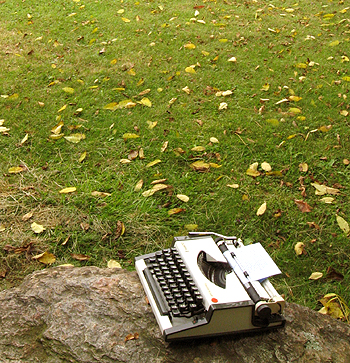
you’re just the typist.
A good typist listens.”
~ Anne Lamott, Bird by Bird
A surprising and splendid acknowledgment has come my way, and I am very grateful. For my part, blogging grew out of journaling, and for the past 3 years has paralleled my daily handwritten journals. For years, I’ve been maintaining a kind of tandem journal: fleeting thoughts jotted in pocketable notebooks in pencil, and larger tomes for developing thoughts as time permits in ink. Carnets and cahiers. The nickname for the little penciled jottings has been my “life in graphite,” La Vie Graphite. The words and themes- even the tools I am fortunate to use- are open-ended means. The real subject is this life’s voyage, the pilgrimage of trust.
The award requires that I post a presentation- and very happily involves a celebration of other writers whose work I respect. The presenter of my award is the esteemed Olivander, author of
Collapsing World. And here is the Kreativ Bloggers award:

I am very pleased now to present this award to 7 creative bloggers.
First, here are the rules for the recipients:
1. Thank the person who nominated you for this award.
2. Copy the logo (above) and place it on your blog.
3. Link to the person who nominated you for this award.
4. List 7 things about yourself that people might find interesting. (see below)
5. Nominate 7 Kreativ Bloggers.
6. Post links to the 7 blogs you nominate.
7. Leave a comment on each of the blogs letting them know they have been nominated.
And here are the winning blogs:
To all of you: Congratulations!
Bon Courage et Bonne Écriture!
Finally, 7 random things:
1. I commute to work with the bicycle I’ve had since I was 16.
2. My career in the visual arts began when as an 8 year old I saw the Chagall production of The Magic Flute at the Met.
3. I taught Benedictine monks to sing in Hebrew.
4. On formal occasions I wear real bow ties.
5. I have been published as a photographer, an illustrator, a historian, a book conservator, and a philosopher.
6. My first language is French.
7. My favorite food in the world is steamed and spiced kasha.

“Northern light
come softly down,
and touch the land I know.
Northern light
come softly down,
and touch the land below.
Northern light
is in my eyes
and in the places I knew
If a light can carry freedom,
let it shine on you.”
~ Frieda Morrison, Northern Light
As days are replete with images, words, and ideas, so are they textured. A recent journey to a nearby island brought to mind some of the dazzling textures in my midst. The view from the ocean presents a context of water, sky, and land in unity. Within these grand worlds are countless elements. Gazing from the boat, after having collected some thoughts about fragments and edges, textures began to surprise my attention. The ocean has constantly shifting characteristics. And these contours, these palpable experiences, like ideas and words, become reference points.
Tactile qualities are essences, and with this in mind it is easy to see the common root of the words texture and text. The Latin textus refers to cloth fabric- material comprising many intermingled threads into one gathering. In the textura of the broader journey are reminders and memories of essences. The sea air itself has a thick, salted, and chilled consistency; gusts of the airborne ocean. In turn, the rugged terrain encompasses numerous textured patterns. Observing sands and tides brings to mind the grander entirety within which I am a very small component. Considering the miraculously and mysteriously appointed order to the universe is a humbling assurance to me.

Being attuned to texture indicates awakened spirit. When I notice my appreciation of aspects often overlooked, there follows a welcome reminder to cultivate ways to perceive on many levels. Comprehending subtleties, essences, and beauty encourages by steps along this unpredictable voyage. Some shells and glass fragments, rounded my incessant tides, sit upon my desk as reminders of how the forces of creation can transform surface textures. It is the same Spirit that exalts valleys and makes rough places smooth.
Transitory chapters, liminal spaces along the way, cause the soul to be acutely aware of immediate textures. Whenever I have ventured out to the unknown, my senses have been noticeably attuned to surface and scent. The cool, ink black air of thick forests at night. The fearful, as well as the peaceful, has texture: it’s when we unavoidably sense our heartbeat. Freshened school buildings, with glossed floors and anesthetized halls that somehow enhanced our echoing steps and voices. My grandmother’s potato pancakes- coarse, then buttery, then spicy. A heartfelt Mass, after which I stepped from the cavernous cathedral, out through a frozen Montreal night, and down into the crowded subway filled with faces for whom I sensed a deep affinity. Standing in that crowded train became a prayer for all present, with the aftertaste of bread in my mouth.
Texture is woven into the pages of memory’s tomes. Just as there are immortal words meant specifically for an individual’s heart, there are indeed textures that we can each uniquely comprehend. Stored memories of essences remain with me as both reminders- and even as consolations. Curiously enough, in response to institutional eliminations of books, popular outcries cite the attributes of tangible volumes. We animate all that books comprise, with our imaginations and movements, and can hold them close to heart.

Compare fast food, and its consumption, with a savory meal- even a simple one- with aromas and strata of tastes. Memorable dining has always been an experience of ambience and spice; a totality of texture. My recollection of a deeply-appreciated dinner, after a hot day of wearily walking Burgundian roads, is ever colorful with the garnishes, sauces, porcelain plates, and paper lanterns of the outdoor tavern. I was on my dusty way to Taizé, and, knowing that, the waiter gave me an extra glass of wine. Within the textus of the moment there emerged the sounds of the environment beneath a night sky in eastern France.
Pilgrimages and daily routines alike provide chances to gather. And the collecting varies from artifacts and addresses, to words and experiences. The ancient emblem of pilgrimage is the scallop shell, and I never remove mine from my backpack. The shells reflect roads, skies, lightness, and friendship back to me. A few of the smaller shells were tied in place by children wishing me well on my way. Such treasured tastes abide, and descriptive words seem insufficient. Similarly, there are only so many expressions to attempt to give an accurate sense of the millions of steps in a life’s pilgrimage. Rather than to tire myself by trying to describe infinity, there are more intimate and intricate ingredients to meet my finite understanding. Beginning with shells- and the very lines I inscribe in my notebook situated on my oak table.


“Who would dare to go nameless
in so secure a universe?
Yet, to tell the truth,
only the nameless are at home in it.”
~ Thomas Merton, The Fall
Edges and ledges ceaselessly captivate. Writing these words, I am aperch near the ocean. To consider a vantage point as a perch bespeaks a fascination with precipices. Edges take many forms- and formless aspects, as well. Changes of surface and texture are seen, sensed- even tasted. And when a corner is turned, revealing a new landscape, from within come reminders in our own language of our transition. The soul’s geography surely has a gazetteer, with words either preceding, paralleling, or following human steps. An edge indicates where events connect, and how one person’s sphere must be overlapped by a much more universal fulness. Turning an edge, in itself, has an extraordinarily intrinsic energy; striking a match to light a candle brings this to mind. Edges can be sparks, instances, and even margins of space between symphonic movements that anticipate a change of timing. Drawing a line on a piece of paper, threading lines and letters, brings an idea across an edge. Observing a photographic image materializing in developer, even for the millionth time, never loses that mysterious amber-bathed sense of threshold.
An edge can be felt as well as seen, and aspects of place are both material and spiritual. Visiting a physical marker is as tangible as recollecting a thought. The moment of transporting insight is itself an edge. But these less-visible edges are for me to recognize, and although not easily delineated these are indeed indelibly felt. An interior edge can be recognized as surely as a road’s sharp turn. But there are many grades of hard and soft edges, often keeping it a mystery to know when one has actually embarked into the unknown. Thankfully so: I am grateful for the unobstructive unknowing.

Even the self has the aspect of edge. But rather than to venture out to the generic sense, I’ll speak for myself. There are perimeters of knowing still to be found. A lifetime of discovery won’t be enough. But it seems the profounder comprehension begins at the ends of self. The plural makes more sense to me, as I believe the self has many ends. These edges seem more to me as perforations, ready to be torn away. Ancient monastic thought pointed the aspiring individual to “lose themselves” in Christ, and to desire a kind of edgeless life of immersion. Thinking of this causes me to wonder where and if self-distinction can dissolve, in this culture of endurance and survival. What are the distinctions worth preserving? Thomas Merton’s many definitions of the “false self” revolved around the rejection of immersion into the divine. Moving beyond all-costs striving to self-immortalize, to traverse the ends of self-ness. It is reminiscent of the rabbinic sages’ image of diving into the “ocean of divinity,” and to cease focusing exclusively on oneself. Merton wrote of his struggles to get out of his own way, and that reminds me of releasing the results for which I irrationally hunger.
Last week, I brought a couple of close friends to the Weston Priory for their first visit. What a rare privilege, to guide loved ones through a place that means so much to me. And to listen to their first impressions. The monastery is a simple array of barns and wooden structures, blended into the mountain landscape of the monks’ environment in central Vermont. Simply arriving there is the beginning of an unburdening- and untethering from material anchors. Even after 15 years of sojourning there, it continues to impress me to realize how little is needed to live to the full.

With my friends exploring the pine-scented terrain, I found a perch of my own. The familiarly medicinal silence returned consolingly to me. As if I needed to ascend a mountain to find what should be with me in the city- and always. Then I began to notice edges: sloped meadows and untamed fields, the brothers’ plain structures angling into the trees, the rotation of silence and sound, the earth and sky. Even the latter presented a soft edge amidst thick mountain fog. Where one edge ends, another begins. I hadn’t been to the Priory since the winter, and wanted to visit Brother Philip’s grave. What I found was unexpected- considering how previously the community used individual grave markers. Upon the occasion of Brother Philip’s passing, the brothers created a group gravestone, with each of their names and respective dates of their monastic professions- all engraved next to their brother’s “completed” inscription. It was at first astonishing, then it seemed a bit morbid to me. But then I realized how very deeply affectionate this gesture is- not just for the brothers, but for anyone else reading the memorial. The community of brothers communally felt their own lives’ edges.

Part of the fascination with edges is to contemplate their very definitions. An inadvertent tendency of mine is to leave objects too close to edges of surfaces. Then when I knock them over, I berate my own clumsiness. When I’m a little more present to the moment, I notice myself pushing things like coffee cups and cameras closer to the centers of tables and shelves. Today, my thoughts turn to what lessons are in ledges. Looking toward the layers of crags and ocean waves causes me to wonder about what is forming, what is on the verge, and what might be burgeoning. Obviously, over the edge is some kind of risk. Beyond spiritual edges is the unexpected, and the invitation to confront what has intimidated me. The wish to see around corners is the desire for knowledge, the spirit of inquiry. Ends of terrain at my feet are meeting the enwrapping arms of the ocean. Horizons and margins only appear to me as edges, but these are simply directions. Even the sunlight lands at a changing edge. The season at this threshold is at once timeless and new.


“You say suddenly you
cannot see yourself out in the world.
With your school suitcase.
Tomorrow- well, you don’t know,
you don’t know.
We’re coming away,
Everything’s changed.
Everything’s different now.
Everything, even the sun.”
~ The Innocence Mission, Everything's Different Now


“Words that build or destroy
Dirt, dry bones, sand and stone.
Barbed wire fence cut me down
I’d like to be around
In a spiral staircase
To the higher ground.”
~ U2, Promenade
Moving through days and distances, the skies and air revealing changes, the increments themselves are what fascinate. In a split-second’s snapshot there is a complete scene before me: of trees, terrace, and a chair to be inhabited. In a fleeting tilt of a silent gesture is the kindness of a stranger. Comprehensible small steps. When the view forward appears pervasively unsure, and institutions uncertain and tenuous, it becomes necessary to take stock of interior treasures reminding me of my own foundation. The exterior gems become easier to find, albeit in a current of overlapping multi-tasks, one interrupting the other. Frequently, work and words are so consistently cut into that it’s hard to tell if something’s ended or if it’s just been broken up again to make way for yet something else. It becomes a challenge of coexistence- and one more balance to master. Average days are replete with fractured efforts and transitions; streams of consciousness diverted into stray rivulets. Of course I want to be able to unify all spheres of my continuum, and see far ahead as vividly as the table upon which I presently write. But long-distance views are often elusive. Simply looking to the present uncovers humble incremental steps. Perhaps the fragments are as much as can be managed.

fragments
Now I am pressed to consider if there is any voyage, of any extent, that is not pursued in paces. Like the correspondence between subject and photographer, that which attracts our gazes and draws our attention is composed of fragments. Perhaps rather than being thwarted by a life of puzzle pieces, steps, days- even words- may be constructively perceived as structural modules. Walking across town today, a steep street brought me to notice my steps, cobblestones, and clouds. Simply being in view, these fragments are brought together. Even the spaces between and around components are, as I once learned in typography classes, counterforms. Contours and contiguous spaces define one another. Definitions of objects and spaces can even effect a dynamism. Consider shadows cast by backlit subjects and how light shines through trees.

words
As with structural elements, accumulating into paths and solid forms, words have momentous potential. These are modules which can build or destroy. We assign by way of our appellations. Further, when communications and rapports must be truncated, the few emerging words become critical pivots. Verbal “sound bites” can wield even more influence than their intentions. Ironically, a culture that shuns silence with space-filling media cannot countenance completeness. I try to prevent myself from following this trend.
Our words are finely-faceted mirrors and windows, reflecting and revealing. From antiquity, we have Saint James’ timeless discourse about how expressions of faith are tarnished by careless talk. He didn’t really focus on words, but instead referred to how we address one another and how we speak to our own conditions. James compared an unbridled tongue to a ship’s flawed rudder. He challenged his readers to match their verbiage and lives consistently. Not knowing what our words can potentially do to others is akin to not knowing one’s own lethal strength. In a conscientiousness of language and movement, we are brought back over and again to the source of life-giving words. In our transformation we may find a new vocabulary building within us- and even new tones. The simplest articulated reference can cause changes of perspective.
I believe we all have our own “root words.” For me the word trust has been a poetic gift from the monks of the Taizé monastery. They use it parallel to the French word confiance, to describe faith, a life of confiding in God, and confident forward movement. This sense is prominently in my lexicon of pilgrimage. It causes me to think of ways to encourage sincere trust wherever I go. When I started journaling, about 15 years ago, it was my antidote to workplace unrest which demanded enormous patience. One of my colleagues saw me writing in my notebook during an outdoor break. Between drags on his cigarette, he commented “it’s good you write; it concretizes your thoughts.” Too good to forget. Words and thoughts, alike, have textures. And the sounds of the pronounced letters cause the mind to visualize.

time
Yet another fascinating module is the measurement of chronology. Apart from calendars and clocks, we interiorly mark our passages of time. Parallel to fixed frameworks, we have our own timepieces and milestones known better by ourselves than anyone else. Our own relationships with time. The long shadows cast by my academic sundial extended from my school years, to teaching years, through post-grad, and then on to years of working in schools. I still buy calendars in August and divide the year into “fall” and “spring” seasons. The late-summer light and air transitions return vivid recollections of returning to school. And there are “eras,” characterized by personal watershed events, as well as small moments counted as tastes of life. The aroma of pine and sweetgrass. The heightened expectation of travel. Invoking a loved one’s name. An ancient Jewish custom assures the ceremonial remembrance of the departed on the anniversary of their passing: yohrtzeit, which means time-of-year. This is a special memorial, among the numerous, more informal ways souls are remembered.
impressions
Then there is the currency of time. If we choose to cultivate a skill, or to simply appreciate a silence, it will demand of our schedules (even as we’ve been conditioned to believe time is money). That means there is an expense involved. But perhaps we may measure time (and its worth) a bit differently than others. I know that I do- considering that I chose to write at this moment, above other leisure activities or any other amusement (wait, this is an amusement!). Time may move in a universally measurable progression, but it can be for me to set the increments, even if not the sizes of the notches. Perhaps that’s it. We each have our historic landmarks and festive days (as well as our days of mourning), but we can determine our own quantities- if not the units of measure. I wonder if impressions may also be fragments. Indeed they are ingredients portioned in each soul. That which we have seen, and heard, and held; these are as tangible to us as they are indelible to our memories and hopes. Imagery has an iconic staying power, and it has always drawn me to seek meanings beyond surfaces. It is a wonder to me, how I can remember moments- tiny snippets and fragments of the distant past- above and beyond other things. But just as the senses can surprise me with reminders, I cannot predict which present ingredients will endure into the future. Today is amidst notions and encounters that will be fixed in time as remembrances.


