Showing posts with label writing materials. Show all posts

Saturday, April 20, 2024

healing takes time

“In remembering, there is always present to the soul
the result of some past operation, and the soul acts on that result,
as on a new object. The soul has its being in eternity, but lives in time;
and the ideas of past and future are not derived from the relation
of the facts of memory to the soul,
but from the relation of those facts among themselves.”


~ William Batchelder Greene, The Doctrine of Life (1843)

Three weeks ago, I made my second relocation in the last nineteen months, all the while working full time. The August 2022 move had to be made, under the duress of the evacuation of the abruptly sold building I’d lived in for 37 years. The recent move had to be made, under the duress of intensely oppressive conditions which were unaffordable. The region continues to be plagued by the misery of a protracted housing crisis. My search essentially took two years of scouring, answering ads, pleading for leads, and traipsing through dozens of hovels. I’ve also been trying to assist others in similar straits. I’ve seen for myself that southern Maine is replete with community leaders and officials who cannot (and will not) relate to the obvious crises reported every day in the news. It’s been a continuing adventure through a paralytic universe of tone-deafness. Now I’m trying to connect my better contacts into some sort of helpful and needed community network. I’ve learned how the able are unwilling and the willing are unable.

Above: The old place had a miniscule patch of outdoors, underneath exterior stairs.

Below: How a bookbinder relocates.

Amidst such anxious times, there’s a shelter in the storm for which to be grateful. Discovering a place and quickly moving in winter amounts to an unusual scenario for this area. My elation at finding a good way out of a bad situation generated its own traction gear, powering me through muscling the move and deep-cleaning both the newer and the former apartments. The season-that-was lasted nineteen excruciating months, devouring more than two-thirds of my earnings. There was nothing else to be found at the time. Now that episode is past; enough said here about numbers. Through the crucible, I could not have guessed at its duration, having to depend upon a housing market as feeble and fickle as the job outlook. But surely I know enough to be thankful. I mailed my first rent check in a thank-you note.

a new perch


All along, I knew enough and was determined to hasten the end of the previous tenure, and by grace I did it. Now in the aftermath, I’ve observed in my journal entries that healing takes time. It cannot be hurried, no matter the need and the eagerness. My tendency, especially with work projects, is to pursue conundrums and deadlines until appropriately vanquished and tested. Healing is quite a different matter: it must run a natural course. Acclimating to a different living space (is it presumptuously daring to say “home?”), the crosstown neighborhood, and a new commute, cause me to reconsider the meaning and worth of temporal things. The previous space was so forbiddingly cramped and loud, I unpacked only books and clothing, leaving the rest in transparent totes I carefully labeled that were stacked around me. Now, I’m gingerly unwrapping possessions I haven’t seen since packing them up two years ago in the West End. This is the unearthing of buried and migrated treasure.


Accompanying the nostalgia of again wearing knitted scarves made for me by my grandmother, and sipping coffee from bowls I’ve carried back from Paris, the new place is coincidentally around the corner from where I lived as an art college student. “Rejoined” with a familiar neighborhood which I’ve always appreciated, I’m amusingly making note of various items I’d had with me during those school years which have “returned” with me. As examples, my desk and my bicycle have “been here before.” Revisiting these streets, I’m effortlessly remembering people and places I knew back in the 1980s, with impressions that have lived on to this day. Indeed, “When I was a child, I spake as a child, I understood as a child, I thought as a child: but when I became a man, I put away childish things.” Yet, still, I speaketh much like I didst when I was eighteen years old. Out on a neighborhood stroll, one recent evening, I mused about what would transpire if my present-day self met my undergrad-student self on this shared intersection. Cause for great conversation, but it will have to suffice as journal entries across time.

“Are you really me, sir?”

“I think so, man. In fact, I think I still look like you.”


The new bus stop is canopied. No more being pelted while standing in mud and slush!


Oh, the trouble from which I could’ve saved myself. Continuing my walking, I remember businesses that used to be in some of these luxurified storefronts. The street patterns are as I left them. I’m now becoming acquainted with the No.9A and No.9B bus drivers, after a year-and-a-half with the Congress Street No.1 bus drivers. More new people I’m inviting to the library. “How you doin’, Mister Archivist? Find anything good today?” Always. Between the lurching bus rides and the work shifts, there are plenty of interesting reminders for me, right nearby. How temporal is this residency? I’m noticing myself shrugging off such thoughts, knowing how much effort and expense went into this move. Now out of the former place, it continues to astonish me to realize how egregious it was, and how thankful I am to have survived. There wasn’t a single evening of peace in there. But now it’s past. Let the healing really take effect.

Felix the Cat, warmed from the zero temps, gets to ride up front.


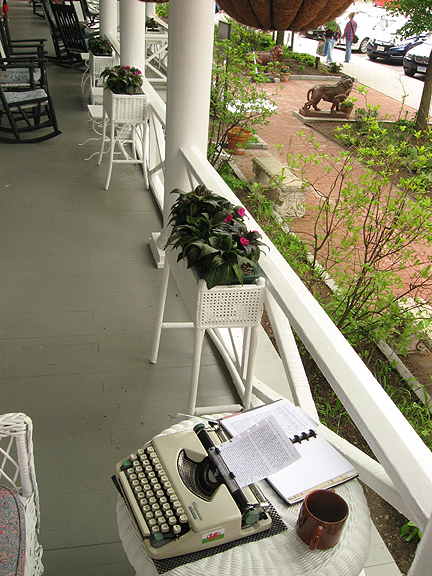
After moving all I could with my car and a rented van, I hired professional movers for the heavy boxes of books and the furniture, to complete the job. One of my former neighbors saw the big vehicle beeping its reverse motion, and asked me the obvious: “Moving day today?” “Better than that,” I replied, “it’s Liberation Day.” True to my word in these pages, my childhood Felix the Cat rode shotgun with me for one of the last carload runs across town. As promised, I found a better place. And I thanked my praying friends at the Saint Anthony Shrine, in Boston. The building here has a wide front porch that nobody else uses. It’s ideal for writing, studying, and fresh air; a great perch for increments of healing.


I’m reminded of the one episode, back in 2015, when I had to deal with a serious back injury. The severity of the pain was such that each motion I’d previously taken for granted was accompanied by wincing and gasping. I made as many medical and therapeutic appointments as possible, tenaciously intent to be done with pain so disruptive I had to tie my shoes while lying on my back. The healing process could not be hurried, so I was told, and took about two months. On the first day without any noticeable pain, I elatedly took a meandering bicycle ride. It was amazing to me. Naturally, I returned to taking my flexibility for granted, though since then I’ve become adept at healthful stretching- not to mention wise ways to move heavy objects! The new dwelling place is in an old, creaky building- but it’s tidy, quiet, and gets a lot of sunlight. My general sense is that of a restart. Between work commitments, I’m enjoying the porch as much as I can, and look forward to the more verdant months. Healing is taking time, but I know where all the totes are that house my writing materials. Everything is labeled and ready for use.

the final night in the compartment. of course I wrote about it.


Friday, December 25, 2020

why write


“Bet you’ve all got a story
You're just aching to tell.
Haven't we thrown our coinage
Down the wishing well?”


~ Bill Mallonee and the Vigilantes of Love, Doublecure


ask foundational questions

The year which is about to close out generates as much comment as emotion. During a recent radio interview for which the topic was journaling and letter writing, I talked about eagerly looking forward to the privilege of reflecting back about this current crisis in retrospect. This is to say when this plague is past. For the time being, and much of the last 10 months, I’ve continued writing, teaching remotely, and encouraging others to write their stories. Every person has volumes. Throughout the year, I’ve thankfully continued working at my employment- humble as it is- and in as much isolation as possible. Interspersed with my duties, whether on-site or in my apartment, my daily journaling also continues. I’ve noticed my written entries are much more detailed about the mundane than before. It’s surely related to the confinements of pandemic life. Although I’m staying afloat, it’s a desolate voyage. Perching to write last night, it amazed me that even amidst this time of exile there is still plenty to write about.

An old and affectionate ballad asks the pleasantly rhetorical question, “tell me why the stars do shine; tell me why the ivy twines?” The listener surely knows the answer, as these lines state what is mutually obvious, as sure as the ocean is blue. “Tell me,” I asked myself, “why do I write?” Well, the ocean is blue, the ivy twines; and as surely as I live and breathe, I write. Being in a much more pared-down life than before last March, the creature comforts are few and modest. But I make sure to write: this is a continuum that is always enjoyable, consoling, and vital. Neither a smoker nor a drinker, I do keep myself in good writing materials and strong coffee. These rank high among provisions. Especially now. Living and writing inextricably go together.

As I scribe my thoughts these days, usually between tasks, it is evident to me how trivial things are magnified while the wider world seems diminished. With all the necessary hygienic precautions and rules, there are no longer any spontaneous errands as before. Walks to the post office and grocery store trips have become equipped expeditions. What can’t be done or visited outnumbers what can be done or visited. At the same time, current events are brought very close- with scant positive news. Perceptions about proximity, distance, and time have been altered. All the more, writing is crucial as a balancing and restorative ingredient to my days. There is the action itself of physically setting down words on paper by hand, untethered from electronic media- and then there are the reasons for doing so. As with any creative art there are the physical actions of making, along with created content, and the work’s significance. It’s easy to take these things for granted, having committed to writing long ago (and photography much longer ago). Part of my stock-taking at the end of this difficult year is writing about why I write.


the invisible hand of providence


An easy and not altogether inaccurate answer for why I write is to say, “because I have plenty to say but I don’t wish to be tedious to those who know me.” Fine enough, though it isn’t really why I write. A person makes a mark on a page (or sculpts, composes, et cetera) in response to inner impulses strong enough to take some coordinated action. Indeed, the context for creative output is highly individualized. Throughout the decade during which I taught photography, I would say to the class that a photo image is the result of many intuitive decisions by the photographer. Such factors include vantage points, camera settings, composing what one has decided to include in the viewfinder, lighting, to name a few- and it all happens in fractions of seconds. The intentions behind the imagery are equally unique to the creative person. When I teach philosophy, I’m sure to point out the concepts of being and meaning as central to very many foundational questions.

In the spirit of the Advent season, I’m remembering how I’ve referred students to Blaise Pascal as having been solidly aware of the invisible hand of Divine providence. Agreeing with Pascal about this point, as well as that of openness to the serendipitous, I’ve learned not to lean too much on contrivance. The nature of discovery is surprise. Years ago while in art college, I strongly felt the need to read the Bible- in the vernacular. As a child in my religious instruction, I had to translate Hebrew into English; I wasn’t very good at it, and the reading was not smooth. With the High Holidays in season and feeling rather desolate, I went to the public library and borrowed a King James translation. Reading at night, after my schoolwork, I found all the familiar places and people from my childhood studies- but in refreshingly fluid English (even if it was rather Elizabethan).

Everything was linking together between ancient history, the traditions I had learned and practiced, and all the fascinating personalities. Then I arrived at a threshold in the form of a blank page and turned it, finding something I had never seen before, the New Testament. Suddenly the names were not familiar, but I continued reading. The words and events were compelling, haunting, and sweet to me. I felt the Spirit very naturally taking root, and what followed after some time was the strength of the message forcing the expansion of my ancestral religious perimeters. Embracing the gospel eventually ostracized me from my community and led to some extremely difficult years of rejection and alienation. Looking back, it is astonishing how I did not break under the strain. An old soul with a new faith. Studies, work ethics, new friends, a few great mentors, and opened spiritual horizons were just enough to start gathering some momentum for the long haul. Surely many ruts in the road; it’s never been easy, but such is the pilgrimage of trust. But the Rabbi of Nazareth taught that hard times are inevitable, yet at the same time wise words will providentially take shape from within: “By your perseverance you will gain your soul.”* I write because an unusual, irrepressible, and enduring message has been given to me.


living for the emergence


Advent represents as much about manifestation as about anticipation. The waiting is not passive. As with my native traditions, the observance lends itself to merging the historic and the symbolic. At the same time the defining spirit is a looking-forward, emphasized at the darkest stretch of the year. The turning of the season offers a chance to be inspired by the sheer passage of time, by the potential for transformation. Although journal writing is often the place for looking back to make sense of what was, and reflecting upon what is, the musing becomes an arena for ambition. In this sense, writing is aspiring. Just as I keep telling myself to keep on going while gaining context, I’m also writing ahead. The lines of my connected script date back to my first cursive loops at Public School Number 13, in New York City. (I’ve actually had the honor of visiting with the current and retired school principals at P.S. 13- even reading to them from my journal. It was a chance to express my gratitude, speaking this time as an adult with fellow adults- educators all.) Centuries before personal journal writing was popular, Quakers of all ages- women and men- were writing their reflections and impressions in diaries. Many of these journals survive to this day and are fascinating to read. The travels, perils, interactions, meditations, reminiscences, testimonies, and personal convictions represent the context of these driven individuals. Early on, Quakers believed their journals were continuations of the biblical book of the Acts of the Apostles. Good reading lightens the darkness, and so does upholding the writing torch. My inked and graphite loops and jots twine like the ivy, page after volume. And my written steps will find their way through this crucible of isolated exile when the storm passes by.


________________________

* Luke 21:19

Thursday, July 7, 2016

peaks and points


“The pageant of the river bank had marched steadily along,
unfolding itself in scene-pictures
that succeeded itself in stately procession.”


~ Kenneth Grahame, The Wind in the Willows.

Now returned from a retreat and back to the grind, as always I hope for the fresh inspiration to remain with me. My eight days in the Berkshires are now memories. Returning to work is necessary for the provision of sustenance. In a parallel sense, pausing the quotidian pace is essential for the spiritual health needed to endure. For those without the good fortune- or the monetary fortunes- for subsidized sabbaticals, there is the concept of a self-guided retreat. Through my most destitute, least compensated years, I’ve made sure to give myself occasional, modest, healthful changes of environment. After 22 years of making retreats, I’ve never once regretted any of my own imposed intermissions. No matter the season or situation, it’s been vital to pause repetitious routines, when possible; in recent years, that’s been about every six months. In an indirect way, personal retreats actually contribute to my employment productivity and my general perspective.


Without meaningful, edifying breaks, the years would roll all the more as seamless backdrops. Recalling my time in school (comprising some 40% of my life’s years), spans of days accumulated by units of academic terms and semesters. Afterwards, it startled me to notice how clumps of months quickly became revolving years. I’ve been interspersing as many of these as I can with pilgrimages and various scholarly, artistic sojourns. The many and colorful travels do stay with me; these are treasured chapters for which no bulleted résumé could encapsulate. Perhaps, someday, these salutary and thoughtful experiences will be well-regarded in a workplace; but that is not the purpose for spiritual growth and insight. Creativity and contemplation are worth too much to be subjected to the conditional and the fleeting. Being a lifelong artist, I’m long accustomed to maintaining an undergirding shadow-career that tunnels beneath the work that pays my bills (and permits me to make creative diversions). And that will have to do, as long as there is time and space to write.


Indeed, time and space to write can take various forms and quantities. The most vital ingredient in a creative pursuit is perseverance. If it is writing, the most important thing is to keep writing. Words must be assembled and recorded. Opportunities must be made, at every possible turn, to cultivate ideas. Ordinarily, my chances occur during early mornings, lunch breaks, and late at night. Weekends provide some oases, as well. Place can itself be a source of inspiration. Even the humblest in my neighborhood can go to the ocean’s edge. It is the way we can see a horizon, in a region of crags, hills, towns, and ridges. The Maine coast is not a place of wide, flat plains and straight roads. My home terrain has influenced my tastes for asymmetrical and meandering scenery. Vermont’s Green Mountains, and the landscape of my recent navigation in the Berkshires and along the Housatonic, are at once grand and intimate. In close proximity, the waterways manifest as river paths, streams, channels, passing under bridges, and inspiring lines on my pages.


The retreats would not avail much, without lived followthrough amidst the drudgery. Grim as it may sound, the fruits of the Spirit are meant to bloom and sustain in ungratifying places. Not that I go looking for inhospitable conditions. A disciplined soul is tested in situations of abasement and abounding alike. A lunch break’s writing, similar to a distant pilgrimage, can be an occasion for renewed strength. It is all in the stream of keeping vigil, all tributaries in the cause of continuity. In the historic definition, a pilgrimage is a great deal more than intentional travel to a sacred place and the time spent there. It is also the journey back. Surely, fresh after a mountaintop experience, the return trip does feel very different from the outbound. Refreshed perspective causes ordinary places and situations to look extraordinary. Even the first few days back at work have something of a novelty. The proving-grounds come later; they always do. I choose not to think about this during a retreat. Sufficient unto the day is the evil thereof.


Above: Red Lion Inn, Stockbridge, Massachusetts.
Below: rejuvenating coffee break, between workday shifts.


Since returning from the Berkshires, where I saw spring forests foresee summer, I’ve made sure to be outdoors as much as possible. Hiking in the proximate Maine woods, I make note of parts which are similar to the places of my Western Massachusetts immersion. Granted, the nearby Kennebec is vaster and more vigorous than the Housatonic, the smaller river is no less ancient and inviting. Within that latter aspect is the procession of Berkshire towns that follow the waterway. The natural and built places alike comprise the river’s character. Added to the equation is the context of my journey. I was there to be on retreat, to be among a monastic community of prayer, and to savour the surroundings. We can see our purposes in our intended destinations, and can derive strength as intention meets discovery. In its trail, in a river-like sense, there follows and flows the serendipitous. This would include people met in transit, with their words; suppers, roads, aromas, and artifacts. Like the allegorical Mr. Mole in The Wind in the Willows, “absorbed in the new scents, the sounds, and the sunlight.” The sojourn really has changed my perspective, and it’s a good thing I continued writing, recording thoughts, along the way.


notes in the Berkshires.


Red Lion Inn postscriptum


While staying at the fascinating Red Lion Inn, I noticed a wall-hanging (below) near the entrance to a parlor. It is filled with pencils, and is reminiscent of an old-fashioned workshop apron.


Friday, January 1, 2016

equipped for the new


"My pipe is out, my glass is dry;
My fire is almost ashes too;
But once again, before you go,
And I prepare to meet the New:
Old Year! a parting word that’s true,
For we’ve been comrades, you and I --
I thank God for each day of you;
There! bless you now! Old Year, good-bye!"


~ Robert W. Service, "The Passing of the Year."


An arduous year has concluded, making way for a new one. Although I speak in relation to the Western calendar, with weeks and months appearing as the dotted lines of municipal peripheries, there remains a sense of new frontiers. We may each mark the anniversaries of our personal milestones, ascribing meanings of our own. But with the prospect of a new year, I noticed time thresholds while routinely re-inking my pen. In this context, some of my everyday routines absorbed the marking of time passing.

In recent years, I have been profoundly engaged in a large project resulting from my rescuing of seventy years of newspaper photographic negatives, which I’ve been organizing and conserving into an exhaustive documentary archive. The trove of many hundreds of thousands of pieces of film had been destined for disposal- but that has surely been prevented. In the almost-daily pursuit of identification and indexing, I’ve been examining- and in a metaphorical sense, inhabiting- each of these images, one at a time, marking their eras, and travelling through the decades from the 1930s to the mid-2000s. As New Year’s Eve approached the present threshold of 2016, I catalogued June of 1954. Amidst descriptive work to index Memorial Day of 1954, the back of my thoughts began to perceive the close of 2015. Yesterday, while identifying the photo (below), of a Mr. Sampson opening his new grocery store in 1954, I mused at my light-table, and noticed the radiating pride of a family businessman. He was surely looking confidently toward the future.


With my 4x magnifier, I looked closer, and remarked at a gesture of eager preparedness: Mr. Sampson had no less than eight sharpened pencils in his tweed suit pocket, pointed up and at the ready. Hope sprung eternal in Mr. Sampson’s spring of 1954, and I am burrowing through the winter of 2015-2016 determined to be undaunted. It’s a new year. Sharpen the pencils, ink the pen, oil the typewriter carriage, take some deep fresh-air breaths, and persevere. Out with old; be equipped for the new.


Along with the grocery store photo, and numerous sundry group pictures from the society pages, I identified a Mr. Jacobsen (below) at his desk. It seemed insufficient to leave it at that; I enriched the finding aid (the archival term for a collections inventory) with an additional line about the table radio behind him, as well as the pencil. This is more than a portrait for a news item: he is assiduously at work. There are tasks to be completed, and he is ready!


Today, more than 61 years after the above photos were taken (and they haven’t seen the light of day since), I am gathering my forces to venture into 2016. Indeed, as I write this, I hope to encourage you in your future constructive pursuits. Remaining encouraged is essential.


Here’s to a New Year of growth and life-giving ventures.
Thank you to each of you, for reading and your encouragement!


~~~~~~~~~~~~~~~~~~~~

See also : Graphite Archive;

and Typosphere Cheer.


Monday, May 4, 2015

pencil pensive


“An observing spirit
can thus derive pleasure from the most
trivial circumstance.”


~ Thomas Cogan, Treatise on the Passions and Affections of the Mind.


familiar, yet anew


In this fledgling, burgeoning season yet untracked, I take up the pencil anew. Just as the approach of Labor Day weekend annually brings school beginnings past to mind, so late-April rain rekindles the sense of semester-end promise. Gradually, it is becoming easier to write outdoors. Lengthened days remind me to get out and away from walls and ceilings- when possible. Apparently there is life to be lived, aside from the constant dawn-to-dusk workday grind. As daunting as inertia can be, rote repetition of denial has its detriments. Self-limitation can become a debilitating habit. By recollection and writing, at least in spirit I can vault the fence. It does mean expending energy, for a measure of transcendent vigilance. But it’s worth it, and the alternatives would be still more regrettable.


Back when I had some schedule flexibility at my job, I’d take my coffee breaks outside- even in winter- as daily as I could. Occasionally this is still possible. My pocketable idea journals- after which I named this blog- have been constant companions for years. The musings and fragments are the ingredients for essays to be developed. Aperch on a public bench or at an outdoor café, I’d scratch down the date and time, then pencil some ruminating words beneath the quick heading, graphite today. Not exactly enough time for substantial stream-of-consciousness writing; perhaps more like rivulets. Such trivial habits create links that maintain the vital momentum of inquiry and ideas. Re-reading the lines and pages of these small books help me retrace my discoveries and thought processes- and at present I’m able to retrieve morsels of confidence to continue.


new season


At the season’s threshold, attending a baseball game, it was impressive to see the bright and well-tended grass on the field. The rest of Portland is still shaking off the ashen grit of a protracted winter. But the pleasant distraction of time measured out by innings has similarities with my writing intermissions: these microcosm journeys have lives of their own. Within the common threads are my pencilled notations. The intricacies of play-by-play baseball scoring are best expressed in sharp pencil. In the province of graphite, notations can be corrected and emphasized with the game’s progress. Causes to adapt a play’s documentation include a fielder’s choice, a passed ball mistaken as a wild pitch, a force-out, or a stolen base. Space needs to be made for pinch-hitters and relief pitchers. As umpires will occasionally amend a call, the erasable medium capably responds. To erase is human, indeed.


The materials and instruments of a craft are means toward ends. In their respective contexts of writing and photography, scribal and image-recording tools serve to record perceptions. In turn, recorded thoughts are elements with which creative works are constructed. Well-crafted tools can have their own intrinsic value as objects. Such extensions of our creative selves present inherent inspiration.


For the moment, on the topic of the humble pencil, I’ve long found this particular writing medium to be as patient as it is tactile. Following pensive spells of recollection- which are misinterpreted as stoppages- a pencil will not dry out and have to be re-inked, as is necessary for pens, nor will the display of text shut off, as it happens with computer screens. I prefer writing instruments that wait for me, as opposed to my having to compensate for syntactical dissonances in the tools. (Ponder that, during your next download, update, reboot, server failure, and virus scan.) With the pace- whether fast or slow- is the proprietary way a pencil changes while it is in use. A sharpened point broadens to a smooth chisel edge that mirrors the angle of the writer’s grasp. Similar to dip-pen writing, emphasized downstrokes reflect as bolder lines. With enough writing and sharpening, a pencil transforms into something weathered. Wood dissolves into shreds and sawdust, the eraser (if there was one to begin with) flattens, and its temporal life shortens as its stamped lettering disappears. Like nutrients, pencils are provisional- vehicles that are transformed en route to their intended purposes.


ideas and speculating


Through a meandering journey measured in jots, my pencilled notions represent various reaches. Sentences scratched in curved graphite parallel my often fractured prayers: constant and unvarnished. But these held thoughts are purposeful means toward ends. I develop ideas and observations by tracking and articulating them. Pilgrimage is surely a voyage of comprehension. In the 18th century, Thomas Cogan wrote voluminously about emotion and philosophical speculation, in his Treatise on the Passions and Affections of the Mind. He described our abilities to cultivate ideas as a testament to our existence, fascinated by the ways we know that we possess our ideas. Cogan describes an idea as follows, from vol.2, p.153:

“It is that wonderful something which pertains to the thinking principle, it is its exclusive property, is indicative of an awakened state of mind, and which the mind knows to exist with such an infallible certainty, that we consider the conscious possession of ideas, as the strongest evidence of our existence.”


Speaking for myself, not all my ideas are wonderful somethings, but wonder is surely a motivating ingredient. Writing, reviewing, and writing more ideas provides a continuum of recorded motion. Thoughts may be expressed into tactile and tangible lines in a notebook, for example. Instruments and surfaces for our ideas have their primary qualities- in this instance, the intrinsic properties of the physical writing tools. From there, an individual’s creative discernment can derive secondary qualities- impressions- based upon practice and experience. Strong sunlight upon writing-paper that reflects the warm end of the light spectrum; the sound of pencil-point upon the surface; the aroma of sharpened wood; the sense and warp of paper humidified by ocean winds.


During one of my always-enlightening lunches with an elderly Chinese colleague, we talked about classical “thinking gestures.” Comparing generalities and tendencies of East and West, we noted the tradition exemplified in Auguste Rodin’s Thinker, with head-holding gesture. My friend described the Asian gesture of a “thinking philosopher” as having folded hands across one’s torso. This brought up how western spiritual practice has tended to emphasize the mind, compared to eastern practice emphasizing the heart. Even the classic Eastern Christian teaching about contemplation has been to “descend into the heart” so as to make ascent.


Above: Rodin's Thinker;
Below: Korean Scholar, 16th century.


One day last week, having successfully stolen away to read and write, I suddenly noticed my own gesture while trying to fathom a very complex text. My hand tends to prop my forehead, while holding a pencil. Comprehension may require writing down something! Hence the digestion by the soul, via the craftsman’s motion. Pursuing the essence of the sacred draws the writing outward and onward, often drawing the map while the exploration is in progress. Realizing this, I gratefully look ahead to more graphite todays.