Showing posts with label fountain pens. Show all posts

Sunday, February 11, 2024

imagination

“For me, reason is the natural organ of truth;
but imagination is the organ of meaning.
Imagination, producing new metaphors or revivifying old,
is not the cause of truth, but its condition.
It is, I confess, undeniable that such a view indirectly
implies a kind of truth or rightness in the imagination itself.”


~ C.S. Lewis, Bluspels and Flalansferes


Giving lectures and reading to audiences have evolved into very comfortable and pleasant experiences. My teaching background certainly helps, but knowing my topics frees me from excessive rigidity. Obviously, it all depends upon the audience, and no two groups are ever alike. A recent presentation about archives lent itself especially well to some storytelling. On that particular afternoon, during a dreary winter day, I had brought out examples of treasures such as rare books, maps, prints, and city directories. These types of artifacts are especially conducive to time-traveling musings. I’m surely with the patrons, students, and all the curious- as we all marvel at photographs of specific places then-and-now, noticing the changes.


To do justice to my occupation, I taught myself about when certain various prominent buildings were built, extended, or demolished. Such facts continue to be invaluable for identifying undated imagery and supporting researchers. Years ago while sleuthing out the sites of extinct streets, writing narrative essays with an expression I coined: “ghost streets.” This is to say buried thoroughfares that are gone without a trace. These have been very popular. In a juxtaposition of past and present, cheering an audience on an especially damp day, I made reference to how the local art college is currently in a former department store building constructed in 1904. The store was called Porteous, Mitchell, and Braun (that first name is pronounced “POHR-tchuss”).

now that's a proper pen department


“Now imagine,” I offered to the group, pointing to my left, “walking up Congress Street, stepping inside that big building at number 522, and suddenly noticing bright chandeliers, colorful merchandise, the din of chatting salespeople and customers above the muffled piano music, and the aromas of cosmetics and perfumes.” There followed memories of people among my audience, chiming in with their own recollections. I held up a Porteous ad for Esterbrook fountain pens, printed from a 1952 Christmas season issue of the Portland Evening Express (which gave me a chance to explain the microfilmed newspaper collection). I am often in the role of informing patrons about what was, en route to explaining what is.
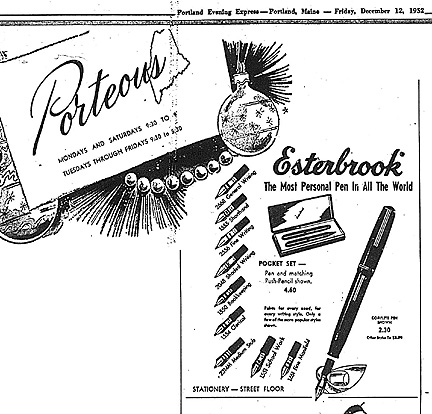

somehow, all I needed was the advertisement, and look what I brought back from my time travel errand.


Early 20th century archival theorist Sir Hilary Jenkinson taught that archivists do best to read the documents in their care, and to be acquainted with the contents. I’ve personally seen this to be an extremely useful idea, especially when it comes to the level of service I can provide, and how I draw together sources and researchers. It’s really about recognition and making connections. Like compassion, these are uniquely human abilities. I’ve been studying the materials, making notes, and committing many things to practical memory. Indeed, this has become the less-traveled road, but the relational touch is surely the most meaningful. Just as people are souls, archives are recorded activities that attest. Through the years of preserving and providing public access to archival material, by default I’ve also had innumerable occasions to be acquainted with many of the people who inquire and use these artifacts. Often, there are patrons who will show up daily for a stretch of time, feverishly nibbling away pursuing evidence of parts of their personal histories. I witness all ages seeking the past, looking for understanding and purpose. I’m no different. Each request is respected, never derided. So many among us simply want to know, then let the witnessing archivist be an eloquent accompanist. With the philosopher Blaise Pascal who pondered in writing: “I am astonished at being here rather than there; for there is no reason why here rather than there, why now rather than then.” Inevitably, archives are facts that can enchant the imagination. Once again, and along with my students and patrons, I’m affected, too. Frankly, I could never figure out why other archivists don’t write about their metaphysical experiences. Manuscripts, images, maps, ships’ logs, and even ledgers present much more than what superficially meets the eye. And then there are the interactive discoveries for researchers interpreting the records.

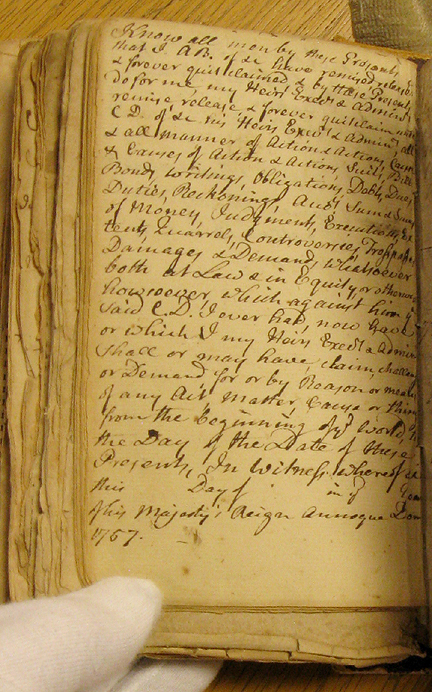

The preservation of the documental record is meant to inform the panoramas between planning ahead, as well as the fleshing out of historiography. Narratives abound in manuscripts, revealing human activities and communications. Indeed, we can understand the popularity of historic novels! And then there is reverie. Serving the public for many years, once in a while I’m asked by patrons marveling over century-old photographs of streets crowded with pedestrians and trolley cars, “Why can’t things go back to the way they were?” Many, many more people wish this without admitting so much. We imagine with our hopes; speaking as a New Englander in the local parlance: “So don’t I.”

From pinched and barricaded confines, imagination insistently pries at the horizons. Ambition is vital. Don’t expect anyone to remind you to flex your hopeful imaginings; we must know to exhort ourselves. Speaking for myself, I write my wishes and prayers as journal entries, often scribing them amidst woeful environments. Remember to dream forward: observe and read between the lines. What we see is not all there is. Our conditioned and compromised cultures reduce our palates to bland, surface bluntness. It is for us to challenge ourselves to think beyond what is “at face,” and cultivate our intellects. We navigate societies of documented hard numbers and literal databases, but the human-voiced manuscripts invite us into the poetry of metaphor. When I managed and facilitated the reference library in a Catholic college, I read the memoir of St. John XXIII in which he wrote of himself, “I am a songbird perched in thorns.” Such a powerful metaphor has never left my thoughts, and I’ve invoked it numerous times since.


The spheres of metaphor and allegory have always provided places of habitation for me, though perceiving through these lexicons can be a two-edged sword when I have to creatively translate for those who cannot interpret subtlety. Fulton Sheen once said, “Introspection requires a lot of humility;” helpful words for speaker and listener alike. I’ll occasionally use archives as metaphor with my philosophy students. Wonderfully diverse as they’ve always been, they refreshingly think and speak at multiple levels. Archival work is entwined with axiological applications- as principles of origin, function, and value are integral to stewardship. Examples help provide crossroads for abstraction and practicality to meet. These also provide runways for metaphysical flights of fancy. Pointing to historic maps and photographs, I’ll ask, “Do places have intrinsic memories?” We’d like to think so. In my helpless insomnia, I imagine being cradled on the waves, aboard a peaceful vessel. In my curatorial adventures, I found documentation from 1948 about a Friend Ship that was sponsored by the Maine Rotary, which brought 107 cargo tons of food and clothing to France. The ship, built in Maine, was called the Saint Patrick, and it crossed the Atlantic in eleven days. Pleasant thoughts of calm seas and noble ambitions. Keep on visualizing better times. As confining situations constrict, my imaginings of comforts, vastness, and possibilities intensify as antidotes. I’d like to think there is still time for improvement.
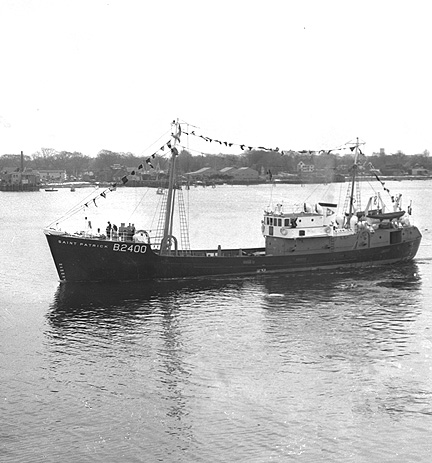
the Saint Patrick sailing from Portland, Maine to Nantes, France


Thursday, August 8, 2019

open windows


“You must know that if there are ruts,
you must jump your wheels out of them,
and if there is no language in which to reach
your audience, you must invent one.”


~ Austin Marsden Farrer, from Called to be Saints.


graphite


Pencil journals are for my flow of ideas, and the more pocketable, the better. The smallest Moleskine notebooks are very useful for this. I've been using their Boston themed journals, adding my own mementos to make these like scrapbooks.


ink


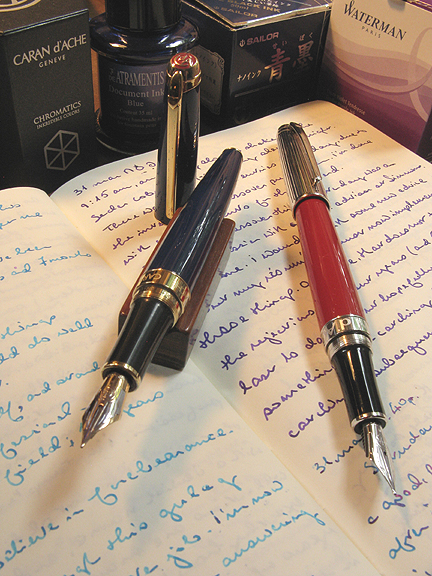
My daily journals must be free of lines- completely blank. My mother taught me how to write before I learned in school; no guidelines or grids, thank you very much! My taste for fountain pens is thanks to my father. There are many good pens out there- such as Waterman, Dupont, Diplomat, and Cross, but for me there's nothing quite as smooth and solid as a Caran d'Ache.
Many good inks, too- such as Pelikan, Mont Blanc, Monteverde, Diamine, and- yes- Caran d'Ache.


Ballpoints are great for writing aboard jostling buses and trains, when I have to lean more into the notebooks. Waterman and Diplomat make nice ballpoints, but for many years Ballograf has been tops for me. The designer of these invented the push-button pen, and he also designed the pens used by astronauts in space. They are made in Sweden, and I bought the set in this photo in Norway. I use the .5 mechanical pencil for marginal notes.


typewriting


As surely as I am my father's son, I love a good, dependable portable typewriter that can be taken anywhere. Nothing fits the bill quite like an Olympia. Durable and precise. I made the typecast pages above on a cursive-writing Olympia SM9. I do a lot of my writing on disc-bind paper, which snaps into Levenger binders. I've found this to be a great way to journal, and these items are easy to travel with. In the photo below, which I took in the Boston Public Library courtyard, you can see one of the Levenger binders decorated with a pencil motif!


notes

A bit of the creative process: Here is the outline I wrote- at the Weston Priory- en route to the essay, "before us." The finished essay followed this sequence. The important thing was to write this down while I had the concept in mind.


The poem, "so they say" was sketched out in my graphite journal. I made many changes, based on how it sounded when I'd read it aloud. These pencil notebooks are ideal for designing my essays and collecting additional thoughts.


____________________________________________


Tuesday, November 29, 2011

der blaue reiter


“Blue champagne
Purple shadows and blue champagne
With the echoes that still remain
I keep a blue rendezvous.”

~ The Manhattan Transfer, Blue Champagne


journey and journal

Gratitude increases with accumulated mileage, as my travels are accompanied by writing. Images and words gladly correspond with places visited. And I try to include sites that inspire the exploration of ideas, paralleling the places visited. The written continuum of journals provides a paper playing-field for the recording of locations, events, and gleaned words, drawn together from immediate environments. Like photo motifs and camera, wise words received require ready writing materials for their recording. Viewing errand as adventure provides an antidote to sameness. “Every day is a mini-project,” my father likes to say. Years ago, an elderly co-worker at a night-shift job I had used to tell me to vary my routes to and from work- to keep it interesting. My grandmother advised that I eat a variety of foods, “otherwise your intestines will get bored.” Such snapshots are enshrined in writing, woven through journeys of streets, workplaces, mountains, waterways, shops, and kitchens alike. Documentation becomes the abiding record of the journey.


discovery and treasure

Discoveries and treasures are authenticated by words and images. They are joined to our living histories. Collected gems remind us of where we’ve sojourned. And the returning individual is always- even subtly- changed by the travel, however humble it may have been. Ah, but to embark upon a journey of taking pictures and taking notes, some preparation is needed. Depending upon the extent and mode of transit, basics include notebook, pencil, pen, and camera. Then there are peripheral reinforcements such as extra ink, a sharpener, a tripod, a spare ribbon- when a typewriter is along for the ride. A few books, too: with every retreat, I bring The Cloud of Unknowing. When writing ideas are jumbled, that means it’s time to read. If I’ve just begun a new journal, I bring along the previously-filled volume. Our own words can also be worthy companions. A portable book or two and a pocketable Bible go with every adventure- even an average workday. This is simply to be prepared; provisions must not anchor. After all, some room must be left available for found treasure.


commerce and collegiality :

joon of new york


Although I brought sufficient sustenance for the journey, an enjoyable side of traveling is the ability to try new wares. New York has some great sources for the adventurous writer. In this era of anonymity, with the banality of big-box, it is refreshing and heartening to listen to experts in their retail fields knowledgeably discuss their wares.


My friend James works with the great folks at Joon of New York. Recently, James and I have been animatedly chatting about... ink. Yes, ink. But James’ descriptions of inks resemble those of a wine connoisseur. Our common ground is in the use of the tools- and our love of the written word. After regaling James about blue inks I’ve found through my travels, he offered some suggestions of his own. Blue shows especially well against warm-toned paper (just as sepia does with cooler and whiter tints). The boldest blue inks tend to be too thick for fountain pen use, and thus I’ve found two favorites for dip-pen writing: Daler-Rowney indigo- which I bought in Canada, and Winsor & Newton royal blue- from Bob Slate’s in Cambridge. Both are perfectly opaque, but their content would destroy the conduits of pens with plumbing. Fountain pen blue inks look weak and watery, compared to the pigmented calligraphy inks, and the best compromise I’d found was Aurora’s blue- bought in Maine. James patiently and jovially brought out a variety of blue inks, referring to saturation and boldness.

James helping me choose the right blue ink, using a dip pen.


Displays at Joon for Faber-Castell (note their salute to their graphite roots) above, and for Caran d'Ache below. Joon has been my resource for the Caran d'Ache fountain pens I use daily.


Sampling the Mont Blanc royal blue, which has the solidity of Aurora- though nicely on the violet side, I settled on this as the found treasure for the road. The moment James brought out the Mont Blanc bottle, I immediately thought of the Rocher Percé, which is in the peninsula region in Canada called La Gaspésie.


Above: Mont Blanc ink bottle.
Below: the massive Percé rock in Canada. To get a sense of how enormous the rock formation is, have a look at the photo I took below my long shot immediately below. I took the bottom photo during low tide; notice how tiny the people look!


___________________________________________________


arthur brown


Later in the week, I stopped in at Arthur Brown- another favorite purveyor that has kept me armed for the battle for a long time. Art Brown has a dizzying variety of journals- along with writing and drawing materials. No less than three of their brilliant salesmen brought out looseleaf books of ink sample swatches, and we pleasantly talked shop as though we were in a hardware store in New England. One of the gentlemen talked about the coverage of types of inks. “You can’t really compare pigmented calligraphy ink to fountain pen ink,” he observed. “Imagine pouring toothpaste out of a drinking glass, or dispensing water from a toothpaste tube.” He gave me some great pointers, but they will wait until I’ve emptied my new supply of Mont Blanc. Indeed, as the abundant opportunity presented itself, I purchased a few journals, adding to my found treasure for the road.


libraries and museums

Above: window at the Metropolitan Museum of Art.
Below: Tiffany ink-wells (and yes, that's a gold pen) at the "Met."


Beyond sources for artisans’ materials, large cities offer immortal works of art to reward the souls that seek them out. For the purpose of this writing topic, it will have to suffice to mention that sharing the Metropolitan Museum with ancient manuscripts and artifacts are enormous chambers filled with classical paintings, sculptures, and numerous extended structures to house the best-of-the-best of fine art. I call the Met “the Louvre of the western hemisphere,” and treat it as such: visits are targeted to specific sections, thus avoiding sensory-overload. Amazement remains inevitable, particularly among the Rembrandts, El Grecos, and Holbeins.


pierpont morgan library


Downtown, and a few blocks east of the New York Public Library, is the stately Pierpont Morgan Library. The Morgan has always been my favorite New York museum, with memorable shows such as Beatrix Potter’s original illustrations, Degas’ and Ingres’ sketches, music manuscripts of the great composers (including the original handwritten Messiah of George Frederick Handel), and their unforgettable exhibit of Antoine de Saint-Exupéry’s manuscript- with the watercolor illustrations- of Le Petit Prince. My introduction to the Morgan was through their William Henry Fox-Talbot show; with wide-eyes, I marveled at the glass-topped table displays of the first-ever photo negatives with their companion paper contact prints. Their collections, largely focused on paper-based works pre-1800, include medieval illuminated books and- not one, but three Gutenberg Bibles (1455).


Above: The East Room, (C)by the Pierpont Morgan Library & Museum, used with their kind permission.

Below: Since photography is not permitted inside the Morgan, I sketched Charles Dickens' travelling ink well. The ink well is included in one of their current exhibitions called "Dickens at 200," which is filled with manuscripts. The ink well has a glass chamber with a silver lid, and it pivots into a wood frame.


new york public library


The famous New York Public Library, guarded by sculpted lions, includes vast research collections, great reading rooms, and an unusual assemblage (2 photos down) of pencils and typed pages. Now there's a thought!


The front courtyard of the NYPL is a great writing-perch. I noticed how my sentiments are shared by others.


waystations

More writers- this time at the Caffe Reggio, in Greenwich Village. Indeed, I made the opportunity (below), with my Caran d'Ache "Ecridor" filled with Mont Blanc ink.


Reminding us that we are always upon our way, whether close to home or far afield, waystations are integral to the voyage. The French word relais explains this well, referring to a temporary place of rest. “Une étape entre deux points,” is a stage (as in a milestone, or a landmark, or a stopping-place) between any two points. If conversations, exhibits, and long walks represent reading, the waystations represent writing the connections between jots. We determine our relais, and- I hope- when they are favorable or necessary. These are the counter-forms among our typographic symbols. When the occasion arises that an étape can be along 5th Avenue, I can gladly recall such places when my midweek coffee breaks take place on the Portland waterfront. This surely works vice-versa, as my senses longed for Maine while I peered out for water views between the office buildings in Manhattan. With treasures to write with and upon, there is a winter for me to eagerly embark upon- and more anticipated travels.


(a little further reading, "blue ink and blueberries.")