Saturday, October 29, 2016

old turtle


“There is no creativity in fear.”

~ Raymond Reitze (“Old Turtle”), during a conversation, 23 Sept. 2016.


For a public speaker, I have never heard such an unforced, subdued voice. Mr. Raymond Reitze speaks definitively and with authority- but if you don’t sit close, you’ll miss most of his subtle words, even with a microphone. Recently, I heard him lecture and respond to audience questions, for the 3rd time in 3 years, at Maine’s annual Common Ground Fair. As usual, the audience of attendees at his talk filled from the front rows. The general listening posture was that of a collective forward leaning, to catch Reitze’s observations. The fair itself is an extraordinary event, now 40 years running, sponsored by the Maine Organic Farmers and Gardeners Association. The fair has surely seen these pages before. All agricultural and crafts exhibitors emphasize respect for the natural environment and sustainable living. Among the livestock and land-cultivation demonstrations are traditional crafts workshops, folk music, and lectures. And amidst the speakers in fairgrounds areas such as the social action tent, and the whole life section, Ray Reitze has come to be a beloved fixture at the fair.


Ray is best known in his roles as Registered Master Maine Guide, and as teacher of philosophy. He is originally from a farming region west of Portland, in southern Maine- and lives in central Maine, operating a lodge since 1988 called the Earthways School of Wilderness Living. His vast experiences as an outdoorsman, thinker, Vietnam War veteran, instructor, and admirer of creation undergird his softly measured words. The training process for a Maine Guide is considered the most rigorous and difficult in the U.S. The Maine wilderness and inland waterways are heavily-forested and difficult to navigate. Maine Guides are qualified to lead others through the Maine woods. Ray is an expert canoeist, and received his name Old Turtle from a Micmac elder and mentor. The Micmac and Maliseet are among the first nations of much of Maine’s land. Years ago, I was told by Micmac in neighboring New Brunswick, Canada that they are popularly considered the inventors of the canoe.


Having met and listened to Old Turtle three times, I’ve glanced back at the notes I’ve taken in my journals. Of course I take notes! In the stream of writing experiences and insights, there is always room to add the words and ideas in my midst. Journals may begin as real-time recorded observations, but they may serve well as personal historic archives.


In 2014, when I first met Old Turtle, his topic was the inward journey to growth that bears fruit in the decisions we make and the good we can provide. He drew a picture of a tree, and repeatedly referred to it as a symbol of life. Pointing to the roots, he said that a life of compassionate love must rise up from the root. Too often, he said, the “top tier,” the outer branches of physical life become our directing influences, taking the place of the human heart. He emphasized that each person needs to know themselves: “Realize who you are, what you are, and where you are. Ask yourself about what motivates you. Use the realization, and then dream.” Speaking about hopefulness from his vernacular, he encouraged all of us to, “see your way through the necessary hardships. If you sense fear, stop and set up camp; then proceed freely without worrying about success.” From this context, he quoted a biblical verse from John 14 about living a Christlike life, “I tell you, whoever believes in me will do the works I have been doing, and they will do even greater things than these,” reminding us that we are not alone, and that we must “expand our energies like a big, spreading tree.”
My rendition of Old Turtle's tree picture.


2015


In 2015, upon entry at the fair, I made sure to direct my steps early to Old Turtle’s tent. His themes centered around living conscientiously. By using care in our thoughts, we can guard against destructive attitudes. “The mind doesn’t know how to rest,” he offered, “we draw to us what we think, and become what we do.” By focusing upon generosity and its ramifications, we can be present to those around us. “We are souls,” said Old Turtle, “and our life is our earthly expression.” Sounding as an environmentalist, he emphasized that we do not fully live life by ourselves, but with community and in community. By removing a sense of resistance from our perspectives, we become better able to propagate kindness, and to “say ‘no’ to what is against your conscience.” Old Turtle laces his talks with stories about his wilderness experiences- and his homsepun adventures. Setbacks are explained through a colorful story about baking burnt cakes, one after another, until he got everything correct. But he loved the burnt cakes best. From there, he told an amusing story about helping a neighbor fix a flat tire, and what a good time they had. “Celebrate the burnt cake,” said Old Turtle, “because those errors move us toward perfection.” I began to recognize an Old Turtleness in his comment: “Don’t grieve mistakes, just give it another whirl.” But he is quite serious, adding that fear creates reaction, but love creates action.

2016


This time (2016), about 5 weeks ago, with Old Turtle at the top of my list of Common Ground Fair musts, I squeezed into the crowded tent to hear him speak about “the universe within.” He began with “all that lives in the universe is inside a soul.” Of course, this brought to mind the Gospel passage from Luke 17, “They can't say, 'Here it is!' or 'There it is!' You see, the kingdom of God is within you." Old Turtle admirably juggles his abstract metaphors with his earthly stories. In the same breath, he said, “Get out of your head and into your heart; quiet the mind,” and “what have you got going? What do you want to do- who and what do you want to be?” After saying, “much of our world works on the principle of resistance,” he used electronics and internal combustion engines as examples. He returned several times to the vital balance between head and heart. “The heart directs, and the mind facilitates.” Admirably positive, he continues to say that “experiences of setbacks can become opportunities.” I needed to hear that. After his talk, I asked Old Turtle for some advice about setbacks of my own. Talking about job-market rejections and my struggles to stay positive, he recognized how little is actually in the power of a job-hunter. His suggestions included creating some constructive habits, and having confidence in my abilities. “Ego is what feels rejected,” said Old Turtle, “You have to believe you are the best person for the job.” From there, he said, “there is no creativity in fear.” After recounting a memory about the Micmac elder he called Grandfather, he remarked that life is filled with stories. Using imagery from his decades of long-distance canoeing adventures, Old Turtle said, “We stretch each other’s strength, and we make progress together.” Instead of focusing on problems, focus on wellness and wellness will take over. These are among the many and understated gems from listening to Old Turtle.


As Mr. Reitze, also known as Old Turtle, speaks of those he has learned from, it is easy to see that many learn from him and still more consider him a mentor. In these times, a wise, gentle, respectful voice is all the more welcome. Old Turtle likes to remind us to slow down, take stock, and “get comfortable with what you know.” Listen to the eloquence of the woods. Souls like Old Turtle invite us to think, to see ordinary as extraordinary. Philosophical insights are to be found in stories about loons, the northern lights, fishing, and digging farm trenches. That pleasant, humorous, gentle presence compels. I’m reminded that a life of eclectic influences and experiences can dovetail into one integrated journey.

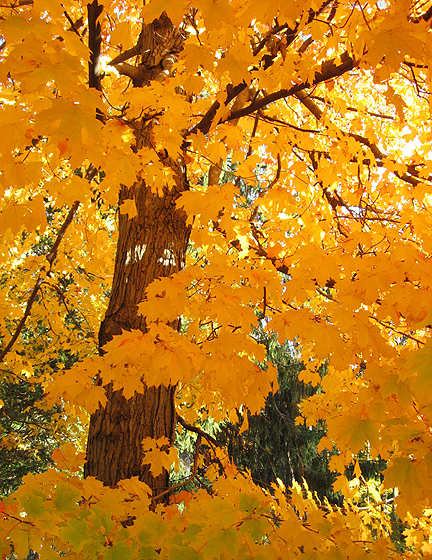


Now traversing the heart of autumn, with noticeably shorter days and colder air, the colors and balmy sweetgrass air of the Common Ground Fair go with me on the winterbound trail. Into the hunkered dormancy of cold months, during which I must continue working as diligently as usual, I’ll have words like Old Turtle’s with me. That elderly and soft voice that describes his memories of his grandfather surfacing when he laces up his snowshoes, reminds me of how I think of my father when I hold doors open for strangers. Like me, Old Turtle likes watching a good snowstorm and how the trees react. His steps connect snowbound shelters, mine connect city streets, and we navigate our respective regions of Maine. Old Turtle teaches us to be relentlessly grateful. When you think you’re too busy, he said, stop and smell the roses. “Stop and look at something beautiful. Just admire the beauty in what you’re seeing. Then go on your way. Stop again and admire... just simple admiration.”


Above: Poetry Grove, Common Ground Fair- Unity, Maine.
Below: A visitor during my writing.


Wednesday, September 7, 2016

sacred ground


“No cloister rivals with the open forest,
not only for bringing absolute peace and calm
to the disillusioned heart, but for looking up to God
with eyes that seek beyond the moving tree-tops.”


~ Jan van Ruysbroeck (14th C.)


asbury grove


Recently, I had the fortunate opportunity to spend a peaceful week in the wooded solitude of Essex County, Massachusetts. The generous invitation came from a friend who owns a small cottage at the edge of Asbury Grove. The rear windows of the cottage face approximately 10,000 acres of forests and ponds between Hamilton and Topsfield. One of my favorite aspects about coastal New England is how the Atlantic meets with forests of pines and maples. Asbury Grove is in the Cape Ann region, northeast of Boston, and at the southern waters of the Gulf of Maine. The village community dates back to the mid-19th century, though amidst settlements from the early 1600s. “The Grove” has its roots in the camp meeting movement within the Methodist church, and the community continues as such- though without denominational restriction. Asbury Grove is a living, historic site, including a chapel, library, social halls, a large tabernacle, and an outdoor sanctuary for community vespers. Every mid-summer, there is a week-long Camp Meeting of speakers and concerts. I arrived as the large meetings concluded and the Grove returned to its calm.


retreat

Exploring some new surroundings, in the context of personal retreat, is always enjoyable. In these stressed and unstable times, my steps are puddle-jumps between pauses for respite. Changing my environment, even if it’s barely 85 miles from home, is enough to recharge- especially if the destination is one of good company and healthful solitude.


The closer I navigated my way to the Grove, the narrower and more wooded the roads became. That’s a good sign. My last road on the way took a few sharp turns, before tunneling through intertwining tall trees. My abode for the week was a good fit, being at the forested edge of the Grove, providing enough solitude yet still moored to the community. The cottage has the look of a gingerbread house, with the basics for washing, cooking, and repose. I had to traverse sideways through the little doorway. The place was cozy and quiet by day, with vigorous accompaniments of crickets and owls by night. I got my wish of a good rainstorm midweek, and savored the sounds of a sheltered pelting.


cape ann


The best retreats include some wandering along paths and lanes, to accompany wondering musings. Taking to the circuitous roads of Cape Ann, I enjoyed loops of meandering lattices between small towns. From the Cape’s outer reach in Rockport, I navigated back to the Grove through Manchester-by-the-Sea, and Wenham- or through Ipswich. Between Rockport and Manchester is the old, famed fishing town of Gloucester.


Above: Memorial, in Gloucester.
Below two: Hammond Castle, Gloucester.


When a Mainer travels in Massachusetts, there is a combination of the sojourner’s admiration of difference, with a great sense of familiarity. My instincts understood the unmarked roads, and my tastes were at home with the pleasantly chatty greetings, strong coffee, and the malt vinegar on my fish and chips. I’d say that to really prize New England, it would help if you like things old-fashioned, such as drive-ins and railroad-car diners, grinders and moxie frappes, creaky houses and covered bridges, century-old ballparks, Shakers, camp meetings, and general asymmetry. If you don’t dare, as we say, well then you dassn’t.

A perfect coffee at Zumi's, in Ipswich.


light and air of late-summer

At one of the outdoor prayer gatherings, I met a fellow who is a 3rd generation resident of the Asbury Grove community. He recounted some regional history among his very interesting recollections, and introduced me to another elder gentleman who later concluded the meeting with an eloquently-worded impromptu prayer. From the tranquil woods near South Hamilton, the older man prayed for refugees, for children, and in his familiarly-accented voice, for the Grove.

With this sojourn now in the recent past, the late-summer is now evident. With the relief of cooler temperatures, the less-pleasant turbulence of ragweed pollen follows. But it’s that time of the year; the time that still reminds me of new school years and beginnings- even to this day. A great reward for graduates is to be able to continue savoring September and October as summer’s extra innings. Alas, the full time worker’s life is not divided into semesters or seasons, but I can resume seeking out retreats and sacred groves.


_______________________________

postscriptum

Readers may recall my spring sojourn in the Berkshires, which serendipitously paralleled reading the adventure story, The Wind in the Willows. Massachusetts landmarks had similar names to those of the story, as I journeyed along the Housatonic River. To my surprise on Cape Ann, at the far opposite end of the state, I stumbled over a bookstore called Toad Hall!


Wednesday, August 10, 2016

solidity in the liminal


“The greatest forces lie in the region of the uncomprehended.”

~ George MacDonald, A Dish of Orts.


1

We are constantly reminded about the persistent certainty of change. This is a subject manifesting in such popular forms as our music and our aphorisms. All of that acknowledged wisdom still cannot completely convince us to count on the reliability of transition. A living human, body and soul, is in perpetual motion. As we live, we dwell upon moving surfaces. With a corner-of-the eye awareness, daily routines are repeated in a temporal context. The fluidity of time occurs to us when our continuities are disrupted. A building we always knew is torn down, a business we counted upon for years dissolves, people we long valued are suddenly absent, a protracted succession of work days or schooldays conclude. The passage of time bewilders and shocks. It’s as though time suddenly lurched forward, after a lengthy spell of stillness. But the hours and days have always been moving, all in the same increments. Yet there is ever an insistence upon solidity, upon predictability in the acknowledged provisional. The trick is to live a wise dynamic, even a comfortable one, in temporal conditions. The length and breadth of liminal space cannot be determined. Temporary can last a long time.


2

As technologies continue evolving, more conveniences and tabulations are connected to our tasks. The mundane and transitory aspects of communication, travel, and commerce become increasingly easier, as well as increasingly monitored and measured. Popular corporate culture obsesses about fickle figures known as metrics. Ease and access are as phenomenal as they are potentially impersonal. The universality of immediacy is really incredible, such that a few undercurrents counteract, by seeking to “unplug” the pace. Recently, on a Boston-bound train, I sat across the aisle from a passenger with two restless young children. Trying to calm down the squirmier among them, the woman spoke in impressively adult tones, “now you need to be patient.” The child replied with a memorable, “but I don’ waaaaanna be patient!” Who does? But we have to be.


If only the cherished could be held in place, and only the detriments be discarded. We would rather not view things and people we love as temporal. At the same time, we wince and want the things we dislike to go away fast- as in right now (this takes patience). All reside in the same time measurement, and unfortunately what we love is moving along and potentially away from us at the same rate as the unwelcome abiding of what we dislike. But then, we are each in motion, too. Evidently, I have something in common with the reluctant child on the train.


A fond memory recalls a simple, yet memorably savory meal I had when I was 17. It was in Paris, and I had spent a day on one of my many photographing ventures. Realizing how hungry I was, I looked for an appealing eatery that I could afford. Stumbling into a little cavern appropriately called Le Clos des Bernardins, I saw that I had just enough money for a salad. Well, the waiter brought me a wide plate that was richly adorned with tomatoes, cucumbers, peppers, and vinaigrette on palm-like chicory greens arranged to point outward like sun rays. At the center of the salad was a warmed morsel of goat cheese. The colors, textures, and tastes were immediately striking, and I did all I could to eat civilly and slowly- albeit through tenacious hunger. I remember telling myself to savor this special food, and that I would momentarily stop to put down the silverware and look around the arched little dining room. I treasured every bite, and after gratefully paying the waiter what I had, I equally savored my slowed steps across the Latin Quarter. Even back then, I knew this was something to remember. What is purposed to last about a beautiful event cannot be the perishable ingredients, but rather the complete impression. Like flowers, a delectable meal is not meant to last.


3


Amidst the temporal, there abides a universal thirst for permanence. I strongly doubt there is anyone that doesn’t wish for something in life to last forever. It could be a beloved person, a situation or place, or a slice of time preserved only by memory. I remember my 13-year-old self at the end of the summer camp season, being very sad at the prospect of leaving many new friends, and returning to the bad old city. A bigger kid put an arm on my shoulder, trying to console me. He was probably a ripe old 15, and he said, “come on, good times don’t last forever.” In retrospect, that’s a rather grim pronouncement for an adolescent to utter to another. But it’s also an acknowledgment of impermanence. Summers do inevitably wind down. We begin school so that we can graduate. The optimist’s comprehension is that there will be more good times to follow, and it’s good to expect them.


Because of the work I’ve been doing for the better part of two decades, the word preservation is in my daily parlance. Archivists also want things to last forever. In my field, we use terms like permanence, longterm keeping, and conservation grade. We confer at length about best practices, formatted backups, and disaster preparedness. Of course, we must work to these ends; that is central to our professional stewardship and the common mission to preserve and provide access. We look ahead and we look back. Consider the historic materials and landmarks reaching us today from great spans of time ago. I type these words from atop the Boston Athenaeum, whose foundation dates back to the late 1600s. How will these places look, three centuries from now? Many of us, regardless of our work, have a personal awareness of preservation. The mindset says, “good things should last forever.” But we are striving to make things permanently endure in a temporal context. Our predecessors have passed their torches to us, and they may have also thought of the paradox of permanence in the provisional. We know that we do and see things that are momentary, but we proceed with a confident sense of preservation.


4

How can there be rootedness in temporal times and places? Ideally, it begins with a sturdy sense of daring and a powerful imagination. It demands faith, the evidence of things unseen. There is a popular biblical passage about the dogged and daunted life of Jeremiah the Prophet. Perhaps he had an inkling that his was among the lives that would be associated with metaphors. There have been many such individuals across the centuries. The ancient Jeremiah was enjoined to invest all his personal resources into the purchase of property in enemy territory which was embroiled in conflict. It was a volatile war zone. But he did it, despite his second thoughts, because what loomed even more powerfully was that he needed to buy that field and make it bloom. There was a holy calling that haunted his thoughts that he follow his vocation. The alternative would have been even more costly to him, and those who knew him. There had to be solidity in the liminal. We say that we make permanent decisions, and that we establish ourselves and our investments. But at the same time, many of us keenly know that we are digging into moving platforms. Perhaps what we must do, in order to maintain sanity, is to prosper between the temporal and the permanent. What is substantial, to the point of solidity, is our treatment of the transitory.


Monday, August 8, 2016

musical chairs


“Bloom, O ye amaranths! bloom for whom ye may,
For me ye bloom not! Glide, rich streams, away!

With lips unbrighten'd, wreathless brow, I stroll:
And would you learn the spells that drowse my soul?

Work without Hope draws nectar in a sieve,
And Hope without an object cannot live.”


~ Samuel Taylor Coleridge, Work Without Hope.

“Musical Chairs” is an old-fashioned children’s social game which I recall from such occasions as birthday parties and indoor recess times in grammar school. A line of chairs would be situated at the center of a large room. There must be one chair fewer than the number of participants. A moderator would operate a music-playing device, and while the music played, the group would process around the chairs- moving along while carefully eyeing the shortened supply of seats. Without warning, the moderator suddenly stops the music, at which instant each person must seat themselves in one of the chairs. Inevitably one person is left unseated, causing them to leave the game. With each subsequent round, one chair gets removed, the music recommences, and with another surprise halt, the diminishing group scrambles for an incrementally shorter supply of seats. There are always too few chairs for one-too-many people, and thus the game of elimination continues, right down until there are two people and just one chair.


The dynamic gets interesting when the game pares down to something like five chairs for six people. Those precious, remaining seats receive an intensifying, hawkeyed, hovering treatment. With each turn around that diminished set of places, the sense of urgency increases. As the group of contenders decreases, always with one-too-few corresponding possibilities, the game becomes increasingly competitive. As a children’s game, we can say the ramifications are very low, of momentary note, and quite forgettable. Some of you might remember the schoolyard song that ends with “the cheese stands alone.” Well, “alone” lasted barely a minute, long enough to move on to another game. The “cheese” might later wind up hitting a home run, or scoring a goal. Such situations had no enduring memory, broadly speaking.


Schoolyard at my grammar school, P.S. 13, in New York City.
Below: Seeing the P.S. 13 schoolyard, as a visitor with adult's eyes.


Then there are those among us who remember in sharp detail. Whether beneficial or not, we are able to see metaphors in things as trivial as children’s games. In the thick of New York City, playgrounds and schoolyards are paved like streets and sidewalks; all were interchangeable and seamless to us. My friends and I invented games, or we imposed our own usable rules upon known popular street games. Assembling to play “ring-a-leevio,” which combines hide-and-seek and tag (and sometimes running bases), we’d start by setting geographic perimeters. We did with our odd mutations of baseball and football, too. What is acceptable, and what is out-of-bounds? We didn’t dislike the kids who couldn’t exceed at batting, fielding, running, or throwing; we didn’t like the kids who refused to play by the rules. We didn’t know many “grownup” words, but we had our own version of “inclusion.” Ramon’s little brother Jorge had to play with us, because he was Ramon’s brother. Luis was with us, because he lived on the same block. Madhavan was with us, because he was with us in school. Such things went without question, and well they should.


Corona, in New York City.
Below: Schoolyard at my junior high school, I.S. 61, in New York City.


Departing from those childhood instances of mutually-accepted rules, time revealed more of the rigid variety- implied in “musical chairs.” Particularly when there is no infraction of the rules (or laws, or etiquette), exclusion can be a terribly negative force. Turning aside the rose-colored glasses, the same kids that called “do-overs,” and would add a 4th strike to allow for a more interesting ballgame, were also among those who ostracized other kids. We naturally know how to shun and leave others out, and such adolescent behaviors that reach adulthood and middle age practice subtle and effective ways to accomplish their ends. Sending a fellow child to the sidelines looks quite direct and overt, compared to how adults blackball each other from behind closed doors. There is also a bullying dimension to neighborhood gentrification, especially as landlords imitate their lesser peers who gouge residents and squeeze them out of their homes. As with schoolyard, workplace, and political bullies, if they can get away with it, they will. But conscientious people do notice. What seems as elusively opaque as boardroom doors is an equally elusive notion of the downtrodden transcending exclusion.


As some are either content or resigned to be overlooked, many are not. The latter can echo Coleridge, in the quoted Work Without Hope, stupefied and mystified at exclusion from fulfilling a vocation. The amaranth flowers of his poem bloom for those who have successfully reached and taken their brass rings. These blossoms adorn that last seat and its fortunate occupant. Indeed, the plight of the job hunter continues the legacy of musical chairs. But the adversity is much more complex, and life sustenance is in play. The rules appear simple: an individual makes inquiries and represents their abilities and accomplishments, aspiring to be able to demonstrate their qualifications in person. Honest play for honest gain, or at least it should be so.


Alas, as it was during childhood, there are innocence-threatening realizations to be made. Of course there are exceptions; at least I continue to resist succumbing to cynicism. In too many instances, hiring procedures tend to be woefully rigged and disingenuous, amounting to one of the last bastions of permissible bigotry. Many of us naively face the job market with high hopes that blend together hard-earned degrees, gainful employment histories, achievements, and adventurous can-do pluck.

Below: From the abyss of automated online applications.


We bravely and dutifully endure demeaning online procedures. Some of these strangely demand typing in such things like the name of our junior high school. Succinctly worded résumés and crafted letters, targeted to the position, are absorbed into data-dissecting web applications along mazes of pigeonhole questionnaires. These reside in a cloudy culture that belongs to the virtual world of passively choosing from formulated lists and thumbnails, like shopping, social media, news, and even dating. But for the job hunter, the genres are oddly enmeshed. The perfect impression is sought, to draw attention. Applicants are challenged to be personal and specialized, yet the process is vague and uncommunicative. Often, rejection notices are eschewed; there is merely silence with the assumption that somebody else got the musical chair. On the other side of the virtual curtain, many a search committee will hand the coveted position to a crony- regardless of experience or credentials. Insiders play their own private version of musical chairs. After all, we dwell against a fear-based culture; unknowns are distrusted and prejudices remain unquestioned. And many of us are astonished at our own naivete and purist expectations. There are those who would rather not play games. Despite all of this, stouthearted searchers continue on. Somewhere out there is a chair that will not be whisked away.