Showing posts with label displacement. Show all posts

Sunday, November 12, 2023

within

“The Spirit moves the faithful to plead
with sighs too deep for words by inspiring in them
a desire for the great and as yet unknown reality
that we look forward to with patience.
How can words express what we desire when it remains unknown?
If we were entirely ignorant of it we would not desire it;
again, we would not desire it or seek it with sighs,
if we were able to see it.”


~ Saint Augustine, The Spirit Pleads for Us.


Maybe you’re a bit like me, and your morning routines include tuning into the news of current events. If you know better than to do this, you’re much smarter than me. An old habit of mine for many years has been to wake-wash-dress-caffeinate with the radio tuned to the news. Added to the ensemble is online news and checking for messages. In recent years, the “ensemble” is more like a barrage to me. Invariably, I’ll glean just enough to know what’s happening and something about weather prognostication, increasingly choosing to begin the day with writing and reading. Indeed, lit screens are integral to each day- especially at work- and can be very useful, if not essential for connectivity, communication, and construction of resources. After all, I’ve been a blogger for 17 years, gratefully authoring essays, and the results have opened doors to extraordinary writing opportunities and fellowships. Simultaneously, considering the internet’s persistent abundance, controlling even a limited stream is equally essential for clarity of thought. Especially at the start of the demanding day. The pandemic era revealed to the isolated many that it is left to the individual to manage their own mental and spiritual health. And develop an intellectual, artistic life. Without such pursuits, it becomes even easier to be lulled into digital complacency. Days flow into months and years. “We have only so much time,” said a pastor friend of mine, “to gladden the hearts of those who make the journey with us.”


As I try experimenting with apportioning my sparse, unsold slivers of time, I’m minimizing media to make space for unfettered constructive thoughts. Making a few written notes in my journal, the words are re-read and built upon later in the day. Thoughts at daybreak seem as unimpeded as any I’ll have. Extending to my uttermost reaches to improve a desperate situation, I’m repeatedly writing about hope. A soul that hopes is one that aspires to see and inhabit better days. And persistent hope does not cease to seek ways to succeed. A living hope somehow generates its own adrenaline supply: a saturated strength, especially as it’s captivated by the unseen. Ideals may seem abstract, but conceptually striving efforts toward better work and housing are tangible motivations. Hope’s objects may be out of view, but these intentions are solid. Many individuals want to talk about their hopes, sharing them, even assisting others with theirs. Unfulfilled hopes drive many to the extremities of their abilities, becoming pleas for assistance, and further as outpourings of prayers.


A conscientious, focused suppliant turns the mind and thoughts to God. Contemplation essentially entails immersing the mind into the heart. Ancient wisdom as recorded in the Philokalia refers to prayer as “conversing with God, in reverent respect and hope.” Saint Dimitri wrote, “Collect all your thoughts: laying aside all worldly cares, direct your mind towards God.” As worries reflect fears, prayer reflects a driven hope. An aspiration that is anything but passive demands a paradoxical combination of persistence and surrender. And it must be lived, much more than observed. To be thwarted for many years at every turn is exhausting, yet still I counteract the weariness with increased striving. Navigating a careful balance between coasting and full-throttle intensity is a discipline in itself. A mystery, indeed, that is neither vague wishing nor obsessive grasping. Intent upon improvement, what lesson is there to be gleaned? Hope is essential, but perhaps one mustn’t hope too intensely? Wishing and hoarding are sentiments than run in opposite directions. We’re all susceptible to overthinking, particularly when straining to overcome deficiencies en route to goals. I surely know the dangers of the paralysis-of-analysis, yet I fall under them nonetheless. It’s a long, long haul and if improvements are merely incremental, they’re still positive factors.


Outside of such things as archival documentation (speaking from many years as a professional archivist), all that is past has ceased to pulsate: At best, it informs, whether we choose to look back a day or a decade. Trying to steer away from anxious wakefulness, my efforts are to channel thoughts to the immediate. Aware of juggling several unsustainable continua, I warn myself against pondering this. Just pursue and tack toward calmer waters. Endure and trust. I’ve witnessed countless friends burn out, and notwithstanding how much I’ve had in common with most of these fine souls, thus far I’ve avoided such straits and fates. Navigating as such by my wits doesn’t mean I’m better; it means I’m intent upon surviving to see and to live improvement. Competition is at all hands, and the last thing I’d ever want to do is damage my chances. Inevitably, the finest of hopes grow amidst discouraging, fruitless, and inhospitable thickets. And thus, the words hope and must are twinned by necessity.


Admittedly, treacherous shoals are far from limited to those offered by such outlets as those announcing what’s wrong and what’s deficient about us. There are parallel dangers in perfectionism, trend-chasing, and lack of compassion. “We’re human, all likewise God’s children,” wrote Josemaría Escrivá, “and we cannot think that life consists in building up a brilliant curriculum vitæ or an outstanding career. Ties of solidarity should bind us all and, besides, in the order of grace we are united by the supernatural bond of the Communion of Saints.” I read Escrivá’s remark while shivering at a deserted bus stop, admiring his big-picture view that inspires individuals to look beyond themselves. Has my manicured résumé really helped to pave a road for me? That’s the desired result, but so much of this entire odyssey reveals the limited control one person has over the critical complexities of living. Roadblocks attest to what cannot happen, but as with swerving away from dangers, these denials can become prompts toward magnanimity. One recent pared-down early morning, my gratitude came to mind that I’ve arrived at the impulse to ceaselessly look to God, and for the grace of perseverance. Manifestations of this type of grace, wrote Theophan the Recluse, “show itself on a person’s side in a yearning and aspiration towards God, and on God’s side in good intention, help, and protection.” At the very least, I am certain that God is. Perhaps there is more to that conviction than I’m able to comprehend now. In his work, Collations on the Hexaëmeron, Saint Bonaventure beautifully observed:

“The soul has to learn how to be willing and consistent. Grace lifts the soul above its own nature and effort, when grace elevates it to receive direct illuminations from God, which then become the subject of spiritual reflection and theological speculation.”


Considering the sanctity of the soul, and trying to remove as much that is deleterious as possible, mental and spiritual refuge must be carefully and judiciously replenished. Winnowing chaff and pursuing advancement, I’m reminded of the first Johannine epistle. To me, John is the archivist’s apostle, peppering his letters and his evangel with terms such as the record, that which he witnessed, and that which was written, as one connecting historicity, his younger audience, and his personal experience. “Test the spirits, beloved,” he wrote in chapter four, so that we can discern what is authentic and confirming of the gospel. He encouraged his faithful students with, you’ve overcome cruel spirits, because greater is the Holy Spirit within you, than that which circulates through the culture in our midst. A popular American financial institution advertises its credit card by asking, “what’s in your wallet?” Over two millennia ago, John asked his listeners and readers, “what’s within?” What’s enshrined in your sanctuary? Applying some language from the archival profession, “what’s your collection development policy?” and “what are your appraisal criteria?” Like stewarding multifaceted archives, being the curator of one’s soul implies confrontation of deciding what warrants preservation. At the same time, I’m maintaining room for growth on the shelves, leaving space for worthwhile acquisitions.


Thursday, October 26, 2023

standpoint

“In the words of the psalm,
‘For with You is the fountain of life;
it is only in Your light that we see light.’

Human beings have no other secure standpoint
for being certain about anything at all.”


~ Douglas Dales, referencing Psalm 36 and Saint Bonaventure,
in Truth and Reality : The Wisdom of Saint Bonaventure.


My ongoing philosophical studies have continued to serve as healthful oases amidst chaos and setbacks. Such pursuits into contemplation also produce learning and constructive thoughts for me, as well as teaching material which I gladly share. With material needs as vital as housing and work in protracted fluidity, survival requires waystations in welcoming forms. As the Word is a lamp to my steps, so it is that in Divine light that I can discern light. Aspirations live in ethereal mists, and thus hopes are not always solid enough for my mortal self. A comfortable place to live and a really good job would do wonders to the morale, with all searches continuing as fibers in the general cord of the pursuit for improvement. This is not to say there aren’t present-moments to savour, because there are- both modest and grand. I’ve surely learned to constructively make do, under pared-down circumstances, throughout my working life. Yet I’ve never stopped hoping large and working ambitiously. It’s equal parts survival, fulfillment, and acknowledgment of the great teachers and mentors I’ve had.


Because my studies are self-directed, I’ll stay with a topic until I’ve covered enough ground to my satisfaction. This practice dates back to my beginnings with philosophy-teaching, in 2015, and intensified during the austerity of pandemic-era quarantining. Lifelines of learning and writing still stand as reliable constants and sources of mental strength. I chose to revisit Saint Bonaventure’s Itinerarium, which I had first studied as the severities of early 2020 set in. Now, following deep dives into the works and lives of Wyclif, Erasmus, Colet, and the Devotio Moderna, the 13th century Bonaventure appears to me as a proto-Renaissance thinker. He was also a university professor and a Franciscan, blending charism and pedagogy with “No one comes to wisdom except through grace... One does not come to contemplation except through perspicacious meditation, holy comportment, and devout prayer.” Bonaventure has some aspects of the scholasticism in his midst, balanced by his mysticism, with metaphysical statements such as, “We are led to re-enter ourselves, that is our mind... one cannot enter within, unless by means of Christ, who says I am the door... but we do not approach this door unless we believe...” Navigating thus far- from Bonaventure’s Itinerary, to some of his commentaries, to the Collations on the Hexaëmeron I continue finding more to nourish me, and will simply keep on reading. It’s as though I’m standing near The Seraphic Doctor himself, with reverent devotion.


Beginning in the middle of last year, I’ve had to function without a comforting home base- or as Dales observed (and quoted above), “a secure standpoint.” Between both work and housing instabilities, the vantage point is at once being between two dead-ends while also admitting that everything is up in the air. Thoughts of this reality at night are threatening. Thoughts of this at noon the next day almost seem exciting. But all thinking and activity take place amidst the din of instability and uncertainty; as much above it, as under it. Missing a physical, welcoming “home base,” that proverbial secure standpoint takes shape as a state of being during which I sense assurance. While frustratingly searching for a comfortable perch, I’ve thus far noticed ephemeral slivers of rest during times of study and writing: reading at bus stops, or sometimes late at night in the crunched hovel after the loud neighbors shut down, and writing during my thirty-minute lunch breaks, or outdoors any chance I get. Not terrible, making room for gratitude, but always too brief and just under the tension radar.

The Archives, 2023


For many years, I’ve called momentary intermissions tagging up which is a baseball expression describing a baserunner’s safely advancing amidst a play. During my 14 years of fulltime work in the pressured commercial photography field, I’d start days and find breathers “tagging up” at the counter of my studio darkroom. It was my base of operations, with two slick, imported Durst enlargers bolted to the surface, and filled with the tools of the custom photographic trade. To help me feel at ease during sickeningly stressful times, I decorated the place and had a small stereo system. Just about everyone I knew in the profession listened to music to keep up the pace of production; for me, it was new wave and opera. And I always had a thermos of coffee with me, as I do now. My memories of closing the darkroom door and gathering my wits for the next project come back to me when I do something similar- albeit in much shorter snippets, resetting during breaks in the archives. The building that housed my studio was torn down in 2016. Indeed, I photographed the demolition.

The Studio Darkroom, 1998


With the business and all the people who passed through the place as workers (many of whom I photographed), customers, friends, and vendors gone, I saw the large piles of debris frontloaded away in dump trucks. Six years later, I lost my home of nearly four decades, the building being converted into elite condos. These are now simply locations, their respective histories and lives syphoned out. They are past and gone, but here I am now and straining to look forward. Places such as cities or neighborhoods or buildings, I’ve learned, are stages. It’s about souls, more than about streets. Solid places to regroup thoughts and broaden perspectives are essentially replaced by points of reflection. My writing and reading are always with me, providing ready clefts of stability- lulls in the battle. Journaling affords the ability to write through trials and get them out of my system. Movements of conscience take time. In my journals, the term point de repère- which actually means a reference-point or a landmark- parallels how I’ve come to see moments as respite. And such metaphorical landmarks can be anywhere.


A better side of remembrance is to recollect what we’ve learned. An individual as vast and inspired as the Apostle Paul wrote of his occasional rearward glances coinciding with reminders to himself of graces along his arduous path. I call this stocktaking. What’s good? Even between two dead ends, a burgeoning life reaches heavenward. Managing to schedule my first weekday off in three months, I made it a reflective day. “What’s good” included appreciating the outdoors at midday, chatting with friends, putting something away in my savings account, getting a very long-overdue haircut. Simple and understated, yet somehow luxurious. Profoundly missing those twice-yearly retreats I’d make- before 2020- something I can do is to find bits of time on weekends to recollect and accentuate graces learned. Among numerous turns-of-phrases I’ve learned from the monks of Taizé (and I’ve written down many, as well as words from the monks of Weston Priory), is the expression almost nothing. In context, this is to say there is always something one can do, “even with very limited means, with almost nothing,” to progress on the voyage to sanctification, and to help others. “See what you can accomplish with almost nothing,” Brother Emile once said to me. I use this at work, always aware of the spiritual/material ambiguity. "With almost nothing, with very little,” Brother Roger taught, “we can live something beyond all our hopes, something that will never come to an end." A beautifully hopeful thought.


Another savoured expression I learned in Taizé is to “live in the dynamic of the provisional.” Consistent with the positive practicality of seeing what one can do with a lively spirit and almost nothing. Consider the fluidity of the present as the provisional challenges individuals to exercise the dynamism inherent amidst our temporal situations- which can be improved as we find ways to improve our perspectives and abilities. Perhaps our most enduring landmarks are within, away from heavy demolition vehicles and exploitive developers. When our points of reference tend from the physical to the spiritual, their properties do have a dynamic in our provisional reality. Hardly the seclusion of a studio, or the coziness of a Victorian livingroom, I await the daily workbound bus in the East End while looking to the skies. It rains a lot here, and I deal with the uncanopied bus stops by wrapping my books in plastic and using a lined water-resistant satchel. Looking up, I’ve taken to musing about how landmarks live in our spirits. If they’re real and important enough, I’ll write about them. The cutting-edge is whether to be constructive or to eat my heart out; that’s quite a choice. “I know both how to be abased, and I know how to abound,” Paul observed as he addressed the Philippians. This comes to mind as I’ve watched many colleagues over the years burn out, while I try sensing the boundaries and do all I can to avoid becoming damaged goods. Keeping in good energies is essential in the reach for better days. “Pray without ceasing, and in all things give thanks,” wrote Paul to the Thessalonians. What supports our hopes? Causes can find me unwittingly, even at weatherbeaten bus stops, wielding my umbrella and a book with this grounding paragraph by Francisco Fernandez-Carvajal:

“We mustn’t forget that our greatest happiness and our most authentic good are not always those which we dream of and long for. It is difficult for us to see things in their true perspective: we can only take in a very small part of complete reality. We only see a tiny piece of reality that is here, in front of us. We are inclined to feel that earthly existence is the only real one and often consider our time on earth to be the period in which all our longings for perfect happiness ought to be fulfilled.”


Commenting about the determination of the humbled Zacchaeus (Luke 19), Bonaventure wrote, “it is the nature of genuine eagerness, which draws the soul to Christ, that even if obstacles are thrown in the way, its desire is not broken, but is the more enkindled.” Referring to my current studies as the Bonaventure Adventure, complete with a monthly day at the Boston Athenaeum library for replenishment, I’ve also made various side studies of his fellow Franciscans Saint Anthony and Saint Francis of Assisi. Comparing notes with a correspondent, I now know of the Franciscan Fr. Dolindo Ruotolo, whose extraordinary life gave the world a very simple devotional practice of openness to completely trusting the Holy Spirit within, called the Surrender Novena. The latter word means nine, as in nine consecutive days of focused meditation upon surrendering one’s will to God’s will. For example, in day eight’s reading, Ruotolo wrote in reflection of the Divine voice, “Repose in me, believing in my goodness, and I promise you by my love that if you say, You take care of it, I will take care of it all; I will console you, liberate you, and guide you.” I’ve been journeying through the past month with this compelling discipline. An elder friend of mine says it best: “Surrendering is so inviting; It sounds so easy until you try. Almost immediately after surrendering, you take up the problem and start dragging it around with you.” I couldn’t have expressed it better.


Surrendering one’s personal will and mortal navigational abilities to the very force of Creation is a formidable discipline that requires its own vigilance. In the throes of intense searching and applying, there must be surrender of all the subsequent worries. And there are many. What will happen? Why can’t this or that be so? What wrongs must I correct? To add to my counterbalance exemplified in Ruotolo’s prayer are those of Brother Roger in his essay, From Doubt to Humble Trusting:“Let your anxiety be transformed into the trust of faith.” And there are thick, embedded layers of anxiety. Consciously implementing this spiritual practice is the adjustment of a way of thinking and being, trying to surrender my attempts to control what is out of my influence, and not to fret. That is a major challenge. I can just hold up my end of things, searching and presenting as well as my experiences inform, always looking to improve my pitch. A devotional practice emphasizing humility and surrender causes- even forces- me to entrust my efforts to God. All at once, struggles expose limits, and defeats ignite more rallying to transcend. To cease is to fall backwards. Yet here again, surrender exhorts that I release all the worries that tend to follow my best attempts. Submit those carefully-phrased credentials at uploaded attachments, and then detach. The same trusting confidence in attaching files must go with detaching from the appealing ads. The prayers of surrender are about confiding, entrusting, and releasing fears and worries. Plenty still for me to learn, as I attentively correct my missteps and continue seeking a secure standpoint.


Friday, September 29, 2023

more than this

“I'm hearing right and wrong so clearly
There must be more than this.
It's only in uncertainty
That we're naked and alive.
I hear it through the rattle of a streetcar;
Hear it through the things you said.
I can get so scared.
Listen to the wind.”


~ Peter Gabriel, That Voice Again


Major efforts are composed of small measures. This often occurs to me, when in the throes of processing large archival aggregates out of many thousands of single components. Years are made of days which comprise hours. A friend talked about their job search, comparing it to throwing big rocks at a wall until it crumbles. That’s the desired outcome. Thinking of the present as an indefinite trial, linking unresolved days, generates its own brand of exhaustion that only loads more upon existing burdens. I try to avoid doing this, but like any forward-moving driver, I must check all gauges and mirrors. Patience in tribulation is essential in these staggering times.


Now 13 months into housing displacement and its accompanying instability, there remains no rest for the weary. As my friend with the wall metaphor, there isn’t a day without searching and inquiring. And constant, earnest prayers. It’s how I push back against oppression and thwarted hopes. Other vital tactics are to persevere in my studies and writing; these are solid sources of inspiration and means to higher goals. Such things are extremely hard to find; if you find literary sources, forms of creative expression, and devotions that uplift (instead of “dumb down”), hold fast to these things and grow with them. Keeping vigil for better situations parallels my interests in learning and trying to understand the broader world. For many years, I’ve started each day with radio-accompanied ablutions and coffee. During my graduate school years, that routine would typically begin at about 5am. In high school, it was New York City’s Newsradio88; life in Boston and its orbit got me into 1030-WBZ. Invariably, the repetition of basics and ads sends me to the checkerboard realm of religious radio. At the tops of hours, I bounce back to WBZ for much less-stilted news. Within that minefield, however, are a few edifying and useful homilists. Most of the preachers are terrible orators, sounding to my New Englander’s ears like something between auctioneers and Huckleberry Hound. But this professional archivist can separate wheat from chaff. Radios can always be switched off, too, as much as I’m intrigued to hear what’s out there.


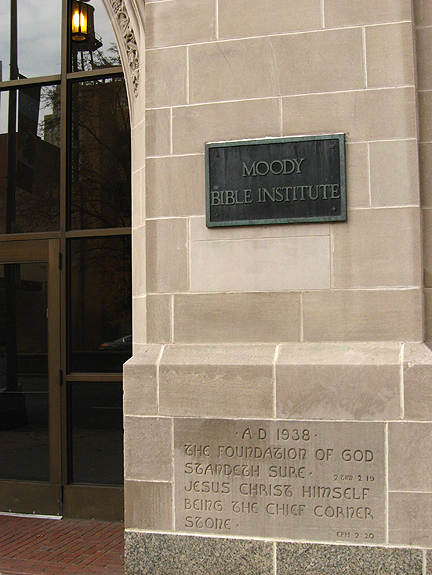
Among the more scholarly and nonsectarian Christian resources are the broadcasts from Chicago’s Moody Institute. Recordings of the late Rev.Weirsbe’s brilliance, delivered with his gentle Midwestern lilt, continue to outshine almost all of what proliferates. The successor to Weirsbe is Moody’s Rev. Lutzer, also with an academic and folksy yarnspinning style, though much more stoic than his predecessors. Well, on a recent workday morning with hot water running and coffee on the bathtub’s edge, I caught one of Lutzer’s installments on his theme, Making the Best of a Bad Decision. I’ll add that many of us must make the best of other people’s bad decisions. Can I get an Amen? Back to Lutzer. Through the noise of first-thing scrubbing, I heard the radio voice beckon, “If you’re still alive, God isn’t through with you.” Surely he wants to encourage his listeners, but considering my state of affairs of recent years, I can easily look at those words ambiguously and through my snowballed sarcasm. Sometimes I do, yet the resultant bad feeling makes me take it back. Reverting to a bleary-eyed positive, my leanings reach inward and upward, through my imagination. That’s my supplicatosphere, which is the stratum immediately beneath clouds of unknowing. “Through with me,” in the wrong context, sounds threatening; but in a healthier frame of reference, my wish really is for Divine intervention. Why is grace deferred? Did I misstep? How am I supposed to know, if nobody tells me? Have I overstayed my welcome? Perhaps I’m inhabiting the very attempt to comprehend the meaning of hope.


While trying to glean insights about things eternal, I’m also constantly reckoning with the ways of mortals. Recently with my philosophy students, I taught about the Golden Rule, framing this in the context of ethics. Our group discussion, probing the time-honored “do unto others as you would have them do unto you” went right into dilemmas about what happens when there isn’t any reciprocity for our respectful acts. Do we keep on being honorable and forbearing, or do we conform to the hardball tactics that confront us? You can imagine our very lively Socratic forum discourse. Whatever we do, we need to choose our reactions and responses. Generally, there’s the trigger end, and there’s the barrel end. Are you the issuer, or are you the inflicted? When so many critical factors are out of our control, what is within a person’s reach? With each day, questions arise in my thoughts as to whether landlords, employers, and community leaders should care about their inhabitants and “stakeholders;” in a word, neighbors. Perhaps it’s unrealistic to expect such people of influence to care, as I care. Ever the cockeyed idealist, I believe everyone should care. That’s how things stand a chance of changing for the better. A genuine sense of respect, even in simple transactions, runs against the currents of pessimism.

Just the other day, I helped a researcher with a query so complex we needed to go back and forth rather extensively in order to unearth the actual question. Having some specifics that mutually made sense, I set about producing what I could find to help this fellow. In the midst of my retrievals, the man frustratedly stormed out of the research room. While I began putting the materials away, he returned and apologized. “I’m sorry,” he said, “I think this world of instant gratification has gotten to me.” He pointed disdainfully at his smartphone. After expressing my understanding, he sat down to read through what I had found, and we talked about his projects. His initial and abrupt impatience was disappointing, but his later presence of mind was impressive. In a handful of minutes, I witnessed metanoia- on both our accounts. Reflecting upon this, later in the day, I was reminded about a barely-known spiritual exercise called examination of conscience. I use parts of my daily journal writing for this purpose, considering such writing as the safest space for articulating thoughts. “Make an appraisal of the entire situation,” wrote Francisco Fernandez Carvajal, adding that we must know what means are available to us, and how to be faithful and thorough. In addition, we must also contemplate how we can remove obstructions in our intentions, as “knowledge of self is the first step the soul must take in order to arrive at the knowledge of God.”


Collecting and digesting knowledge comes very naturally to me, always taking notes. My notebooks become reference sources themselves and they’re great for me to reread when distractions throw my studies off course. These many pages of annotated gleanings remind me of the philosophical texts I’ve been so carefully reading, while struggling to prosper above the fray. As it is with examining my conscience, there must be focused intention to transform head-knowledge into heart-knowledge. What is there for me to learn, from my experiences? “When a person accepts a great undertaking,” as Carvajal recommended, “they must consider various possibilities and look for the opportune means for bringing the work to successful completion,” adding that “we have to be aware of what is lacking so that we can ask God confidently.” In my repeated recoveries from rejected applications, trying to figure out my deficiencies (because reasons are never specified), while left to figure things out I remind myself that more attempts will be accompanied by more failures. More at-bats increase the odds of striking out. Yet still, and even now as the setbacks persist unabated, my efforts continue and amplify. It’s imperative. The here-and-now is at once stifling, uninviting, and tentative; it’s more than enough to keep the search coals stoked. As an extension of my certainty that all we see is not all there is, during the present drudgery I’m convinced there is more than this, and the accumulation of my being is meant for better and more conducive circumstances.


Monday, July 17, 2023

higher ground

“My heart has no desire to stay
Where doubts arise and fears dismay;
Though some may dwell where these abound,
My prayer, my aim, is higher ground.

Lord, lift me up, and let me stand
By faith, on heaven’s tableland;
A higher plane than I have found,
Lord, plant my feet on higher ground.”


~ Johnson Oatman, Jr., Higher Ground.

My recent seven weeks since last publishing an essay have been engulfed in survival mode. Woven into tirelessly working my job and seeking better fortunes is the unending marathon of searching for a place to live that would permit liberation from the loud, cramped hovel of this past year. At least I can report to you that I’ve been writing in my journal daily, either beneath layers of “white noise”- including a fan, a mechanism that produces sounds that imitate ocean waves, and my radio tuned to classical music, to try thinking above the incessant upstairs antics of Le Cirque des Eléphants, or very late at night when the boors bed themselves. But I write, and on better nights and portions of weekends I study philosophy. I’ve also continued teaching. And indeed I report to work, always putting in a thorough day of productivity and service. The nightmare of miserable and overpriced housing has yet to end. I assure you, dear readers, I am doing every honest thing in my power to remedy this. Sometimes it’s an employment interview, most other times it’s an apartment viewing- the latter now resembling candidate interviews- but I’ve yet to find success. Far too much energy and time have been lost, not just in the past year of housing hell, but many of us can look back at the covid years as having destroyed more than our creative and community lives, but also the dynamics of our cities.


I have just enough presence of mind to remember my gratitude for having gotten away for a week’s pilgrimage in spring to the Berkshires. The photographs I made during the sojourn are good reminders. It was something of a serendipitous fluke to find three people to cover my workplace shifts, and that my arrival in Stockbridge was exactly on the Feast Day of the Divine Mercy. I knew that I needed to gather up whatever energy and grace I could find, so that I could dig even harder into scouring for a place to live. Safe, Spacious, and Civilized, as my tireless networking tends to include. Because last summer’s desperation-searching ended in defeat, the scouring never stopped. I vowed not to endure a repeat of last year. But here it comes, with its scythe, as time runs out again. Numerous Maine residents are doing battle with a similar plight, thrown beneath the merciless wheels of hypergentrification. I’m no longer surprised at the tone-deafness of elected leaders; they all have what they need, thus they do not relate as they vote themselves pay raises. I’ve spoken with countless people about housing in the past 14 months, and listen to as many stories. There are the willing who are unable to help, but there are the able who are unwilling to help. The latter category is lulled by that ubiquitous wagon-circling prevalent in this culture; the most shocking instances of this I’ve had to wince through have been from, of all things, influential religious leaders who should know better. And it’s not that I ask for anyone to pay my expenses; what I request are leads and referrals. Networking. Are we parts of solutions, or are we parts of the problem? Who will dare to be tangibly caring? Who wants to really live the Golden Rule?

seen in Stockbridge, MA.


Trying to stretch the imaginations of the ignorant, I ask professional ministers to join me in praying- at the very least (as inspiration may follow) for the homeless and the displaced. There are many. This region’s larger parishes are in the suburbs, though they tend to use the name Portland, despite having nothing to do with what they perceive as the city’s benighted unwashed. Well aware of my own level of unabated trauma (noticeable when the racket from upstairs drives me outside the building in all weather), I am physically wrenched when I speak with and see people that have no place to call home. Not wanting to be exploitive, I chose not to take photos of the “tent cities,” along local roadways. It momentarily suffices to describe rows and clusters of plastic canopies in highway gullies, thick with mud, the occupants’ spare clothing draped over chainlink bordering a commuter “park-and-ride” lot, amidst piles and piles of detritus. It is a constant heartache to see. These souls could be any one of us. A handful of people try to be helpful, namely a friend and pastor who connects homeless veterans with transitional housing in a motel. A social worker and housing advocate I spoke with referred to people like me as rent-burdened, which means an excess of 30% of my income (for me, it’s more like 50%) goes to pay rent. I tell friends that the search for better, peaceful housing is the search for higher ground to be able to find some form of healing while continuing to work and aspiring for stability and comfort. I don’t dare predict anything.


Sunday, May 28, 2023

en plein air

“Adopt the pace of nature.
Her secret is patience.”


~ Ralph Waldo Emerson, Nature


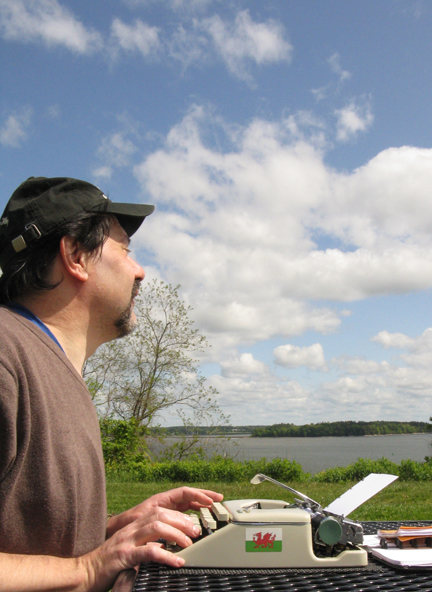
With an extremely rare weekday off, I chose to stay in town and write outdoors. Not only that, I decided to write on the Eastern Promenade- a writing perch I’ve enjoyed for many years, long before having to move from my home in a suddenly-gentrified West End building. Indeed, last autumn- until it got too cold- I walked to the “Prom” as often as possible, getting away from the puny apartment, just to be able to look upward. Going outdoors to write allows me to transcend “addresses,” and their confinement. People travel to Portland from great distances, to be able to perch along Casco Bay. The scenery continues to be inspiring to me, just as it was for me last month in the Berkshires. Getting out gets me away from oppressive and bland spaces, as well as from the static recirculating air of the workplace. “Retreat” needn’t mean extensive travels; it’s really about stepping back and away from structure and demands. I could be from anywhere and come here to write, at the same time as being from here (which I am) and forget about annoying confines. The outdoors also provide an escape from alienation. Open, and accessible spaces strike a needed contrast from offices, phones, and lit screens- allowing me to listen to my thoughts and make some notes. Skies provide a taste of ceilinglessness (and how cooperative that my typewriter doesn’t redden or rewrite my made-up words).


Writing at the Eastern Prom, which includes a busy playground, brings to mind the day camps that were lights to my adolescent summers in New York City. Asphalt jungle childhoods comprise scarce amounts of trees and clean grassy spaces for playing and perching. There was always a lot of broken glass to sidestep, along with other detritus I stopped seeing after moving here to Maine to begin college. No doubt, the air was a comparison I could immediately make, and since then has always been rolled into what I’ve come to know as “the outdoors.” But humble as it was, day camp gave me a taste of things easily taken for granted in northern New England. In the city, the change of context brought kids like me on long yellow school buses out to the lush and landscaped parks of Queens- namely Forest Park, and for a number of years Kissena Park. Hardly any of the other kids were from my neighborhood: the blighted and dangerous projects in Corona; they were from just about everywhere else. But we were all together, frolicking outside, jumping through sprinklers, and fanatically playing baseball every single day. We were easy to please, once we had time and space. Perhaps some of us retain those traits. There was no structure and no technology- even for the camp counselors that watched over us, also serving as our umpires through all those raucous ball games.

From my high school years:
Above: Greenway Terrace, Forest Hills, New York City
Below: High School of Art & Design cafeteria, as we all wondered what was really in those sandwiches.


I’m one of those adults that can still think very much as I did when I was ten. The ache to have time and space to muse, around those fettered and adversarial school days, resembles the ache to have time and space to muse between job tasks and inane meetings. Free time becomes increasingly costly. For most of us, liberation is rare and at best incremental. Reflecting back, childhood redemption arrived in an unwitting combination when I was 13. My year began as I completed rigorous and intense religious studies, thus declared an adult at that rather young age. In my naive determination, I survived my final year in what happened to be New York City’s most overcrowded public school, which went by the heartwarming name of I.S. 61. Its schoolyard was surrounded by housing projects and scrapyards. The city was a good 2 decades away from gentrifying, and my daily walks to school were imperiled by gangs and packs of feral dogs. Almost all the threatening and thrashing ended for me with the post-middle-school summer at a healthy summer camp in the mountains of Upstate New York, followed by my parents’ purchase of a house in a strikingly beautiful and safe neighborhood- still right in the city. And finally, still at age 13, I began my sojourn of secondary education at the High School of Art and Design, on the tony east side of Midtown Manhattan. A whole lot in a short year. My father gave me my first bicycle, enabling me to run a lot of errands, including grocery shopping. I explored all the streets of Forest Hills and contiguous neighborhoods, also toting my first camera- which had been a 13th birthday gift.

My Rudge-Whitworth bicycle, which I purchased used for $20 to replace the new bicycle robbed from me by muggers.
Above: Photo I took in 1981, in New York City.
Below: Photo I took (I still have the Rudge) recently at Acadia National Park, Maine.


The bicycle symbolized freedom and an enduring sense of self-propulsion. I would joke about drinking a glass of milk, then bicycling the length of Queens Boulevard and over the 59th Street Bridge en route to a library I frequented on East 38th Street. All on one glass of milk, as I’d say. One afternoon, while bicycling with a neighbor through Flushing Meadow Park, I was accosted and mugged at knifepoint, forced off my shining new bicycle. I still remember this well, and can recall the sheer powerlessness of that event. At my summer job in a supermarket, I saved my earnings to buy another bicycle- a used one that I defiantly considered to be too ugly to draw any thug’s attention. I still have it today, driving it throughout the Portland area, including all the carriage roads in Acadia National Park. Self-sufficiency continues to be its own brand of liberation. Alas, and as I’ve learned, childish and childlike are really two different traits. At best, that early spirit endures by adaptation. As well, self-sufficiency shows its hard limits, particularly in the powerlessness of housing searches, employment scavenging, and economics. Recalling Saint Augustine, “I do not know what I do not know,” and thus I want to know what I don’t know. If there’s any way to improve things, it must begin with avoiding prior mistakes.

Outdoors on the 2nd floor terrace at the Boston Athenaeum.


How much of a factor are our interpretations that are based upon our subjective perceptions? Obviously, something entirely subjective is my taste for perching outside to write and read in 40-degree temperatures, which I find perfectly comfortable. Then there’s the fascinating aspect of how syntax plays a role in how we view and depict our discoveries. For example, traveling to a location with a variety of cameras allows me to photograph similar motifs with different formats. The images will look distinct from one another, based upon the tools I’m using. Same with writing: pencils, pens of varied construct, typewriters, and computers will each lead to results reflecting the tools’ influences. Within this is the example of journaling with a dip pen, requiring many regular pauses to re-ink the pen, while the mind continues its train of thought. Those pauses surely reflect what is written. I’ll often switch writing instruments, when I notice aridity in my words. Varying the vantage point is also as effective with writing as it is in photography. Getting outside amidst the swirl of nature permits for an appreciation of Emerson’s description about the patient paces of nature. Light, skies, and horizons will surely affect how I interpret what I see, and how I interpret my thoughts. In a similar sense, I write during my mid-day breaks inside the Archives stacks, as well as aboard lurching city buses. What I notice and the ensuing words are affected by their situations of notation.


When I’m not on the job, and I turn away from doomscrolling online searches for apartments and employment, while the blaring and trampling from upstairs disturbs the peace, I know to go outside. Beneath the skies, there are no upstairs. Life gets to return to looking open-ended as it did when my friends and I would lie on our backs in green and sunny Kissena Park, just talking and looking up at airplanes going to and from LaGuardia. The paces of nature are surely not those of such humans as those among us who use the expression, hurry-up-and-wait. Coaxing the inertia out of the wheels of progress is exhausting. During the thick of childhood, time slogged like a schoolday. It felt endless. In retrospect, that was a brief period of time- its space on my timeline diminishes as the adventure continues. Looking back exclaims the necessity of looking ahead. My decades of tireless efforts have yet to pave ways to my profoundest wishes, to exercising and really seeing my best abilities coming to fruition. How close is success? Is it completely out of reach? I’m daring to believe it isn’t, notwithstanding my scarce resources and lack of influence or allies. Echoing Saint Anselm’s prayer in the Proslogion, “I have still to do that for which I was made.” Yet, the stuff of eternity does not include accolades or material. The moment and all subsequent time stands for me to redeem. Knowing how to redeem liminal time is a daily and constant challenge. Having little more than faith and gumption, I’m left to heeldigging trust, insisting upon finding the sacred in the ordinary. Such thin rations need the light and rain of the outdoors, for the vines of latent presence to proliferate and provide.


Saturday, May 13, 2023

misericordias domini


“A soul should be faithful to prayer despite torments,
dryness, and temptations; because oftentimes the realization
of God’s great plans depends mainly on such prayer.
If we do not persevere in such prayer,
we frustrate what the Lord wanted to do through us
or within us. Let every soul remember these words:
‘And being in anguish, He prayed more fervently’”


~ Saint Faustina, Diary, 872
[with reference to Luke 22:44].


1

During the recent three years, my hopes for returning to Stockbridge and the surrounding region in the Berkshires never left my thoughts. As it has become less of a health risk to congregate and travel in this present time of late-pandemic, there are more possibilities for roving and visiting. If we’re really out of the covid depths, how shall we consider the past several years? Writing in the first-person, I never stopped working or meeting expenses, soldiering on as what I call one of the working wounded. The effects of last year’s housing loss continue and things remain unresolved, having humble resources in an incurably gentrified part of the country. When I hurried out on the road two years ago to visit with my father in his final days- and then returning after his funeral- I drove through the Berkshires. There was no time to stop there, neither were there opportunities to lodge amidst all the pandemic protocols. The circumstances were anything but leisurely. My years of memories of southern Berkshire County and the National Shrine of the Divine Mercy, continued to provide inspiration. Along with physical health adversities and general economic hardships, the covid era has been marked by what the U.S. Department of Health and Human Services acknowledges as a national epidemic of loneliness and isolation. I’ve fallen back on every useful self-care strategy I’ve cultivated, even dating back to my childhood years. It’s of critical importance not to mind one’s own company and stay constructively balanced, especially at work.


2

Though I cannot claim to be an expert at self-discipline and motivation, at least I know to persevere. And I’m sure to write about it. When Le Cirque des Élephants upstairs starts pounding away and blaring me out of my thoughts, I grab my books, writing, and a chair- and flee outside. During rain and snow, I perch in the building’s entrance, bundled up, writing, and reading. It all merges with my devotions. When I think of Stockbridge, I always recall the Divine Mercy Chaplet, its austere eloquence and thoughtfulness of the needs of others. Others can also mean those who inconsiderately stomp on their neighbors. Everyone needs a prayer. The revered Chaplet as recorded by Saint Faustina in wartime Poland was taught to me by a colleague- Sister Sylvia Comer- about eighteen years ago. The devotion never left me, and it only intensified during quarantining, lockdowns, and coffee-breaks while working in isolation. Meditate upon the Passion, and pray for mercy to strengthen others and for oneself. Be mercy for others, especially when generosity and consolation are painfully elusive. San Juan de la Cruz, in 16th century Spain, famously taught “impart compassion where you do not find it, and then you will discover compassion.” Customarily, as observed by the Marian community in Stockbridge, the Chaplet is observed at 3pm, referred to as the hour of Divine Mercy. In recent years, my insomnia awakens me at 3am most every night, becoming my additional hour of Divine Mercy. It is included by many, and I do the same, as integral with the liturgy of the hours. About 2 ½ years ago, when the intensity of quarantining made it so I could hear a pin drop downtown, those portions of daily psalmody helped provide lifegiving structure.


3

Conversely, when I think of the Divine Mercy Chaplet, the environs of Stockbridge come to mind. The westernmost area of Massachusetts is contiguous to the higher elevations of southern Vermont and eastern New York State. The waterways and woods resemble parts of my home state of Maine, though without the coast that I see every day. Nonetheless, it is New England, complete with the unmarked, winding roads and very small towns. The site of the Shrine, Eden Hill, was the destination for the emigrating Polish religious community in 1943, and continues today as the much larger congregation of the Marian order who nurture the legacy of Saint Faustina. Her diary has been preserved and kept in print by the Marians. The community welcomes one and all, daily- including pilgrims such as myself. I’ve traveled there many times, always grateful for the place, prayer, and people as a complete experience of sanctuary.


True to pilgrimage form, some major effort was needed long before taking to the road. My usual marathon-minded durability makes it unnecessary for me to test the understaffed workplace logistics. Requesting days off however, despite my overabundance of earned time, demands resourcefulness and diplomacy. In the general emergence from winter in my midst, I saw an unclaimed week and seized upon it. Getting the time approved, seeing to auto maintenance, and exchanging messages with my destination, the pull of pilgrimage became an imminent journey. I began assembling writing and reading material for the sojourn, and in the cramped hovel those items were visible to me each day- including unpacking the hat I bring with me on all my retreats. It has a seashell sewn to it, which is the badge of pilgrimage. And true to personal form, I continued working as industriously as usual, and with a small Divine Mercy icon at the side of my desk computer.

As road day drew closer, I realized I would be arriving in Stockbridge right on the Feast Day of the Divine Mercy. As providential as it sounds, it just happened that way- though it did inspire me to leave Maine earlier in the morning than planned. The highway travel was smooth, even with showers and mountain fog; after all it was a Sunday morning. Indexing across the car radio dial along the Massachusetts Turnpike, I picked up a broadcast with interviews of various Marian friars talking about the liturgical holiday, Saint Faustina, and welcoming listeners to the Shrine. As I typically do, I glanced at the radio and said, “on my way.’ It was a good thing I had found that station, as I began to see single-file traffic after exiting the highway in Lee, extending all the way to Stockbridge. Impressively, drivers were civilized and patient. I wondered, “Are these all pilgrims, too?” The radio station began broadcasting the outdoor church service from the Shrine, and finding a parking space in the thick of the village, I proceeded to ascend the steep hill, hearing the singing choir’s music, my steps parallel to fellow sturdy walkers. I later heard that at least 12,000 pilgrims were in attendance that day, surprising the resident community and all present. How wonderful to arrive in such festive contrast to the misery I managed to interrupt back in Maine.


Descending the Hill later, the village center in Stockbridge was replete with visitors, albeit too early for tourism season. Many café patrons and pedestrians were recognizably clergy and members of religious orders. The stately Red Lion Inn offered special rates for the week, and very thankfully I was able to lodge there, close to the Shrine. The 250-year-old Inn was in early-spring maintenance mode and thus uncrowded and very comfortably peaceful. The full-width front porch made for an added place of retreat for me, between Eden Hill, nearby hiking trails, and the village. My room in the Red Lion consolingly reminded me of my old place which I miss very much. I especially savoured the high ceilings and the Inn’s muffled ambience, reminding me of better days. Integral to the pilgrimage was the pleasant company of fellow guests, trading stories and insights. I made numerous notes, wrote letters to friends, enjoyed time to read, and visited with the resident cats.

above and below: Jack and Jane


the Housatonic River, in the Berkshires


At the Shrine’s book store, I asked for a volume of Saint Faustina’s words, “small enough for bus commuting.” The little book has since joined my twice-daily trek and coffee breaks. Throughout my week in Stockbridge, I was sure to be in attendance for Mass followed by the 3pm Divine Mercy Chaplet. There are many to be commemorated, especially Dad and Sister Sylvia. The days were calm and salubrious, replenishing me for me return to the world of struggle and uncertainty. I’ve learned over the years that pilgrimage not only comprises the return travel, but also proceeds on with every day and every task. It is essential to keep these in mind, with all the beautiful things I saw and heard- along with remembering the mountain air, as the pursuits of betterment and stability must continue.


4

Saint Bonaventure wrote about the soul’s itinerary en route to God, and referred to how our pilgrimage is “kindled by the desire for the heavenly country.” The difficult road ahead is fueled by nourishing experiences and contemplation. The painful absence of respite in these recent years has been profoundly felt, and I must find ways to keep well- even while searching for a healthy place to live, and for better work. Writing of life’s itinerary, Saint Bonaventure added, “the route is illuminative and the pilgrimage is adhered to by love of the destination; philosophy is to be engaged in the understanding of the stages by which progress may be made along the route.” Ascension is made in progressive steps as on an upward ladder, and his words accompanied me in the Berkshires as they do on my daily city streets and transactions.

studying the Itinerarium of Saint Bonaventure


During my week at the Shrine, following the afternoon’s liturgy, one of the Marian friars gave all of us in attendance his blessing. He also blessed the devotional articles of all in attendance, such as icons and rosaries. Then, in a well-placed teachable moment, he said to us, “don’t just go home and put these things away in a drawer: bless others! Think of the many people who wish they could be here, and also those who don’t want to be here.” Another officiant earlier in the week preached about exemplifying the meaning of these prayers. Indeed, the work I do with the public and as an educator permit for many opportunities to apply merciful perspectives and ways of communication, albeit in a merciless world. It is unbearable to countenance thoughts of being a lamp concealed under a barrel, after years of consistently intense hard work and persistent defeat. I know enough to remind myself that few are fortunate enough to realize their potential, and many have it far worse. Saint Faustina surely could not have known- and would not have wanted to know- the reach of her words and her example of resilient faith. Among the assorted prayers in her journals is one of gratitude for her ability to love God by whom she need not lower her ideals. She elaborated:

“Although the path is very thorny, I do not fear to go ahead. Even if a hailstorm of persecutions covers me; even if my friends forsake me, even if all things conspire against me, and the horizon grows dark; even if a raging storm breaks out, and I feel I am quite alone and must brave it all; still, fully at peace, I will trust in Your mercy, O my God, and my hope will not be disappointed.”
[1195]