Showing posts with label archives. Show all posts

Tuesday, July 8, 2025

small

“Negations seem to say less,
but actually they say more... expressing transcendence.
The more intimate the ascending force, the more powerful the elevation;
the deeper the love, the more fruitful the rising. It is beneficial, therefore,
to practice in this manner.”


~ Saint Bonaventure, Love Enkindled


Perhaps, if there will be interest to someone far into the future, the telescopic truncation of time will reveal a dovetailing of present-day crises. From intensely economically recessed times, there followed a devastating global pandemic, giving way to this contracting and stratified era. What comes next remains to be seen. While the cultural and infrastructural scaling-back of the past decade seems yet to hit the bottom, contrasting and exclusive opulence has yet to crest. The view from my very modest perch is that of scaled-back times persisting and forcing ambitions into compromise. Reflecting upon the ancient prayer to be led away from temptation and delivered from evil, there really is no other wise choice but to persevere and to improve as possible. No turning back, and no stopping at this extremity of my hardworked tracks. This often comes to mind, sometimes when my daily commute includes a long stretch of shadeless barrens of broken pavement mildly recalling slivers of my junior high school trudges. The urgency of perseverance bites down on my work days. Keep going, I tell myself, even if just by modest increments. Big ideas may exemplify ambition, though progress may manifest by small measures. Reaching destinations, apparently, is the guiding big idea. Complex entities become intelligible, as Descartes posited, via analyses of the smaller components. This comes to mind as I process oceans of archival documents and images while keeping the broader entirety in view. Completing projects, of any extent, also carries metaphors about letting go, taking on new projects, and persisting in my belief that better will ensue.

Amidst a societal prevalence of necessary downsizing, terms such as small and humble have ceased being pejoratives. Basics being unaffordable for so much of the general population, frugality has taken on a self-defensive connotation. Economics and personal reach are obviously tied together. Many of us are brought to the challenge of whether and how less can be more. What happens to the scale of our hopes, as buying power dissipates? Shall we thrive in our smallness?

Such small things in a major accomplishment for the ages.


Living in a scenic, yet depressed region whose chief commerce is tourism reveals a juxtaposition of extremes which are impossible not to notice. For this essay’s occasion, my treatment of smallness is along the lines of making do- as necessary. Small pieces in an immense puzzle, such as one 35mm negative among 1.2 million- each that I examined while interpreting and processing an enormous archival collection. In context all those tiny parts find their greatest research and documental impact. Gem-like smallness, from artifacts to difference-making mechanical parts, are outsized in their importance. Think of ingredients. Years ago, when my mother taught me to bake bread, she showed me what a pinch of salt is, and how integral that is to the exponentially larger whole. When I’m binding books, I regularly see what a great difference a sixteenth-of-an-inch makes. Ponder the parabolic implications around grains of leaven and mustard seeds. Astonishingly simple things serve to form a reliable world around us. When I see ads and signs about “buying small” from a small and local business, building smart and small, companies and venues that publicize their personal attention, it is interesting to see the humble somehow exalted.


As we are compelled, for any of many reasons, to redefine what we mean by significance, we may also reconsider how we interpret importance, and what is trivial. In all spheres, it is critical for me to know what I’m overlooking and needs my careful attention. Difference-making, subtle factors can paradoxically become vital. Indeed, there are solutions found in correctly fitted fasteners and cogs- and surely how far-reaching are small acts of kindness? In keeping with the understated and humble, it’s not really for us to know- except for when we are recipient of such gestures. My best teachers could never have known the extent of all I learned from them. The expression, “pay it forward” is something a person can do, however modest that gesture might be. But of course I want to do great things! I’ve tenaciously cultivated myself to achieve and inspire. Preparation and endurance crave tangible fulfillment. How, when, and if that materializes continues to be a mystery. So does not knowing what to reasonably expect. But action and motion must move in a forward direction. Rather than to expect to solve sweeping problems in a fell swoop (few can do that), I can manage in measure with small steps. In this light, lowly attains great importance. There is discoverable divinity in the ordinary, and in this light we see light. Plainness can conceal complexities. Consider the needed effort to pare many disparate ideas down to a concept- and to be easily comprehended! The big work en route to humility, simplicity not to be mistaken for smallmindedness.


Monday, March 24, 2025

sprint the marathon

“Of itself, the light of the created intellect is not sufficient
for the certain comprehension of anything without the light
of the eternal word...
St. Augustine says in On The Trinity: “The eye of the human mind,
since it is weak, is dazzled in the presence of such excellent light,
unless is it purged through the justice of faith.”


~ Saint Bonaventure, Christ, The One Teacher of All.

1

Just as critical as it is to keep on productively working, it is equally essential to continue being ambitiously creative. I’ve been insistent upon this directive for myself. Maintaining perspective demands increasingly vigilant discipline, amidst these pervasively discouraging times. A soul is not wired to expend all its energies for merely holding one’s ground, but rather to aspire and grow. With such abundance of convenient and ready technology, learning and mental health should not be so intensely daunting- but the fray above which we live tends much more to the nightmarish than to dreamlike hopes. Many say, “life is short,” and “you only live once,” all of which resembles forbidden fruit while most of us tread the mill of survival mode. A well-meaning colleague of mine, as sympathetic as they are prone to offer solutions, likes to tell me, “life is a marathon, not a sprint.” All of these sayings serve as nice reminders, while not necessarily practical. Some of us are fulltime caregivers that are also fulltime workers, managing both scenarios single-handedly- even gratefully. With enough coffee and clever planning, I get to write and study. Sprinting the marathon must have a fixed duration, though I continue testing that theory.


Priorities and urgency determine the pace, along with instincts informing me what is needed to survive. For at least the past half-dozen years, and for the foreseeable future, it remains imperative to hold course- at least until it’s possible to adjust the pace. Atop all that perpetuates my insomnia, it’s easy to believe we’re all witnessing universal decline. But haven’t observers been saying this since time immemorial? Indeed, though each one of us experience our own times and trials. A recently introduced reader of these essays told me that my writing is dark. Well that’s fair enough, and it isn’t my place to contradict another’s insight. For my part, I mentioned something I’ve repeated to my writing students for years, which is to write true- in all subjects, whether favorable or not. In personal writing, one must commit to practicing the written word and to do so with authenticity. Another subject I’ve been teaching, now for a solid decade, is philosophy. My own studies have long been with medieval philosophy, and I’ve always been profoundly impressed by thinkers who insisted upon extolling light Divine immersed in extremely dark ages.

2

Being grounded in the reality of vigilant and multiple responsibilities, there is the beckoning balance struck in the gospel to navigate society without allowing one’s soul to be owned by this exploitive world. Exemplified by the overabundance of newsfeed salespitch lures, one would think all our decisions are made for us. But not entirely. And the temptations are not limited to consumer products; there are also peddled ideologies piped to our personal devices. As a longtime student of such beacons as Erasmus, Ruysbroeck, Scotus Eriugena, and Bonaventure, I know to be enlightened in the darkness. The conscientious choice for what is lifegiving also comprises choosing away from unhelpful idols and ideals. Doing so requires strong doses of discernment, especially as even our work and worship passively absorb seepage running off from prevailing brutish culture. This entails an intentional choosing away from disrespect, keeping constantly aware that our vocations are for the purposes of service to one another. In other words, choosing that which is honorable is to choose away from denigrating others. Choosing the high road means choosing away from the low blows. Kindness over quagmire. A life’s work, to be sure; easier to utter than to fully apply. The road less and less traveled (but no less worthy) is that of human genuineness. A decade ago, many of us were striking the contrast between real and “virtual.” A meeting at a real table, or in a physical classroom, became an “in-person meeting.” The covid pandemic accelerated the transition from videoconferencing to meetings- or visits. Of late, the world has waded into varying degrees of artificial intelligence, expanding the distance between manipulated appearance and actual physical experience. For the conscientious, we’ll integrate watchfulness about choosing and choosing-away-from, into our days.

Somehow, I’ve been able to make productive careers around sustaining the unsustainable. From my years in extremely frenetic, deadline-driven commercial graphic arts and photographic production- to my following couple of decades in painstaking archival work and public services- my solitary output has regularly outpaced much larger departments. More than “just by doing,” it’s meant constant and strategized work. In the photo field, I kept a sleeping bag and changes of clothes in my studio. Through my second career, my thirty-minute lunches comprise 15 for eating what I’ve packed with me, followed by another 15 for journaling. Doing free-lance contract work, I took on (and completed) projects nobody else would take. In all circumstances, it’s been about earning my keep, proving the value of the work, and tenaciously keeping strides ahead of demands and due dates. Private-sector businesses and nonprofits each have their own versions of anxiety, bottom-lines, and absurdities. With both sectors, a worker must derive their own sense of satisfaction, and both involve bringing people and purposes together with well-crafted presentations. The same levels of craftsmanship, thoroughness, and communication are essential in both fields. Alongside appreciation from clientele, both spheres require constant proof of the worker’s worth. And clever innovation. All of which entail a disciplined sense of confidence, and impassioned drive. Through tougher days and easier days, consistency is de rigueur.

3

Fortunately, sustaining the paces of production and service grew to become an ingrained instinct. Occasionally I’ll notice the cumulative effects when I stop for a portion of a weekend. Nothing makes itself known quite like contrast. A wise friend suggested creating a sustainable bridge, spanning between protracted strings of strenuousness and the rare day off. Being one who loves words, the imagery suggested in bridge is much more interesting to me than my customary puddle-jump. And a metaphorical bridge needn’t necessarily be a place or particular length of time- elusive as both are. A sustaining bridge can be as humbly accessible as a coffee break chaplet, a sidewalk saunter, or an evening spared of lit screens. And writing. My handwritten lines are stitches connecting hours, days, and years. All words, which I compose myself; and the intelligence, if any, is natural.


There’s a worthwhile thought exercise in the consideration of what sustains. Years ago, I re-translated the old “daily bread” into the encompassing “Give us our sustenance, today.” A logic that precedes grocery errands, by making shopping lists, can inspire listing sustaining principles and endeavors. Indeed, there’s writing and studying- both reflective and practical. A philosophical shopping list of sustaining provisions would continue with such vital inspirations as discovery, faith, exploration, and opportunities to cultivate projects. As I’m sustained by physical and metaphysical nutrients, there are such corresponding manifestations as sharing my abilities and experience, while accomplishing and motioning toward the future. As it implies, sprinting a marathon persists at vigilant full-throttle. What’s most needed doesn’t always scream loudest.


With my philosophy students, we recently had an animated discussion about how we define happiness. The general consensus was their interest in simplicity, far exceeding material abundance. We talked about utilitarian ethics and there were many comments about the word pursuit. Most of the youngest students emphasized their weariness with electronic tethers, shifting the discussion toward self-discipline and personal interaction. And all of this took place after we disengaged from our “hybrid” live/teleconferencing model which we had been using for the past five years, deciding that we favored meeting together in person. Admirable and hopeful. Committed to being a fit and inspiring educator, I’m reminded about self-care, with the unadorned simplicity we were extolling this week. Deep-seated learning manifests with contemplation, and that is essential for the praxis of compassion. The squeeze of multiple fulltime commitments has compressed me into reaching for the refuge of the written word. Years of contending with time deficits has caused me to savour the oases all the more. At work, I’ve long conditioned myself into refraining from metaphorically looking up at the mountain, ingraining myself to persevere. For example, this past December saw my completion of a 14-year project in which I processed eighty years of archival journalistic photographic negatives- from physically salvaging hundreds of thousands of pieces of largely uncaptioned film from a gutted office building, to their preservation, inventorying, and digital publication. All the work of one person, in the midst of managing my multifaceted department myself. It took intense determination, not just to defend the project and my vision, but also to refrain from looking up at those heaps of cellulose and avoid being overwhelmed. Indeed, I worked as quickly and efficiently as possible, sprinting the marathon. The even bigger picture comprises belief in the value and purpose of the opus- whether it’s archives, or teaching, or writing, or living. The tie that binds is the drive to be the Renaissance worthy of pursuit.



‘Yet a little while, light is among you. Be faithful to the light that you have, for fear darkness should overtake you; for a person who walks in the dark does not know where they are going.” ~ John 12:35

Wednesday, October 30, 2024

fragments

“Truth comes from things, and our senses uncover it there...
There is no body, however small that cannot be broken up into countless parts.
But to know that any given body is multiple,
I must already have the notion of unity before I perceive it.
Neither bodies nor the senses can give me such an idea.
We cannot expect to find beneath reason
the source of the truths apprehended by reason.”


~ Etienne Gilson, The Christian Philosophy of Saint Augustine, p.16


1

Evidently, we’re informed by commentators that on the average, each of us processes about 55 gigabytes of data on a daily basis. Some reports refer to 74 gigabytes, others mention 8200 words, per day. We can barely imagine the equivalent in photo images. Ironically, the information is conveyed to us via digital media platforms. And those informational morsels are among hundreds of millions of terrabytes which are generated every day. That’s a daunting amount of rapid-fire fragments through which to navigate. Our days do not grow in their duration. When it comes to academic research, I’ve observed how the additive aspects of manual source-gathering gave way to the subtractive aspects of sharding away digital abundance- all to hopefully arrive at the substantial. Focus has become a disciplined effort in itself- nearly impossible for many.


But there can surely be fascination in a nurturing wholeness made of intricate fragments. Complex ideas and projects incorporate mosaics of modules. Getting away from the artifice that dominates our world of lit screens, I’m making sure to savour the season’s faceted colors. The chilled air is much more to my liking, and the autumn foliage strikes great contrasts against greying skies and ground. With enough wind gusts, leaves take flight as airborne confetti, serving as three-dimensional distractions from shrill newsfeeds. Spectra, from pale yellow to velvet red, change within the day in their intensities and textures. These fragments serve as time increments.


2

Shuffling through both newly-fallen and dry leaves up the street to the bus stop, all the more, fragments are the stuff of my work days. The driest and most embrittled foliage crackle as crumpled papers under pedestrians’ feet, and the sounds remain in mind while reading en route to the job. Archival collections are sums-of-parts, structured hierarchically into groupings and subgroupings- referred to as series. I’ve occasionally organized highly complex collections into sub-sub-subseries- as the substance, formats, and sources of the records warrant. The basis for arrangement may be how the documents and manuscripts were initially made and configured. Otherwise, this must be ascertained through analysis, understanding both sources and uses of the materials. Inevitably, the fragments are to be sensibly and consistently laid out and listed so each “branch” and “leaf” can be easily found for future uses. During early stages of configuration- especially with large and disparate documentation- critical sifting, research, and “boiling-down” must be done (archivists call this appraisal) to advance what emerges from the heaps into cohesive series and subseries. When it comes to making sense of thousands (sometimes exponentially more) of fragmented components, and interpreting them as needed, we use terms such as establishing order over the archives.

My discoveries occasionally reveal how documents were inventively brought together by their creators.

Applying such principles and their many practical derivatives, my thoughts turn to how Scholastic philosophers considered “order” as an indication for understanding divinity. Comprehending creation and knowledge may not be the same as arranging and describing archives, but the spirit is not far away. Generating compendia and indices for the sharing of information do connect philosophy and curation. In the analyses, I get to see how people value what they’ve produced, and how institutions structure (or don’t structure) themselves.

These items may not look alike, but they are part of a unified subseries.


3

“Everything is in everything, and partitions are only possible by abstractions,” wrote the French Dominican philosopher Antonin-Gilbert Sertillanges in The Intellectual Life. Vaster and more complex than archival groupings are the pieces and thoughts of our days and years. Woven among physical formats that comprise pictures, words, and artifacts- are those of sense and recollection. Wafting leaves and their propelling air currents amount to a unity of form and counterform. Life fragments are in our midst, and buoyant. Like curators and readers, we can choose to comprehend our findings. Our accessions, random and scattered as they are, require our reckoning and processing, in our pursuits of understanding. Persevering intact through turbulent times demands more than continuity. One must have the metaphorical “ears to hear,” to prevent from becoming insensitive. Our unique individual contexts join together our experiential fragments. As we cultivate instincts and perspectives, our contexts become more discernible to us. Pondering these things on a day off, attending a church service, the liturgical sequence brought to mind collated fragments reverently brought together as commemoration and observance. Each portion held holy, but all in cohesive union. And my walked paces amidst the hues of autumn fragments continued through narthex, nave, and sanctuary- returning again albeit transformed to the outdoors.


Monday, October 7, 2024

forbearance

“The soul generates, nourishes, and increases:
generates as regards essence, nourishes as regards quality,
and increases as regards quantity.
By the sensitive power it apprehends sensible things,
retains what it has apprehended, combines and divides
what it has retained.”


~ Saint Bonaventure, The Breviloquium, ch. 9

Despite countless task-saving conveniences, we’re all navigating increasingly demanding paths. And it seems the manual projects and chores are made easier than before; the ramped-up, harder efforts involve the mind. Logistics and time-management require constantly adaptive abilities to rearrange priorities, even sharding away excesses. When it comes to intellectual and spiritual matters, the challenges of self-discipline only intensify.

The recent decade attests to a continuous barrage of violence, conflict, pandemic, recession, displacement, disaster, and fractiousness. That short list encompasses the daily experience for too many, enough to overwhelm. Much as the horrific school shootings of 25 years ago prompted sociologists and officials to finally regard bullying as something to take seriously (and as a badly-bullied adolescent, I remember the commonplace dismissiveness too well), current studies are informing us about how anxious and worried we are. As if we needed to be reminded. A new study ties rampant anxiety with equally rampant obsessions with smartphones- particularly among teens. I interpret this, in a broader generational sense, as being swept into ubiquitous, sensationalized, and constant newsmedia feeds tapped into by all our networked devices. Evidently, we need to know, during all our waking moments. I’ve had to create my own version of the proverbial ten-foot-pole, tempering my connectivity, reminding myself to get outdoors and experience life first-hand. Despite the cautious vigilance, I’m also amidst the pressure to be confident in hopeless surroundings. Trust and worry stand in opposition to each other. Many among the faithful commonly profess that we should not worry, as most of us do what we can to restrain ourselves. But is faith enough, and is that all I’ve got? Apparently, a mustard seed’s worth suffices.

I heard a preacher say that life is 10% what happens to you, and 90% what you do about it. We may propose, but very few of us can even begin to dispose. With my granule of gumption, there are learned instincts to help me contend with obstacles. If anything, there is the cultivated skill of noting the limits- whether they are related to economics, practical logistics, or the behaviors of others. The discretionary tacks between forcing back the constrictions and steering around the incorrigibles. Unraveling the implications emanating from trust, my thoughts bring me to the healthful version of surrender. Parallel to persistently believing in finding better situations to fulfill what I’ve been built to accomplish, I’m also aware of immovable barriers. Thus I return to the vitality of trust- albeit in clouds of unknowing- all of which amounts to perseverance.

Perseverance needs a purpose. For what, or whose sake, do we persist with our efforts? Perhaps it’s to gain respect, or peace of mind, or to make an impression; perhaps it’s the fight-or-flight impulse to survive. Many among us are naturally competitive, driven to exceed, hoping to improve our situations. As with that “ninety percent” of the preacher’s comment, hardship can pry forth our ambitions. Beyond motivations to survive with strength, work, and housing- is to be convinced there is tangible cause for hope. Josemaría Escrivá, whose books have been mainstays in my daily bus commutes for two years, helps right my ship with his exhortations about living for the causes of service to others and devotion to God. “Think of nothing but of divine compassion,” he advised in The Forge, instructing preference for the pursuit of a life of generosity, over and above fear. “The immediate future is full of worries, if we stop seeing things in a supernatural way,” Escrivá added. Worry and anxiety can be motivators as much as detriments, though both are inevitably exhausting.


While responding to audience questions after a recent lecture, someone asked me “where do you get all that energy?” Not entirely a technical or theoretical question, I heard myself say something like, “There’s a lot that still needs to be done!” Creating archives often borrows the metaphor of bringing out sculptures that are within large stone blocks. Preservation and access resemble the nurture and promotion of a botanical garden. Very simply put, the energy comes from caring, and my forbearance incorporates stewardship and vision. Commitment to the profession’s many aspects is supremely important, wherever I’m working- and my hope is to continue improving. Many thoughts- perhaps too many- while working and seeking better work, have to do with the concept of “success.” How have definitions of success changed in the past decade (or two)? For whom is success necessary? Impressing my elders- whether parents, grandparents, or teachers- always meant a great deal; impressing friends was less of a priority, but impressing managers and prospective employers has been a longstanding matter of anxiety. Is sufficient the same as success? Having endured two layoffs in my working life, along with forbearance-testing threats and economic conditions, anxiety has long been tied to fears of the impending. Or perhaps not impending! That sort of tension can be formidable, as though a solid barrier. Years and years of trying, and very rarely succeeding, lend too easily to discouragement which must not obstruct a good future. Remembering what I heard myself say to that audience a couple of weeks ago, essentially in light of things and in spite of things, I have to just keep productively working. One who surely knew a rough life of fits-and-starts, Paul taught those in his midst- as well as his later readers- to insist upon gratitude and graciousness, and to “ let your forbearing spirit be known among all.” Fully agreeing with St. Bonaventure as quoted above, the soul must be nourished in order to be renewed and encouraging to others. Carefully-selected studies fuel my forbearance abilities, amounting to the most critical of life skills.


Sunday, August 11, 2024

past and future

“How can the past and future be,
when the past no longer is,
and the future is not yet?
As for the present, if it were always present
and never moved on to become the past,
it would not be time, but eternity.”


~ Saint Augustine, Confessions, Book 11


The unrelenting marathon of professional life finds some redemption in the complexities of service and curatorial projects. Indeed, preferring productive and supportive work, I’m not in this for the palace intrigues or the ladder rungs. The prize at the unknown opening of the maze must lead to something much better. And the route has to tunnel beneath the careful consistency of relational and physical accomplishments. Holding firmly to my ethic of “bloom where you’re planted,” in addition to managing and facilitating a full-service department single-handedly, there is no shortage of projects. Just as well, the satisfaction in producing successions of positive results serves as both motivator and sanity factor. Josemaría Escrivá famously said that vocation is the greatest gift of grace, and a vocation surely has many related facets. I still strongly believe in the work I’m doing, bringing out unique archival materials that inform many- including me. In order to generate effective and accurate metadata, varying degrees of thoughtful analysis are needed- from basic verification, to skimming, to comparative reading. All the while, there’s always an eye on time-efficiency.


A project I pulled to the fore, amidst my complete overhaul of the archives I’ve most recently created (having set up archives throughout the State, over the years) is a large array of rare, local serial collections. As much as researchers love them, the service end of things is replete with indifference about newspapers and periodicals. I happen to really enjoy the writing styles and advertising graphics of eras past. To me, the materials are captivating- essentially history in real time. For each time I bring out digitized ephemera, I hear from grateful audiences who devour the contents. And with the researchers, I’m fascinated to see what was, leafing up to later dates, then back to earlier years and decades. Through all my inventorying and indexing, I’m better able to connect people with information. And it happens. About two months ago, I sought out and processed a unique run of a cultural periodical, printed on newsprint, from the 1970s. It had been locally warehoused. Shortly afterwards, a visiting researcher asked whether I knew of that exact title, as she and her mother had both published in it. Bringing out the alkaline boxes of flattened papers, my guest was elated. This sort of serendipity is not uncommon. I can merely glance heavenwards, wink, and keep up the good work (and the good instincts).


While in the throes of sifting and sorting piles of antique newspapers which had been migrated from one library building’s attic to another’s basement, I found several items that I knew would fit perfectly in another city’s archives. It so happens I had created their archives more than twenty years ago, and remember their contents very well. Eager to deliver the gems, I carefully reinforced the 19th century broadsheets in a portfolio, and made a daytrip of my errand. En route, it occurred to me that while I had maintained some contact with that particular library, I hadn’t been inside the place in a long time. A life of continuous, hard work leaves very thin margins for respite. Trying to offset exhaustion with journaling and unstructured Sundays have provided ways to continue puddle-jumping, refraining from looking too far. Indeed, I brought the historic items to grateful recipients I’d never met before, in a building I hadn’t visited in twenty-three years. The place still looked the same, and it was heartening to see the calligraphed sign still displayed which I had made for them back in 2000. The last time I’d been in the place, I had completed major projects; it was shortly after my completion of graduate school. This time, I crossed their threshold after having achieved and endured numerous professional scenarios and challenges. My impression of this brief visit wasn’t an experience I expected- at the same time both strange and familiar. After quietly leaving the building, I walked to a nearby church to reflect, knowing the doors were open.


Again, I thought of Escrivá’s words- whose books I’ve known only in recent years- and how he told his readers to ask themselves who they sought when they approached the Sacrament. He said, “Are you seeking yourself, or are you seeking God?” That hour of contemplative intention, immediately following my strange visit with a past place of employment, was just the right instinctual balance. As much as archival work serves here-and-now access, and conservation for future use, the interpreting of raw material magnetizes our compasses toward the past. This week’s projects send me back to earlier projects in earlier places quite easily. All the jobs we’ve had, with our schools, communities, our various adventures dotting our timelines- good and bad- illustrate each of our personal histories. These stages along our pilgrimages form our perspectives. An individual is essentially a living time-capsule, replete with ethereal archives. Life and art mirroring each other amidst my wakeful hours, I wonder at the human version of deaccession and preservation. Tireless work makes for tireless thinking about work, especially all the pending projects. Insomnia tangles with my strategizing of the department I manage, and that slides into when I report to work, so that I can implement the ideas. And with my cultivated and critical senses and skills, the work always gets done.


Integral to the processing of historic serials is their preparation for longterm storage, retrieval, and future digitization. I’ve been doing all of these things, including a lot of the scanning, after flattening and even very gently repairing torn newsprint. No matter how disciplined my adherence to tasks-at-hand, it’s impossible to avoid reading from my discoveries. Indeed, the more informed I am of the content, the better my analyses for researchers’ queries. And, admittedly, the narratives and illustrations of bygone eras- be it the 1990s or the 1790s- are compelling in their vocabularies. Newspapers, in particular, are frozen moments with commentary. The paper strata themselves have distinctive stories, in their very ingredients and manufacturing. Handling and reading really go together.


There are embossed textures in pre-1840 cotton rag content paper, retaining an impressive amount of strength. Latter 19th and early 20th century newspapers were largely very cheaply made, using bleached wood pulp, resulting in thin and highly acidic surfaces. Depending upon how the paper has been stored, I’ve seen darkening that has the appearance of having been burnt. Scanning this type of material saves the content. Rewrapping the deteriorated pages, with enormous care, the telltale rattling sound attests to the papers’ embrittlement. The other day, while checking my work, it occurred to me how a computer screen can give digitized, antiquated text a similar look to present-day electronic text. Past and present become easily juxtaposed this way, but the genuine article has the intrinsic aspects of authenticity. Artifacts carry memorable content, but also the physical objects also have memory. Among my regular patrons is a researcher who writes about religious communities and biographies. Having just flattened, repaired, boxed, and inventoried a run of regional newspapers beginning in 1822, I brought him several early issues as a sampling for perusal. He was clearly impressed and inspired, spontaneously reading various paragraphs to me, from the cotton-based 200 year-old newspaper, in surprisingly good condition. We took turns reading to each other, talking about what we read as archaisms. A moment worth remembering in the life of doing this work. This fellow was astonished at how close these unique papers were to being discarded. Past is pulled to present, and projected ahead to future endeavors, in the search for knowledge and context.


Sunday, February 11, 2024

imagination

“For me, reason is the natural organ of truth;
but imagination is the organ of meaning.
Imagination, producing new metaphors or revivifying old,
is not the cause of truth, but its condition.
It is, I confess, undeniable that such a view indirectly
implies a kind of truth or rightness in the imagination itself.”


~ C.S. Lewis, Bluspels and Flalansferes


Giving lectures and reading to audiences have evolved into very comfortable and pleasant experiences. My teaching background certainly helps, but knowing my topics frees me from excessive rigidity. Obviously, it all depends upon the audience, and no two groups are ever alike. A recent presentation about archives lent itself especially well to some storytelling. On that particular afternoon, during a dreary winter day, I had brought out examples of treasures such as rare books, maps, prints, and city directories. These types of artifacts are especially conducive to time-traveling musings. I’m surely with the patrons, students, and all the curious- as we all marvel at photographs of specific places then-and-now, noticing the changes.


To do justice to my occupation, I taught myself about when certain various prominent buildings were built, extended, or demolished. Such facts continue to be invaluable for identifying undated imagery and supporting researchers. Years ago while sleuthing out the sites of extinct streets, writing narrative essays with an expression I coined: “ghost streets.” This is to say buried thoroughfares that are gone without a trace. These have been very popular. In a juxtaposition of past and present, cheering an audience on an especially damp day, I made reference to how the local art college is currently in a former department store building constructed in 1904. The store was called Porteous, Mitchell, and Braun (that first name is pronounced “POHR-tchuss”).

now that's a proper pen department


“Now imagine,” I offered to the group, pointing to my left, “walking up Congress Street, stepping inside that big building at number 522, and suddenly noticing bright chandeliers, colorful merchandise, the din of chatting salespeople and customers above the muffled piano music, and the aromas of cosmetics and perfumes.” There followed memories of people among my audience, chiming in with their own recollections. I held up a Porteous ad for Esterbrook fountain pens, printed from a 1952 Christmas season issue of the Portland Evening Express (which gave me a chance to explain the microfilmed newspaper collection). I am often in the role of informing patrons about what was, en route to explaining what is.


somehow, all I needed was the advertisement, and look what I brought back from my time travel errand.


Early 20th century archival theorist Sir Hilary Jenkinson taught that archivists do best to read the documents in their care, and to be acquainted with the contents. I’ve personally seen this to be an extremely useful idea, especially when it comes to the level of service I can provide, and how I draw together sources and researchers. It’s really about recognition and making connections. Like compassion, these are uniquely human abilities. I’ve been studying the materials, making notes, and committing many things to practical memory. Indeed, this has become the less-traveled road, but the relational touch is surely the most meaningful. Just as people are souls, archives are recorded activities that attest. Through the years of preserving and providing public access to archival material, by default I’ve also had innumerable occasions to be acquainted with many of the people who inquire and use these artifacts. Often, there are patrons who will show up daily for a stretch of time, feverishly nibbling away pursuing evidence of parts of their personal histories. I witness all ages seeking the past, looking for understanding and purpose. I’m no different. Each request is respected, never derided. So many among us simply want to know, then let the witnessing archivist be an eloquent accompanist. With the philosopher Blaise Pascal who pondered in writing: “I am astonished at being here rather than there; for there is no reason why here rather than there, why now rather than then.” Inevitably, archives are facts that can enchant the imagination. Once again, and along with my students and patrons, I’m affected, too. Frankly, I could never figure out why other archivists don’t write about their metaphysical experiences. Manuscripts, images, maps, ships’ logs, and even ledgers present much more than what superficially meets the eye. And then there are the interactive discoveries for researchers interpreting the records.


The preservation of the documental record is meant to inform the panoramas between planning ahead, as well as the fleshing out of historiography. Narratives abound in manuscripts, revealing human activities and communications. Indeed, we can understand the popularity of historic novels! And then there is reverie. Serving the public for many years, once in a while I’m asked by patrons marveling over century-old photographs of streets crowded with pedestrians and trolley cars, “Why can’t things go back to the way they were?” Many, many more people wish this without admitting so much. We imagine with our hopes; speaking as a New Englander in the local parlance: “So don’t I.”

From pinched and barricaded confines, imagination insistently pries at the horizons. Ambition is vital. Don’t expect anyone to remind you to flex your hopeful imaginings; we must know to exhort ourselves. Speaking for myself, I write my wishes and prayers as journal entries, often scribing them amidst woeful environments. Remember to dream forward: observe and read between the lines. What we see is not all there is. Our conditioned and compromised cultures reduce our palates to bland, surface bluntness. It is for us to challenge ourselves to think beyond what is “at face,” and cultivate our intellects. We navigate societies of documented hard numbers and literal databases, but the human-voiced manuscripts invite us into the poetry of metaphor. When I managed and facilitated the reference library in a Catholic college, I read the memoir of St. John XXIII in which he wrote of himself, “I am a songbird perched in thorns.” Such a powerful metaphor has never left my thoughts, and I’ve invoked it numerous times since.


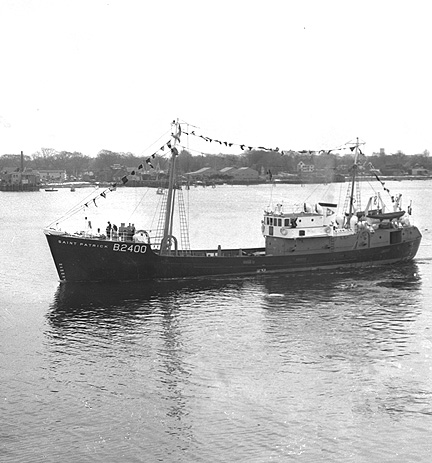
The spheres of metaphor and allegory have always provided places of habitation for me, though perceiving through these lexicons can be a two-edged sword when I have to creatively translate for those who cannot interpret subtlety. Fulton Sheen once said, “Introspection requires a lot of humility;” helpful words for speaker and listener alike. I’ll occasionally use archives as metaphor with my philosophy students. Wonderfully diverse as they’ve always been, they refreshingly think and speak at multiple levels. Archival work is entwined with axiological applications- as principles of origin, function, and value are integral to stewardship. Examples help provide crossroads for abstraction and practicality to meet. These also provide runways for metaphysical flights of fancy. Pointing to historic maps and photographs, I’ll ask, “Do places have intrinsic memories?” We’d like to think so. In my helpless insomnia, I imagine being cradled on the waves, aboard a peaceful vessel. In my curatorial adventures, I found documentation from 1948 about a Friend Ship that was sponsored by the Maine Rotary, which brought 107 cargo tons of food and clothing to France. The ship, built in Maine, was called the Saint Patrick, and it crossed the Atlantic in eleven days. Pleasant thoughts of calm seas and noble ambitions. Keep on visualizing better times. As confining situations constrict, my imaginings of comforts, vastness, and possibilities intensify as antidotes. I’d like to think there is still time for improvement.

the Saint Patrick sailing from Portland, Maine to Nantes, France


Sunday, November 12, 2023

within

“The Spirit moves the faithful to plead
with sighs too deep for words by inspiring in them
a desire for the great and as yet unknown reality
that we look forward to with patience.
How can words express what we desire when it remains unknown?
If we were entirely ignorant of it we would not desire it;
again, we would not desire it or seek it with sighs,
if we were able to see it.”


~ Saint Augustine, The Spirit Pleads for Us.


Maybe you’re a bit like me, and your morning routines include tuning into the news of current events. If you know better than to do this, you’re much smarter than me. An old habit of mine for many years has been to wake-wash-dress-caffeinate with the radio tuned to the news. Added to the ensemble is online news and checking for messages. In recent years, the “ensemble” is more like a barrage to me. Invariably, I’ll glean just enough to know what’s happening and something about weather prognostication, increasingly choosing to begin the day with writing and reading. Indeed, lit screens are integral to each day- especially at work- and can be very useful, if not essential for connectivity, communication, and construction of resources. After all, I’ve been a blogger for 17 years, gratefully authoring essays, and the results have opened doors to extraordinary writing opportunities and fellowships. Simultaneously, considering the internet’s persistent abundance, controlling even a limited stream is equally essential for clarity of thought. Especially at the start of the demanding day. The pandemic era revealed to the isolated many that it is left to the individual to manage their own mental and spiritual health. And develop an intellectual, artistic life. Without such pursuits, it becomes even easier to be lulled into digital complacency. Days flow into months and years. “We have only so much time,” said a pastor friend of mine, “to gladden the hearts of those who make the journey with us.”


As I try experimenting with apportioning my sparse, unsold slivers of time, I’m minimizing media to make space for unfettered constructive thoughts. Making a few written notes in my journal, the words are re-read and built upon later in the day. Thoughts at daybreak seem as unimpeded as any I’ll have. Extending to my uttermost reaches to improve a desperate situation, I’m repeatedly writing about hope. A soul that hopes is one that aspires to see and inhabit better days. And persistent hope does not cease to seek ways to succeed. A living hope somehow generates its own adrenaline supply: a saturated strength, especially as it’s captivated by the unseen. Ideals may seem abstract, but conceptually striving efforts toward better work and housing are tangible motivations. Hope’s objects may be out of view, but these intentions are solid. Many individuals want to talk about their hopes, sharing them, even assisting others with theirs. Unfulfilled hopes drive many to the extremities of their abilities, becoming pleas for assistance, and further as outpourings of prayers.


A conscientious, focused suppliant turns the mind and thoughts to God. Contemplation essentially entails immersing the mind into the heart. Ancient wisdom as recorded in the Philokalia refers to prayer as “conversing with God, in reverent respect and hope.” Saint Dimitri wrote, “Collect all your thoughts: laying aside all worldly cares, direct your mind towards God.” As worries reflect fears, prayer reflects a driven hope. An aspiration that is anything but passive demands a paradoxical combination of persistence and surrender. And it must be lived, much more than observed. To be thwarted for many years at every turn is exhausting, yet still I counteract the weariness with increased striving. Navigating a careful balance between coasting and full-throttle intensity is a discipline in itself. A mystery, indeed, that is neither vague wishing nor obsessive grasping. Intent upon improvement, what lesson is there to be gleaned? Hope is essential, but perhaps one mustn’t hope too intensely? Wishing and hoarding are sentiments than run in opposite directions. We’re all susceptible to overthinking, particularly when straining to overcome deficiencies en route to goals. I surely know the dangers of the paralysis-of-analysis, yet I fall under them nonetheless. It’s a long, long haul and if improvements are merely incremental, they’re still positive factors.


Outside of such things as archival documentation (speaking from many years as a professional archivist), all that is past has ceased to pulsate: At best, it informs, whether we choose to look back a day or a decade. Trying to steer away from anxious wakefulness, my efforts are to channel thoughts to the immediate. Aware of juggling several unsustainable continua, I warn myself against pondering this. Just pursue and tack toward calmer waters. Endure and trust. I’ve witnessed countless friends burn out, and notwithstanding how much I’ve had in common with most of these fine souls, thus far I’ve avoided such straits and fates. Navigating as such by my wits doesn’t mean I’m better; it means I’m intent upon surviving to see and to live improvement. Competition is at all hands, and the last thing I’d ever want to do is damage my chances. Inevitably, the finest of hopes grow amidst discouraging, fruitless, and inhospitable thickets. And thus, the words hope and must are twinned by necessity.


Admittedly, treacherous shoals are far from limited to those offered by such outlets as those announcing what’s wrong and what’s deficient about us. There are parallel dangers in perfectionism, trend-chasing, and lack of compassion. “We’re human, all likewise God’s children,” wrote Josemaría Escrivá, “and we cannot think that life consists in building up a brilliant curriculum vitæ or an outstanding career. Ties of solidarity should bind us all and, besides, in the order of grace we are united by the supernatural bond of the Communion of Saints.” I read Escrivá’s remark while shivering at a deserted bus stop, admiring his big-picture view that inspires individuals to look beyond themselves. Has my manicured résumé really helped to pave a road for me? That’s the desired result, but so much of this entire odyssey reveals the limited control one person has over the critical complexities of living. Roadblocks attest to what cannot happen, but as with swerving away from dangers, these denials can become prompts toward magnanimity. One recent pared-down early morning, my gratitude came to mind that I’ve arrived at the impulse to ceaselessly look to God, and for the grace of perseverance. Manifestations of this type of grace, wrote Theophan the Recluse, “show itself on a person’s side in a yearning and aspiration towards God, and on God’s side in good intention, help, and protection.” At the very least, I am certain that God is. Perhaps there is more to that conviction than I’m able to comprehend now. In his work, Collations on the Hexaëmeron, Saint Bonaventure beautifully observed:

“The soul has to learn how to be willing and consistent. Grace lifts the soul above its own nature and effort, when grace elevates it to receive direct illuminations from God, which then become the subject of spiritual reflection and theological speculation.”


Considering the sanctity of the soul, and trying to remove as much that is deleterious as possible, mental and spiritual refuge must be carefully and judiciously replenished. Winnowing chaff and pursuing advancement, I’m reminded of the first Johannine epistle. To me, John is the archivist’s apostle, peppering his letters and his evangel with terms such as the record, that which he witnessed, and that which was written, as one connecting historicity, his younger audience, and his personal experience. “Test the spirits, beloved,” he wrote in chapter four, so that we can discern what is authentic and confirming of the gospel. He encouraged his faithful students with, you’ve overcome cruel spirits, because greater is the Holy Spirit within you, than that which circulates through the culture in our midst. A popular American financial institution advertises its credit card by asking, “what’s in your wallet?” Over two millennia ago, John asked his listeners and readers, “what’s within?” What’s enshrined in your sanctuary? Applying some language from the archival profession, “what’s your collection development policy?” and “what are your appraisal criteria?” Like stewarding multifaceted archives, being the curator of one’s soul implies confrontation of deciding what warrants preservation. At the same time, I’m maintaining room for growth on the shelves, leaving space for worthwhile acquisitions.