Showing posts with label Blaise Pascal. Show all posts

Sunday, February 11, 2024

imagination

“For me, reason is the natural organ of truth;
but imagination is the organ of meaning.
Imagination, producing new metaphors or revivifying old,
is not the cause of truth, but its condition.
It is, I confess, undeniable that such a view indirectly
implies a kind of truth or rightness in the imagination itself.”


~ C.S. Lewis, Bluspels and Flalansferes


Giving lectures and reading to audiences have evolved into very comfortable and pleasant experiences. My teaching background certainly helps, but knowing my topics frees me from excessive rigidity. Obviously, it all depends upon the audience, and no two groups are ever alike. A recent presentation about archives lent itself especially well to some storytelling. On that particular afternoon, during a dreary winter day, I had brought out examples of treasures such as rare books, maps, prints, and city directories. These types of artifacts are especially conducive to time-traveling musings. I’m surely with the patrons, students, and all the curious- as we all marvel at photographs of specific places then-and-now, noticing the changes.


To do justice to my occupation, I taught myself about when certain various prominent buildings were built, extended, or demolished. Such facts continue to be invaluable for identifying undated imagery and supporting researchers. Years ago while sleuthing out the sites of extinct streets, writing narrative essays with an expression I coined: “ghost streets.” This is to say buried thoroughfares that are gone without a trace. These have been very popular. In a juxtaposition of past and present, cheering an audience on an especially damp day, I made reference to how the local art college is currently in a former department store building constructed in 1904. The store was called Porteous, Mitchell, and Braun (that first name is pronounced “POHR-tchuss”).

now that's a proper pen department


“Now imagine,” I offered to the group, pointing to my left, “walking up Congress Street, stepping inside that big building at number 522, and suddenly noticing bright chandeliers, colorful merchandise, the din of chatting salespeople and customers above the muffled piano music, and the aromas of cosmetics and perfumes.” There followed memories of people among my audience, chiming in with their own recollections. I held up a Porteous ad for Esterbrook fountain pens, printed from a 1952 Christmas season issue of the Portland Evening Express (which gave me a chance to explain the microfilmed newspaper collection). I am often in the role of informing patrons about what was, en route to explaining what is.


somehow, all I needed was the advertisement, and look what I brought back from my time travel errand.


Early 20th century archival theorist Sir Hilary Jenkinson taught that archivists do best to read the documents in their care, and to be acquainted with the contents. I’ve personally seen this to be an extremely useful idea, especially when it comes to the level of service I can provide, and how I draw together sources and researchers. It’s really about recognition and making connections. Like compassion, these are uniquely human abilities. I’ve been studying the materials, making notes, and committing many things to practical memory. Indeed, this has become the less-traveled road, but the relational touch is surely the most meaningful. Just as people are souls, archives are recorded activities that attest. Through the years of preserving and providing public access to archival material, by default I’ve also had innumerable occasions to be acquainted with many of the people who inquire and use these artifacts. Often, there are patrons who will show up daily for a stretch of time, feverishly nibbling away pursuing evidence of parts of their personal histories. I witness all ages seeking the past, looking for understanding and purpose. I’m no different. Each request is respected, never derided. So many among us simply want to know, then let the witnessing archivist be an eloquent accompanist. With the philosopher Blaise Pascal who pondered in writing: “I am astonished at being here rather than there; for there is no reason why here rather than there, why now rather than then.” Inevitably, archives are facts that can enchant the imagination. Once again, and along with my students and patrons, I’m affected, too. Frankly, I could never figure out why other archivists don’t write about their metaphysical experiences. Manuscripts, images, maps, ships’ logs, and even ledgers present much more than what superficially meets the eye. And then there are the interactive discoveries for researchers interpreting the records.

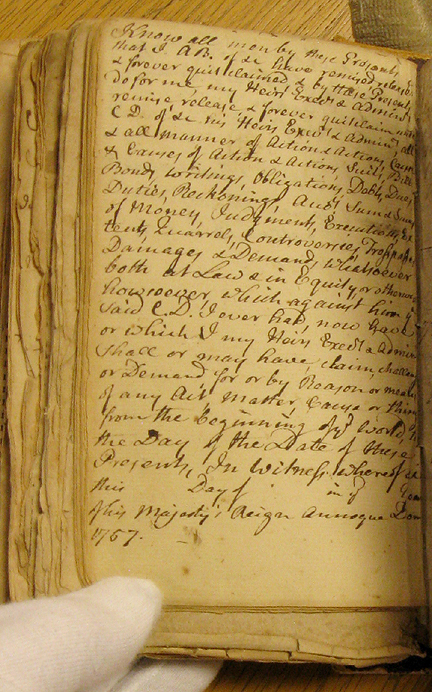

The preservation of the documental record is meant to inform the panoramas between planning ahead, as well as the fleshing out of historiography. Narratives abound in manuscripts, revealing human activities and communications. Indeed, we can understand the popularity of historic novels! And then there is reverie. Serving the public for many years, once in a while I’m asked by patrons marveling over century-old photographs of streets crowded with pedestrians and trolley cars, “Why can’t things go back to the way they were?” Many, many more people wish this without admitting so much. We imagine with our hopes; speaking as a New Englander in the local parlance: “So don’t I.”

From pinched and barricaded confines, imagination insistently pries at the horizons. Ambition is vital. Don’t expect anyone to remind you to flex your hopeful imaginings; we must know to exhort ourselves. Speaking for myself, I write my wishes and prayers as journal entries, often scribing them amidst woeful environments. Remember to dream forward: observe and read between the lines. What we see is not all there is. Our conditioned and compromised cultures reduce our palates to bland, surface bluntness. It is for us to challenge ourselves to think beyond what is “at face,” and cultivate our intellects. We navigate societies of documented hard numbers and literal databases, but the human-voiced manuscripts invite us into the poetry of metaphor. When I managed and facilitated the reference library in a Catholic college, I read the memoir of St. John XXIII in which he wrote of himself, “I am a songbird perched in thorns.” Such a powerful metaphor has never left my thoughts, and I’ve invoked it numerous times since.


The spheres of metaphor and allegory have always provided places of habitation for me, though perceiving through these lexicons can be a two-edged sword when I have to creatively translate for those who cannot interpret subtlety. Fulton Sheen once said, “Introspection requires a lot of humility;” helpful words for speaker and listener alike. I’ll occasionally use archives as metaphor with my philosophy students. Wonderfully diverse as they’ve always been, they refreshingly think and speak at multiple levels. Archival work is entwined with axiological applications- as principles of origin, function, and value are integral to stewardship. Examples help provide crossroads for abstraction and practicality to meet. These also provide runways for metaphysical flights of fancy. Pointing to historic maps and photographs, I’ll ask, “Do places have intrinsic memories?” We’d like to think so. In my helpless insomnia, I imagine being cradled on the waves, aboard a peaceful vessel. In my curatorial adventures, I found documentation from 1948 about a Friend Ship that was sponsored by the Maine Rotary, which brought 107 cargo tons of food and clothing to France. The ship, built in Maine, was called the Saint Patrick, and it crossed the Atlantic in eleven days. Pleasant thoughts of calm seas and noble ambitions. Keep on visualizing better times. As confining situations constrict, my imaginings of comforts, vastness, and possibilities intensify as antidotes. I’d like to think there is still time for improvement.
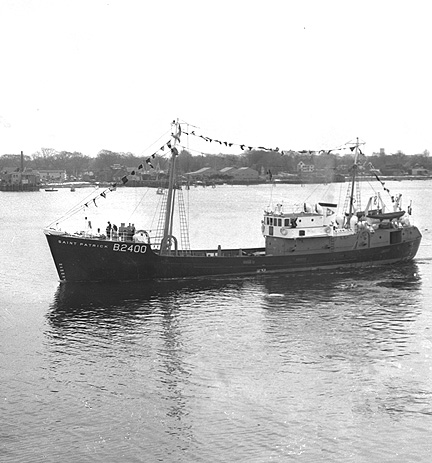
the Saint Patrick sailing from Portland, Maine to Nantes, France


Friday, December 25, 2020

why write


“Bet you’ve all got a story
You're just aching to tell.
Haven't we thrown our coinage
Down the wishing well?”


~ Bill Mallonee and the Vigilantes of Love, Doublecure


ask foundational questions

The year which is about to close out generates as much comment as emotion. During a recent radio interview for which the topic was journaling and letter writing, I talked about eagerly looking forward to the privilege of reflecting back about this current crisis in retrospect. This is to say when this plague is past. For the time being, and much of the last 10 months, I’ve continued writing, teaching remotely, and encouraging others to write their stories. Every person has volumes. Throughout the year, I’ve thankfully continued working at my employment- humble as it is- and in as much isolation as possible. Interspersed with my duties, whether on-site or in my apartment, my daily journaling also continues. I’ve noticed my written entries are much more detailed about the mundane than before. It’s surely related to the confinements of pandemic life. Although I’m staying afloat, it’s a desolate voyage. Perching to write last night, it amazed me that even amidst this time of exile there is still plenty to write about.

An old and affectionate ballad asks the pleasantly rhetorical question, “tell me why the stars do shine; tell me why the ivy twines?” The listener surely knows the answer, as these lines state what is mutually obvious, as sure as the ocean is blue. “Tell me,” I asked myself, “why do I write?” Well, the ocean is blue, the ivy twines; and as surely as I live and breathe, I write. Being in a much more pared-down life than before last March, the creature comforts are few and modest. But I make sure to write: this is a continuum that is always enjoyable, consoling, and vital. Neither a smoker nor a drinker, I do keep myself in good writing materials and strong coffee. These rank high among provisions. Especially now. Living and writing inextricably go together.

As I scribe my thoughts these days, usually between tasks, it is evident to me how trivial things are magnified while the wider world seems diminished. With all the necessary hygienic precautions and rules, there are no longer any spontaneous errands as before. Walks to the post office and grocery store trips have become equipped expeditions. What can’t be done or visited outnumbers what can be done or visited. At the same time, current events are brought very close- with scant positive news. Perceptions about proximity, distance, and time have been altered. All the more, writing is crucial as a balancing and restorative ingredient to my days. There is the action itself of physically setting down words on paper by hand, untethered from electronic media- and then there are the reasons for doing so. As with any creative art there are the physical actions of making, along with created content, and the work’s significance. It’s easy to take these things for granted, having committed to writing long ago (and photography much longer ago). Part of my stock-taking at the end of this difficult year is writing about why I write.


the invisible hand of providence


An easy and not altogether inaccurate answer for why I write is to say, “because I have plenty to say but I don’t wish to be tedious to those who know me.” Fine enough, though it isn’t really why I write. A person makes a mark on a page (or sculpts, composes, et cetera) in response to inner impulses strong enough to take some coordinated action. Indeed, the context for creative output is highly individualized. Throughout the decade during which I taught photography, I would say to the class that a photo image is the result of many intuitive decisions by the photographer. Such factors include vantage points, camera settings, composing what one has decided to include in the viewfinder, lighting, to name a few- and it all happens in fractions of seconds. The intentions behind the imagery are equally unique to the creative person. When I teach philosophy, I’m sure to point out the concepts of being and meaning as central to very many foundational questions.

In the spirit of the Advent season, I’m remembering how I’ve referred students to Blaise Pascal as having been solidly aware of the invisible hand of Divine providence. Agreeing with Pascal about this point, as well as that of openness to the serendipitous, I’ve learned not to lean too much on contrivance. The nature of discovery is surprise. Years ago while in art college, I strongly felt the need to read the Bible- in the vernacular. As a child in my religious instruction, I had to translate Hebrew into English; I wasn’t very good at it, and the reading was not smooth. With the High Holidays in season and feeling rather desolate, I went to the public library and borrowed a King James translation. Reading at night, after my schoolwork, I found all the familiar places and people from my childhood studies- but in refreshingly fluid English (even if it was rather Elizabethan).

Everything was linking together between ancient history, the traditions I had learned and practiced, and all the fascinating personalities. Then I arrived at a threshold in the form of a blank page and turned it, finding something I had never seen before, the New Testament. Suddenly the names were not familiar, but I continued reading. The words and events were compelling, haunting, and sweet to me. I felt the Spirit very naturally taking root, and what followed after some time was the strength of the message forcing the expansion of my ancestral religious perimeters. Embracing the gospel eventually ostracized me from my community and led to some extremely difficult years of rejection and alienation. Looking back, it is astonishing how I did not break under the strain. An old soul with a new faith. Studies, work ethics, new friends, a few great mentors, and opened spiritual horizons were just enough to start gathering some momentum for the long haul. Surely many ruts in the road; it’s never been easy, but such is the pilgrimage of trust. But the Rabbi of Nazareth taught that hard times are inevitable, yet at the same time wise words will providentially take shape from within: “By your perseverance you will gain your soul.”* I write because an unusual, irrepressible, and enduring message has been given to me.


living for the emergence


Advent represents as much about manifestation as about anticipation. The waiting is not passive. As with my native traditions, the observance lends itself to merging the historic and the symbolic. At the same time the defining spirit is a looking-forward, emphasized at the darkest stretch of the year. The turning of the season offers a chance to be inspired by the sheer passage of time, by the potential for transformation. Although journal writing is often the place for looking back to make sense of what was, and reflecting upon what is, the musing becomes an arena for ambition. In this sense, writing is aspiring. Just as I keep telling myself to keep on going while gaining context, I’m also writing ahead. The lines of my connected script date back to my first cursive loops at Public School Number 13, in New York City. (I’ve actually had the honor of visiting with the current and retired school principals at P.S. 13- even reading to them from my journal. It was a chance to express my gratitude, speaking this time as an adult with fellow adults- educators all.) Centuries before personal journal writing was popular, Quakers of all ages- women and men- were writing their reflections and impressions in diaries. Many of these journals survive to this day and are fascinating to read. The travels, perils, interactions, meditations, reminiscences, testimonies, and personal convictions represent the context of these driven individuals. Early on, Quakers believed their journals were continuations of the biblical book of the Acts of the Apostles. Good reading lightens the darkness, and so does upholding the writing torch. My inked and graphite loops and jots twine like the ivy, page after volume. And my written steps will find their way through this crucible of isolated exile when the storm passes by.


________________________

* Luke 21:19

Sunday, November 29, 2020

thought


“Toute notre dignité consiste donc en la pensée. C’est de là qu’il nous faut relever et non de l’espace et de la durée, que nous ne saurions remplir. Travaillons donc à bien penser: voilà le principe de la morale.”

(“All our dignity consists, then, in thought. By it we must elevate ourselves, and not by space and time which we cannot fill. Let us endeavour, then, to think well; this is the principle of morality.”)

~ Blaise Pascal, Pensées, 347


provisioned and purposed

During these times of bunkering and hunkering, it seems many have been brought to consider the practical meaning of self-sufficiency. We need the comradeship of one another more than we may have previously realized. Many that have had to navigate this world in these recent months have seen how individuals’ safety precautions are mutually much broader safety precautions. My safety is equally your safety, too. Yet it may be instinctual for us to form ourselves and our lives toward goals of having everything we need. Is preparedness about survival, or is it more about fear of not having enough? And does the latter cause us to hoard more than is needed? Do we need to prove our self-sufficiency against a fragile security with abundance? All questions for an observer of a world of billions of little islands that long for connecting bridges. It has been crucial to find one’s own definition for preparedness. An expression like take care has derived a wishful connotation that has come to parallel the post-sneeze God bless you which originated during medieval plagues. Being prepared and provisioned is a motion toward continuity- toward survival and emergence.


As it has become vital to my own approach to survival, I’ll shift to a lighter musing- on this occasion, about provision. Since my childhood years, I’ve always been fascinated by intricately inclusive “kits” that provide all that is necessary to complete a task. By this, I mean a portable receptacle that can be taken to various locations so that you have what you need to accomplish a project. A first-aid kit wouldn’t quite fit my definition any more than a flatware drawer: these are gatherings of items to keep you going. I’m thinking much more along the lines of my tacklebox of archival conservation tools which I take with me to do fieldwork in libraries and museums. The box filled with tools I’ve gathered over the span of two decades contains what I need to solve just about any preservation problem. The spatulas, bone-folders, knives, tongs, cleaning instruments, gauges, among other tools are the “constants,” to which I’ll add rolls of various papers, board material, and even cameras- depending upon a specific project. It’s also at the heart of all my conservation workshop teaching. The box is always packed and at the ready, being a quintessential inclusive provisions kit.


Another everything-kit which I keep intact and at-the-ready is my larger tacklebox packed with all that is needed to do and to teach calligraphy. Many of my lettering projects are done on-location, including countless makerspaces I’ve led. It’s also easy for me to simply set the box near my desk, as everything’s gathered together and portable. The calligraphy box has many multiples of pen-holders, nibs, inkwells, and numerous related tools, so that I have what is needed just for myself- along with plenty of extras for others when I am teaching groups up to twenty people at a time. As with the book & paper conservation box, the calligraphy box has traveled many miles with me. On several occasions, I’ve journeyed with both kits to large teaching events at which I’ve taught both subjects. Indeed, there are more “free-standing” kits to mention, involving photography, writing, and sewing- as examples.


a thought kit


In ways that are similar to how we can outfit ourselves for purposes that are best accomplished with a supply kit, what about our thoughts? As we navigate life- especially amidst our respective isolated experiences- can a ready thought kit be appropriately stocked? We do, after all, carry our thoughts with us; consider how we naturally “collect our thoughts,” while trying to make sense of a situation. Recollection is one of my favorite words, particularly in the contemplative context of attention to the presence of the Divine within the soul. In addition to carrying our thoughts with us, we can also choose to “tap into” our thoughts, “calling to mind” impressions, memories, and ways of thinking. Very much as it is physically when assembling the essentials for a comprehensive tool kit, there are surely spiritual disciplines when deciding which thoughts are the best ones to keep in one’s conscientious stock. It also means making room by discarding and replacing various supplies that become outmoded and dulled.


There are certainly more “terrestrial” ways to curate knowledge to benefit our thinking processes and memories. Along with daily journaling, I’ve maintained a parallel run of chapbooks in which I jot down thoughts and found quotations. I’ve even digitally indexed a number of these chapbooks, to make things easier to find later. I transcribe my research gleanings from my travels, and back up the documents in ethereally-titled “cloud storage.” As well, two favorite pieces of digital technology are my portable netbook and a good spacious flash-drive. While I view these as tools themselves, and also as supply-kits, I’m well aware of the care needed to keep things intact and accessible. These are not necessarily thoughts, but surely aides-mémoires.


Among his many written thoughts, left to posterity on hundreds of small leaves of paper, the philosopher Blaise Pascal made thought a topic in itself. He affirmed how humans are capable of thinking at levels beyond all living beings. “Pensée fait la grandeur de l’homme,” which is to say “thought constitutes the greatness of humanity.” To think- to carefully and thoughtfully consider- is essential and is the means through which our greatness proceeds. Pascal elaborated that we humans are more than mere sentient creatures:

Man is but a reed, the most feeble thing in nature; but he is a thinking reed. The entire universe need not arm itself to crush him. A vapour, a drop of water suffices to kill him. But, if the universe were to crush him, man would still be more noble than that which killed him, because he knows that he dies and the advantage which the universe has over him. The universe knows nothing of this.


Evidently there are reeds, thinking reeds, and minds like Pascal’s. Here he speaks about the paradox of our fragility and the enduring transcendence of our thoughts. In this transcendence, we do file our unique thoughts and accomplishments in the archives of our souls. Our most refined and substantial thoughts can be easily dissolved, but the spirit of our cultivation lives beyond finite days. We ponder fleetingly about eternity. The extent or the duration of thoughts cannot be known by an individual, yet so many of us, like Pascal, unhesitatingly make intellectual investments. It is undoubtedly worthwhile.


thoughtfully equipped

Being equipped with a multi-tiered kit of curated thoughts, the supplies are meant to be used. Theory meets practice when learning meets the road. Attentiveness to observation can be refined into applicable treasure. But it’s easier said than done, to be sure. During this protracted pandemic, that carefully constructed trove of thoughts is put intensely to the test. What are the recollections that right the ship? Deep into the wilderness of bad news, misery, and barricades- we must dwell upon things that console and help light the way. Although most of this past year has offered no opportunities to venture out as I’ve always liked to do, the venturing has had to be inward. New learning and new thoughts can certainly be pursued and noted; I’ve been doing that as much as possible with my existing resources. There remain thoughts to be held every day. I continue looking forward to the prospect of writing about these times in retrospect. Between my apartment, my workplace “bubble” (at which I spend 2 of my 5 workweek days), and my few and critical errands, I also make time to maintain letter correspondence with friends. We write to one another, each from our own circumstances of exile. Much like listening to a calming radio broadcast, the letters I receive are living messages from another world.


spare parts


Provisions of the spirit are not always necessarily major concepts or “large events” committed to memory. My own stock of inspiring impressions consists of what I call spare parts. Subtle enough to fit between events and complexities, spare-part thoughts can be equated with cooking spices at the ready as a pinch or a dash may be needed. They are in the forms of things said to me, words I’ve read and remembered (and very likely written down), as well as images engraved in my memory. One evening last week, I called in to my friend Jordan Rich’s radio programme, broadcast from Boston, when he brought up the topic of writing and correspondence; this was a way to chime in and cheer him on at the same time. A parallel thread about gratitude gave me a chance to speak to a cherished spare part. He asked about causes for thankfulness, “and not the big-ticket items, but things you might be taking for granted.” I spoke about literacy, being grateful to know how to read and write. That’s a source beneath the source-material. Subtle as it’s been through the years, literacy is a profound blessing during these times of isolation.


Various friends tell me about seeking calm by focusing their thoughts on the “happy places” of their memories. There’s a lot of good sense in this, and I do some of that in my journaling as I seek healthy distractions these days and nights. These are certainly occasions for reaching for both the big-ticket reminders, as well as the more covert spare parts. I appreciate reaching for the wise words of compassionate people I’ve known. Years ago, I worked at a college which had been founded by a women’s Catholic religious order. The campus ministry was led by the sage and elderly Sister Sylvia, a mentor who taught me something about mentoring: she would say, “I won’t tell you what to do, but I’ll walk alongside you.” Metaphorical as that was to say, she is one who likes to walk. I have a vivid memory of how she would walk across the green quads of the campus with her rosary. She called this prayer-walking. Contemplative and practical. And praying the rosary itself is a plunging into the depths of spiritual memory, using the increments to find context in the timeless. Like Sister Sylvia who encourages generations of listeners to “shine that light,” holy writ comes to thought from everlasting with “walk while you have the light.*” Between there and here are the words of Sant Joan de Déu (San Juan de Dios), of the 16th century, urging us to keep going and “do all the good works you can while you still have the time.” Even from places of isolation, and even when the machinery indefinitely needs all the spare parts in the kit.


_________________________
* John 12:35

Friday, May 28, 2010

striving and striding


“Walking around,
You know I’ve had enough of this trouble
following me high and low.
Now it can go.”

~ The Innocence Mission, Walking Around


As with most weekday mornings en route to work, the postmaster and I exchanged greetings. “How’s it going,” I asked. This time, Jim replied with “I’d complain, but I won’t.” My immediate response was, “we each have a place to go.” A bit of work is a slice of sustenance. Having a place to go draws implications beyond the utilitarian trudge. As one’s work is a destination, so is a walk. Some people tell me going for a walk with no purpose is pointless. I must differ; indeed a meaningless stroll has great purpose. Less is more. From carefree jacketless jaunts to heavily-equipped winter expeditions, I remain deeply grateful for my mobility. Rather than appearing as obstacles, weather and terrain provide ingredients for the adventure. The paths of my upbringing wove through large, multidimensional cities. As a child, my grandmother and I would promener (go walking) together through our Arrondissement (the 17th); she would soften day-old bread with water for us to break off morsels to feed the birds.

Going for a walk, of any length, is a break out of the box. A taking to a trail away from the rutted roads of repeated routine. A means of escape? Perhaps; but if so, this is the necessary kind to re-engage the marches of time. A good walk comprises motion to slow things down. Just as going out with a camera to create a sense of a scene that draws your attention. An observation stops the pace, changes vantage point, and preserves an image. Teaching photo students, I’ll often say, “be a tourist in your own town.” Notice places familiar and changed. Turning corners and traversing roadways, thoughts will change- even opinions. As the mind diverts, what is cherished comes to the fore. Simmering the questions, strolls test and revise perspective. Blending the mind’s ingredients, an outdoor walk resembles the randomness of dreams. Notice how birds glide from tree to tree.


With paces preferring manageable paths, balance comes to mind. Striding and striving, often forcing matters becomes counterproductive. To strive, in this context, is to unnecessarily struggle and overattempt. To walk is to entertain patience. Aperch on a bench, amidst a city thoroughfare, the elements remind me to not be irritated by things removed from my control. Excessive striving is no friend of a good effort. We get accustomed to being so compelled as to force every detail into shape- and then to vigilantly guard these interests. How about an endeavor not to excessively exert? “Be paced, poised, and avoid burnout,” I mused while waiting to cross a street. Varying views change frames of mind.

There is middle ground between leaving things to be as they are (or as they develop), and constantly looking to adapt them (even compulsively). The latter viewpoint fixates upon the next thing. I’d be the last to advocate complacency; at the same time there is a worthwhile awakening in the consideration that one cannot get blood from a turnip. The preferable path sidesteps resignation, yet knows repose. The ancient gem, “study to be quiet,” originated in Paul’s criticism of materialistic and empire-building emphases among elites of ancient Greek society.

“Our dignity is tied to our ability to be thinking beings,” wrote Pascal. For me, this translates as the capability of conscientiousness. To think for oneself is to do so unabashedly- without façade. Technology and tools to be as gladly used as put away, giving priority to simplicity. Getting outside, away from the “virtual,” encourages continuation of cultivating skills that require thought and dexterity. When it can be done, easing the pace opens a view to observe treasures immediately at hand- and the trove may be that very midst itself.

Friday, August 1, 2008

pilgrim in progress


“‘Can you remember by what means you find your annoyances to seem
as if they were vanquished?’
‘Yes,’ he answered,
‘it is when I think of what I saw at the cross- that will do it;
and when I look upon my broidered coat, that will do it;
also when I look into the scroll that I carry in my bosom , that will do it;
and when my thoughts wax warm about whither I am going, that will do it.’”


~ John Bunyan, The Pilgrim’s Progress

It would be a forbidding limitation, to impose timetables and quantitative expectations upon spiritual matters. But many of us want to, or wish we could, but then again wish that wasn’t our first impulse. As it appears, ratings and rankings are this culture’s necessary evils for assessment. This comes to mind while listening to “places rated” surveys, polled prospective voters’ results (who’ve not yet voted), reading abstracted sports predictions, and remembering academic “measurements” and “outcomes.” These are accepted ways of discernment, often someone else’s partialities made to look impartial to us. I once had an employer who was particularly fond of the “numbers don’t lie” mantra, and often invoked it when we would all discuss ideas and ways to surmount business hardships. Sure there’s rationale, but such pat lines were roadblocks to progress. I’ve contended that situations are not what fail us, but the difficult ones sure can feed our handily available fatalism. It seems we are flanked by a society that obsesses over results, numbers, and outcomes- and it even extends into market-driven “spirituality.” Participants in this culture then become vulnerable to trying to assess personal faith by relying on tangibles, which of course cannot be accurately done. Indeed, we may present varieties of works inspired by faith, but the finest and subtlest forms of immersion into spiritual life are not to be displayed. When it’s come to unique steps of faith, beyond the harbors of rote ritual and tradition, the oceanic panorama demands risks that we navigate by our own cultivated criteria. Will we risk launching forth, daring to test the spirits- and even to trust in the unseen Holy Spirit that holds us buoyant?

When the seamless swirl of multi-tasked pursuits pushes silent reflection out of reach, I find ways to regroup. Enough learning experience with monastic orders has taught me about interspersing industriousness with contemplation. Indeed, this insight is as yet unrefined, and a work in progress. I do wonder about my own spiritual development, and noticing how healthy disciplines lapse, it seems as though I must “restart” from where I imagine having left off. From there, I am reminded of that conditioning which ever pressures for results, causing me to ponder how much I might have really changed at all. Does one- or can one- really “make up for lost time,” as we commonly say for many things, when it comes to spiritual life? Surely, this defies how we perceive through old compensatory methods like exam-cramming or highway back-tracking. In many ways, restarting is a greater challenge than beginning from scratch, having to distinguish between recovering momentum while also desiring to cover new ground. I find a state of unsettle accompanies an odd obstacle course of remorseful feelings, colliding with a more rational understanding of Divine forgiveness. The sense of perplexity to forge through is strong enough to require some reckoning. What ignites the quagmire, and what are its sources? What assurances can be drawn, so as not to remain frustrated? “It is not in vain,” Thomas Aquinas wrote, “that the fires of this divine discontent have been kindled within us.” Comprehending the inner voyage very well, Aquinas added in his Summa Theologica how “it is our heart, not our feet, that rushes to God’s embrace or flees judgment.” Yet, he asserts, “God is rapturous beyond our most extravagant desires.” As much a learning about myself as about God, I see the limits of my cognition and how that which is eternal can hardly be described. Thinking about this throughout the week, the unsettle is really an impatience with my own journey, with its fleeting situations, and actually a thirst for new discoveries. For progress and purpose.


Returning to the unquantifiable nature of spiritual progress, I ought to revel in its defiance of descriptive calibration or limitation. Spiritual life has no measure, no means as ostensive as the wordless prayer of the heart. Articulating the unsettle began as a vague notice of disconnect, revealed in a simple yearning for respite amidst an excess of scattered material concerns. Then it became a list of feelings and impressions, though still not providing a launch in a positive direction. From there, I thought about sources of such restlessness- points that any of us can encounter when our worlds disappoint while also sharply sensing a divergence from sacred calling. How temptingly simplistic it can be, to focus on comparative progress, on closed doors, on uncertainty, and on regrets. Conversely, I started to enumerate sources of contentment instead, some of which I have known, such as fulfilled efforts, a confirmed sense of purpose, an awareness of completion- that nothing essential is lacking, and an ability to see a general humor in life. Again, I saw how these come off as descriptions of feelings and deep impressions, as in “the sense of...,” reminding me to stand away from thoughts as objects to be observed. Surely there are other, less self-conscious, interesting things to consider instead of musing over my own progress. If one must self-evaluate, here is a rare example for which looking back has great value, making it possible to see what has happened to bring us to this moment.

Having lived a number of years in the same vicinity, I am able to visit geographic life-crossroads of my own- for better or worse. Various landmarks and streets have what I call, a “sense of visitation,” with my present day footsteps meeting those of my unique history, my memory calls forth residences, places of work, classrooms, and events. The difference is signified by the years that have passed, discernable only by my mind’s eye. Surely this is occasional, and these are not incessant thoughts. And I am selective with my landmarks, preferring the places that have been pivotal on my pilgrimage. But when I encounter crossroads, and look to new horizons, I can also look to a physical geography of intersections. Indeed, we are immersed in the currents of time. In my impatient grasp for signs of transformation, while also wary of society’s presuming calculations, I remind myself that we do not remain unchanged. Our paces on the pilgrimage of trust are not known by increments in city blocks or miles, but by our hearts’ deepest desires. Pascal once wrote about how our unity with God is by humbling graces that surpass our nature, adding “you are not in the state of your creation.” He concluded with the recommendation that we observe our impulse to be able to distinguish how we are being reshaped by the Spirit (Pensées 182).


We are each uniquely able to see how our thoughts and perspectives have changed. When I consider this prospect, and then try imagining that God knows me better than I do myself, there follows an unusually intensified personal vision of God. On an unfolding journey, perhaps the soul need not be concerned with “back-tracking.” Whether or not I can know if I am making the best of my time and resources, I must take heart in the very desire to know, remembering the words, “take my yoke upon you and learn of me, for I am gentle and lowly of heart; and you will find rest for your soul.” The important thing is to proceed, unpredictable results notwithstanding.


Sunday, July 8, 2007

endurance


"We need not destroy any minor good in ourselves for the sake of a better,
but we should strive to grasp every truth in its highest meaning,
for no one good contradicts another."


~ Meister Eckhart, from his Counsels on Discernment


Aspiration meets a stifling challenge when our hopes shout into the winds of what try to convince us of the impossible. Certainly there is an appeal in a self-portrayal as hopeful, even superficially wearing the "positive" clichés. Indeed there is much to derive by directing ourselves in constructive directions, and clear skies provide plenty of visibility and sunlight for cultivating potential. And what of these beliefs when night falls, when daylight is obscured, and our senses become unusually cognizant of news stories that coincidentally feed the momentum of our fears? What happens when our sense of daring becomes elusive? Yesterday, during a high-speed highway drive a sudden torrential rainstorm struck. In spite of my careful navigation at a more moderate rate of travel, there were enough others hurtling their hydroplaning vehicles into left lanes, rushing to I-don’t-know-where (inevitably ending up a mere car-length ahead of me at the toll gate), slamming tidal waves of rain into neighboring pathways. On several occasions, I experienced that startling phenomenon of moving with a barraged windshield such that it was absolutely impossible to see more that a seamless wall of water. It would be like driving blindfolded among others having to do the same. Seconds as slow as hours. It’s still with me, and causes me to imagine how momentarily obscured vision can intensely differ from an utter loss of spiritual horizons.


Blaise Pascal had once warned that "if the small annoyances can discourage, just imagine what something major could do to you." Pascal was offering some perspective, perhaps speaking from his experience of maintaining determination while suffering incessant physical pain. Equally disciplined, yet coming from another vantage point, Meister Eckhart offered "it is harder at times for one to endure one little word of contempt, which is really insignificant, while it would be easier for that person to suffer a heavy blow against which we can steel ourselves." Further, Eckhart added, "it is much harder to be alone in a crowd than in the desert, and it is much harder to abandon some little thing than a big one." What might appear to be a quantitatively small matter could be qualitatively decisive. Have you ever lost those little pieces of metal called house keys? Ever have a bicycle encounter with a negotiably visible fragment of glass? Well then, what is insignificance, anyway? For those who have endured both scenarios of abrupt brutality and of gradual neglect, the traumatic effects can be quite similar. And so Pascal’s and Eckhart’s angles are reconciled in the wise resolve to choose attentive vigilance.


Our collected years can bring us to either barricade our hearts into fortified resistance, or to a strength of recollection that sensitizes our hearts into open compassion. The latter way incorporates the challenge to vigilantly patrol the heart, to keep focused upon what causes our hopes to surge up above the surface of what we deem as our limits. It is buoyancy in the drudgery, the type of hope that locks horns with the insurmountable. Staying confident while we easily find what appears to be enough evidence to abandon faith. Vigilance of vision can exhaust the human spirit, and invariably, with weary steps, we find the limits to our mortal striving. But thankfully, if vision becomes clouded and soreness derails, we can remind one another that discouragement is the "almost-worthy" opponent, because truly it cannot overpower the brilliance of our passionate yearning.