Showing posts with label ambition. Show all posts

Sunday, February 11, 2024

imagination

“For me, reason is the natural organ of truth;
but imagination is the organ of meaning.
Imagination, producing new metaphors or revivifying old,
is not the cause of truth, but its condition.
It is, I confess, undeniable that such a view indirectly
implies a kind of truth or rightness in the imagination itself.”


~ C.S. Lewis, Bluspels and Flalansferes


Giving lectures and reading to audiences have evolved into very comfortable and pleasant experiences. My teaching background certainly helps, but knowing my topics frees me from excessive rigidity. Obviously, it all depends upon the audience, and no two groups are ever alike. A recent presentation about archives lent itself especially well to some storytelling. On that particular afternoon, during a dreary winter day, I had brought out examples of treasures such as rare books, maps, prints, and city directories. These types of artifacts are especially conducive to time-traveling musings. I’m surely with the patrons, students, and all the curious- as we all marvel at photographs of specific places then-and-now, noticing the changes.


To do justice to my occupation, I taught myself about when certain various prominent buildings were built, extended, or demolished. Such facts continue to be invaluable for identifying undated imagery and supporting researchers. Years ago while sleuthing out the sites of extinct streets, writing narrative essays with an expression I coined: “ghost streets.” This is to say buried thoroughfares that are gone without a trace. These have been very popular. In a juxtaposition of past and present, cheering an audience on an especially damp day, I made reference to how the local art college is currently in a former department store building constructed in 1904. The store was called Porteous, Mitchell, and Braun (that first name is pronounced “POHR-tchuss”).

now that's a proper pen department


“Now imagine,” I offered to the group, pointing to my left, “walking up Congress Street, stepping inside that big building at number 522, and suddenly noticing bright chandeliers, colorful merchandise, the din of chatting salespeople and customers above the muffled piano music, and the aromas of cosmetics and perfumes.” There followed memories of people among my audience, chiming in with their own recollections. I held up a Porteous ad for Esterbrook fountain pens, printed from a 1952 Christmas season issue of the Portland Evening Express (which gave me a chance to explain the microfilmed newspaper collection). I am often in the role of informing patrons about what was, en route to explaining what is.


somehow, all I needed was the advertisement, and look what I brought back from my time travel errand.


Early 20th century archival theorist Sir Hilary Jenkinson taught that archivists do best to read the documents in their care, and to be acquainted with the contents. I’ve personally seen this to be an extremely useful idea, especially when it comes to the level of service I can provide, and how I draw together sources and researchers. It’s really about recognition and making connections. Like compassion, these are uniquely human abilities. I’ve been studying the materials, making notes, and committing many things to practical memory. Indeed, this has become the less-traveled road, but the relational touch is surely the most meaningful. Just as people are souls, archives are recorded activities that attest. Through the years of preserving and providing public access to archival material, by default I’ve also had innumerable occasions to be acquainted with many of the people who inquire and use these artifacts. Often, there are patrons who will show up daily for a stretch of time, feverishly nibbling away pursuing evidence of parts of their personal histories. I witness all ages seeking the past, looking for understanding and purpose. I’m no different. Each request is respected, never derided. So many among us simply want to know, then let the witnessing archivist be an eloquent accompanist. With the philosopher Blaise Pascal who pondered in writing: “I am astonished at being here rather than there; for there is no reason why here rather than there, why now rather than then.” Inevitably, archives are facts that can enchant the imagination. Once again, and along with my students and patrons, I’m affected, too. Frankly, I could never figure out why other archivists don’t write about their metaphysical experiences. Manuscripts, images, maps, ships’ logs, and even ledgers present much more than what superficially meets the eye. And then there are the interactive discoveries for researchers interpreting the records.

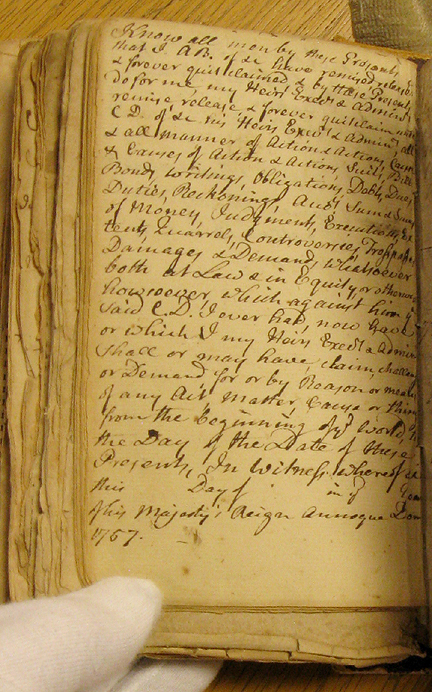

The preservation of the documental record is meant to inform the panoramas between planning ahead, as well as the fleshing out of historiography. Narratives abound in manuscripts, revealing human activities and communications. Indeed, we can understand the popularity of historic novels! And then there is reverie. Serving the public for many years, once in a while I’m asked by patrons marveling over century-old photographs of streets crowded with pedestrians and trolley cars, “Why can’t things go back to the way they were?” Many, many more people wish this without admitting so much. We imagine with our hopes; speaking as a New Englander in the local parlance: “So don’t I.”

From pinched and barricaded confines, imagination insistently pries at the horizons. Ambition is vital. Don’t expect anyone to remind you to flex your hopeful imaginings; we must know to exhort ourselves. Speaking for myself, I write my wishes and prayers as journal entries, often scribing them amidst woeful environments. Remember to dream forward: observe and read between the lines. What we see is not all there is. Our conditioned and compromised cultures reduce our palates to bland, surface bluntness. It is for us to challenge ourselves to think beyond what is “at face,” and cultivate our intellects. We navigate societies of documented hard numbers and literal databases, but the human-voiced manuscripts invite us into the poetry of metaphor. When I managed and facilitated the reference library in a Catholic college, I read the memoir of St. John XXIII in which he wrote of himself, “I am a songbird perched in thorns.” Such a powerful metaphor has never left my thoughts, and I’ve invoked it numerous times since.


The spheres of metaphor and allegory have always provided places of habitation for me, though perceiving through these lexicons can be a two-edged sword when I have to creatively translate for those who cannot interpret subtlety. Fulton Sheen once said, “Introspection requires a lot of humility;” helpful words for speaker and listener alike. I’ll occasionally use archives as metaphor with my philosophy students. Wonderfully diverse as they’ve always been, they refreshingly think and speak at multiple levels. Archival work is entwined with axiological applications- as principles of origin, function, and value are integral to stewardship. Examples help provide crossroads for abstraction and practicality to meet. These also provide runways for metaphysical flights of fancy. Pointing to historic maps and photographs, I’ll ask, “Do places have intrinsic memories?” We’d like to think so. In my helpless insomnia, I imagine being cradled on the waves, aboard a peaceful vessel. In my curatorial adventures, I found documentation from 1948 about a Friend Ship that was sponsored by the Maine Rotary, which brought 107 cargo tons of food and clothing to France. The ship, built in Maine, was called the Saint Patrick, and it crossed the Atlantic in eleven days. Pleasant thoughts of calm seas and noble ambitions. Keep on visualizing better times. As confining situations constrict, my imaginings of comforts, vastness, and possibilities intensify as antidotes. I’d like to think there is still time for improvement.
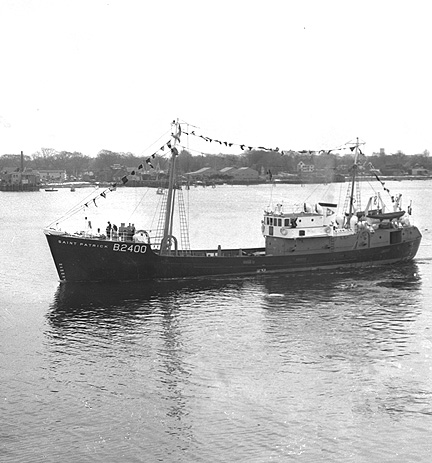
the Saint Patrick sailing from Portland, Maine to Nantes, France


Monday, December 5, 2016

simmering


“I slept, and dreamed that Life was Beauty;
I woke, and found that life was Duty.
Was my dream, then, a shadowy lie?
Toil on, sad heart, courageously,-
And thou shalt find thy dream shall be
A noon-day light and truth to thee.”


~ James Freeman Clarke, Self Culture.

1

A few weeks ago, I wrote about regathering, and the term implies that of spirit, strength, and wit. And there is more to this necessity than constructively responding to societal currents. The need to personally recalibrate reaches to and through the core of being. Deep in the protracted trenches of seeking and weighing opportunities, I’ve arrived at yet another costly pause. The proximate past has been spent on mere sustenance far more than on creative productivity. Solvency tamps down sentimentality, and suddenly taste buds become dulled. When old, long-bolstered sentiments and ambitions lose their fortifications, they enter the crosshairs of questioning. I’d worked through graduate school to begin a second career, while watching my first one dissolve. I can identify the symptoms, and have been seeing them again. The labyrinth has so many barricades and blind alleys. Are there too many to be realistically hopeful? The days descend into winter darkness, and it’s time to find new dreams. New dreams and aspirations, to replace what now look like outdated notions, are not materializing fast enough.


2

Alas, as with all too many matters of personal urgency, needs are delayed, time is passing, and grace looks deferred once again. There are too many rehearsals and not enough performances. It is as though invisible root networks below ground exponentially outpace humble shoots that may see light of day. “What’s the new dream?”- has become something of an obsession. The sentence appears daily in my journal entries. The idea visits conversations I have with close friends- especially those I trust for advice. This gives me a chance to listen to how others navigate their own scrapyards. Nobody really has an answer for me, but I don’t expect more than good exchanges of ideas and stories. Indeed, I’d love a crisp and unambiguous directive. It would surely save time.


And taking time into account intensifies the unrest. The passage of time tells us there really is no sitting still: treading water is like falling backwards, and both are inferior to progressing ahead. During a recent lunch hour, an elder friend of many years told me, “I know it’s painful to stay put, but you’re wise in doing so.” Of course, the next step must be an upward step, but will that happen, and how much longer the wait? Patience is an honorable trait, yet by definition it means unhurried. The line dividing patience and impatience is wavering and not always defined. Imaginably, one could impatiently want to know the limits of patience. The popular idea of “buying time” smacks of something more like a costly rental. My thoughts turn to recalling times when patience has benefitted, and times when rashness piled on to existing setbacks. Lengthened journeys provide troves of anecdotes.


As with writing and reading, mulling and musing can only happen between obligations. Daily slices of time- early mornings, late nights, and lunch breaks- provide chances to reflect and make notes for me to subsequently stitch together. Quite like cooking a rich soup, thoughts are as spices and morsels added and changed over a span of time- not all at once. Soups and stews are best when they simmer, rather than rapidly boil. With time, the tastes of the different ingredients affect each other, and the whole mixture develops a texture. The depths of contemplation simmer, rather than flash in pans. While intensely impatient to see improvement and achievement, it is taking additional effort to stir and simmer all the ingredients. They have been seasoning for a very long time. Perhaps it is that new dreams cannot instantly manifest by just adding hot water. Watching for pots to boil is the opposite of simmering.


3

With any dilemma, great or small, the light of experience is among the first navigational tools to reach for. At my intersection with How Shall I Do This, there’s a tattered road atlas called What Worked Before. A creased, stained artifact, but still somewhat useful. My sense of direction becomes more vital, and I can effectively improvise. But I know not to stand still and wait for boiling water; it serves me better to keep going. Observations are simmering and there are opportunities for helpful distractions. Long walks and road trips allow for some reflective solitude, and certainly writing outdoors as well. As with listening to friends, I’m able to see more of the breadth of this world. Travelling provides some freedom both to confront and deflect the unknown.


Recently, within the space of two weeks, I made two road trips- the first for a professional conference at which I lectured, and the second was a 2200-mile Thanksgiving round-trip to and from the Midwest. The shorter trip had the melancholia of closed ends, but when I drove a stretch of 1100 miles only five days later, I did so with the eagerness of seeing loved ones. Although being en route to a specific location demands exact turns at crossroads and certain lanes at interchanges, there are tastes and views that rise above the quotidian labyrinth. The open road provides thought-provoking adventures. Changes of scenery, weather, and sound to add spice to that simmering soup. This may also be true for others. While refueling my vehicle in a faraway state, a man asked me, “Are you really from Maine? I used to know someone from there.” At a diner, a waitress asked me where my accent is from. Evidently, I am part of that change of scenery and sound, too. The road is also an interior adventure, and while reconciling with detours and delays, reminders surface about past dreams that fell by the wayside. Looking across the windshield, What’s the new dream? It simmers yet, and there are immediate urgencies such as keeping an alert eye on the road.


4

The urgency for a new dream coincides with obsolescence of the outmoded. Old, long-held hopes are not necessarily “bad.” Ambitions can be time-honored; they can be sculpted out of otherwise useless heaps. But, on the other hand, releasing expired aspirations is an unburdening action. Even after many years of hard work and investment, the way forward implies cutting losses. It makes for a raw liminality: the process of shedding invalid notions is one that runs parallel to testing spirits and discerning new dreams. Paring down, building up, and simmering something fresh amounts to a reformation. For me, it must take shape in midstream- without the luxury of stopping. Prayer on the go. Highways with a commuter mug and finger food. Beneath the rapid paces is that imposed simmer. It can’t be microwaved. How infuriating. Still more mystifying are my ungranted, relentless petitionary prayers. I’m reminded how the transit of letters to me have nothing to do with how often I look in my mailbox. Such things, alas, have their own simmered timing. I’m left simply to hold course and redeem the time.


5

Awareness of my unsuccess is counteracted by taking stock of the good that is in my midst and that which I create. Fortune may yet tilt in my favor, and the response will be that of the immense gratitude of a lifetime’s worth of honest effort. There still seems to be time. Well, there will have to be, and while held off by simmering, my end of the bargain is constructive productivity. An admirable mind, named Charles Henry Brent, once expounded upon the words of Zechariah the Prophet who said, “Turn ye to the strongholds, ye prisoners of hope.” To this, Brent observed, “You can win your humanity only by finding your highest opportunity in your more evil days. We are prisoners of hope.” With faith comes strength, and from there follows longing. In this context, longing refers to a fuelled aspiration that drives and strives and pushes ahead for a better life. Longings have goals, as well as sources; discerning new dreams implies evaluating both. Indeed, there are expectations, and that’s a risk in itself. Perhaps this is a test of undefined extremity. But even now, rather than grouse about dashed dreams and enumerating the graphic details, my thoughts must point toward new ambitions. The simmer of the dark ages has got to boil over into renaissance. For the moment, the taste of the new has yet to manifest. It’s still simmering.