“This luminous and excellent Power
operates upon the humble and thankful Acceptor,
so as to open an Understanding of what he reads,
both in Scripture and other experimental Writings,
often giving him to feel that concerning which he reads,
and rendering it of improving Effect to him.
But he who rejects the Means, can never attain the End.”
~ Joseph Phipps [Quaker],
The Original and Present State of Man, Briefly Considered... (p.51)
Tuesday, July 28, 2026
spirited words
Saturday, March 28, 2026
march
“Set out on your way again now. I like the word ‘way’ very much,
because in God’s sight we are all wayfarers. We are viatores, travellers,
heading towards our Creator from the day we enter the world.
A person who sets out on a journey has a clear goal, an objective:
they want to get from one place to another.
Consequently, they do all they should to reach their goal safely.”
~ Josemaria Escrivá, In Dialogue with the Lord (112)
1
As serendipity would have it, I taught with historic material I’ve been preserving to junior high school classes, and presented to a conference group of archivists about preserving historic material- all within a week. All wonderful groups, and I treat all ages with the same careful respect. As always, a joy to be integral to learning processes. I’m assured enough with my topics to adjust how I deliver them, no two classes ever taught in the exact same way, and there’s always room for banter. Anything not to lose anyone. With all the groups I talked about documentation and narrative, then extended the practical by unabashedly asking each of the groups whether anyone wrote in a journal. I saw an impressively high percentage among the teen students, and not enough raised hands from the adult professionals. That’s fine; it means I have work to do, promoting the value of reflective writing. As well, I’m reminded that as our schooling dissolves from view, dissipated by complex pursuits, writing must become more intentional. Writing by hand has multiple benefits- even physiological. When journaling was new to me, I’d describe the action as parallel to doing the “long division” in mathematics, comparing the punching-up of using a calculator versus mapping out the why of an interior conundrum. Trying to encourage others via applied experience, I refer to reading back through my own journals as historic manuscripts. “While you’re keeping a journal,” I heard myself say, “it’s keeping you.”
For a long time, I’ve focused my thinking by journaling, writing down what I hear myself say, and this serves to inform my present, past, and future. Exploring the creation of writing prompts, I discovered“ I heard myself say” was peppered amidst my written pages, later deciding to make that phrase a frequent journaling starter. Though not exactly a prompt, I’ve noticed my recent and frequent use of, "Well, here I am” as a peculiar verbal re-set. It’s a bit like the apostrophe-like symbol in wind-instrument sheet music that indicates when to take a deep breath. I think my utterances and notations were going on for a long time, before “Well, here I am” rose above the surface at dark bus stops in subzero temperatures. The bus is late, and meaningful progress in the rest of life is nowhere in sight. Well, here I am; showing up as ever. Like a pawn on a game board, there appears no wiser choice than to advance along the paces en route to a weekend. Here I am, showing up, lest I miss my chances for a breakthrough. While the doldrums drudge on, it’s critical to be chin-up and forward-marching. As I try keeping things interesting at work, with successions of productive projects, I do something similar outside the workplace with studies, writing, and visits threaded between and around chores and sundry obligations. Indicators of low levels of intellectual fulfillment and strength tell me when replenishment is needed. Years ago, a wise friend taught me that “sometimes your guts take over, and that tells you to pay attention.”
2
Guts notwithstanding, and three months since my last string of days off, I managed to navigate the requisite steps and clearance so I could make a week’s retreat from the grind. I was especially grateful to find the time (and get it approved), just as winter had begun to give way to increased daylight. Quiet, contemplative time is surely the appropriate medicine. Getting on the road and away from such annoyances as persistent setbacks amidst the surrounding miseries of politics, economics, and widespread violence- gave me a hopeful distraction. Stupor and inertia have amounted to a dangerous combination adding up to societal paralysis. Setting positive examples and putting related ethics to practice compels each of us to take the lead as we’re able. All the more reason to seek out a rejuvenating place of peaceful silence and communion.
With an invitation to return to the Cistercian abbey in Wrentham, I took to the highways and trails on a grey morning. The drive is within New England; almost close enough to seem local. A friend from my workplace is from Wrentham, and he directed me to his favorite diner in the region- in the neighboring town of Franklin. After my few hours’ driving, I felt a little provincial with a few queries about Maine from people that saw my license plates- but all genial. When I walked into the diner and was asked where I was from, I mentioned my friend, and a waitress cheerfully recognized his name. The customers dining next to my table were also jovial, knew the abbey that was my destination, and added a convivial atmosphere to our lunches. Indeed, I had the parmigiana from heaven, and hearing that made the wait staff very happy. They wished me a good retreat, and with that heartening aftertaste, I continued my pilgrimage. We all commented about what a long winter it’s been, and how we hope for good things ahead.
3
To be sure, winter remains with us enough that New England still sees more snow than rain, but spring is assured of the winning side. The liminal season’s upper hand is evidenced in lengthening evenings and visible horizon lines at night. The pull of pilgrimage includes a thirst for sanctuaries, along with an interior seeking for lifegiving words. The going-forth is a turning within, from a wilderness of barrenness, to a wilderness of wise silence. The human spirit longs for growth, for purpose, for depth- and such intensity responds to desolation through momentary breaths of solitude.
During one of my workday intermissions, too brief to leave the building, I looked out from the Archives window, cup of coffee in hand. I wrote something on a notecard about hacking away at a miracle. Working productively, reaching out, staying the course; that’s the tireless, restless, hacking-away. In the search for inspiring words, my note-taking is always at the ready. Open to helpful influences, I’m reading and listening. I heard an exceptional homilist read from the Letter to the Philippians, and speak about dealing with difficulty. He referred to Joseph and Job, then Paul, respectively in the Old and New Testaments- all having grappled with extremely difficult situations that thwarted their lives. Paul’s life and work were completely restricted by his imprisonment- yet, like Joseph, he found ingenious ways to inspire his jailers. The preacher I heard was saying that we can’t fully know the impressions we make upon those around us, that we mustn’t lose sight of our purposes, and that we each need the self-awareness to avoid self-imposed difficulties. What stayed with me was the statement that expectations relate directly to depression. Indeed, that’s a vulnerability to living, but what about ambition?
Life as a thwarted messenger that upholds purpose is something very familiar to me. And among my foremost literary and philosophical heroes is San Juan de la Cruz, of 16th century Spain. I’ve written often about him, and quote his works regularly. Like the aforementioned, Fray Juan had to endure an unjust, brutal, and torturous imprisonment. Though jailed by enemies who intended for him to die in his cell, a prison guard who knew that Juan was a priest asked for his prayers and brought him writing materials. Night after night, for an unknown duration, Juan picked away at the prison cell’s lock with his fingernails until one night- the eve of the Feast Day of the Assumption- the lock fell off the door. Amazingly, the noise did not awaken either guards or other prisoners. Fray Juan persistently chipped away at a miracle. He quietly hoisted himself out of the tower with blankets tied together, then traversed the surrounding river in the dark. A piece of paper he took with him was a sketch for The Dark Night of the Soul. On the following morning, the guards found the cell’s open door and the knotted blankets tied to a nearby window ledge. By that time, Juan was already safely sheltered in a nearby Discalced Carmelite convent in Toledo. His works to this day are published and read around the world. The Ascent of Mount Carmel is one of the world’s great books of the contemplative life.
Reflecting about the 2025 Jubilaeum proclaimed by Pope Francis, with the focus upon living and fostering the virtue of Hope, “And what happens after the year of Hope?” asks Soeur Marie-Espérance, a Dominican Sister, in a recent article published in the French periodical l’Étoile Notre-Dame. Applying metaphor to being an embodiment of vibrant hope, she writes that as the human heart represents compassion, our eyes represent the virtue of faith, so our feet represent hope; she refers to the latter as “the virtue of the road: “Oui, l’espérance est la vertu de la route.” As a viator- a wayfarer- Saint Augustine wrote that our paths exist for the purposes of our paces and intentions. As hope is exemplified by our continuing steps, this is also the virtue that awakens us daily to our aspirations. While navigating the motions of commuting, work, chores, and- when I can- writing, I don’t really have any choice other than to continue. I would surely regret missing any opportunities, convinced the adventure remains unfulfilled and unresolved. For the moment, I’ll savour how I set down my backpack in my monastic room in Wrentham and without thinking, I changed my weary“Well, here I am,” with: “I’m here.”
Wednesday, January 22, 2025
forging ahead
“I am still following, still forging ahead, still walking,
still on the road, still extending myself; I haven’t yet arrived.
So if you, too, are walking, if you are extending yourself,
if you are thinking about the things that are to come,
forget what’s past, don’t look back at it...
You ask, ‘What does walking mean? I’ll tell you very briefly;
it means forging ahead, in case you should possibly not understand.”
~ Saint Augustine, Sermon 169.
As the new year began, five years into what has come to be known at the covid era, I was able to make two very long-awaited monastic pilgrimages. Part of my respite time scarcity corresponds with the nearly two years of quarantining, as well as closures to the public of retreat lodgings. All measures taken for the causes of safety and stabilization. In addition, since February 2020, at my workplace I’ve been a department of one, having to adapt into being an especially productive jack-of-all-trades. True to the adage, all work indeed means no play. No complaints. I get everything done, well and fast- and I’ve been gratefully employed the whole way. Forging ahead remains paramount. Over the years, banking up enormous quantities of largely unusable earned hours caused me to squelch hopes for those vital spiritual and artistic retreats that have provided nourishment throughout my adult life. It’s a trial of absorption and adaptation. Absorbing the constraints, while adapting to the tenable. A Saturday once a month at the Boston Athenaeum, combined with an interspersed holy hour at local sanctuaries, help to patch me along.
Several weeks ago, I had the time and space to fulfill a thwarted sojourn from a year ago. Last Christmas, I exhaustedly stole away to Mount Saint Mary’s Abbey only to arrive during the approach of weather so severe it forced all retreatants to evacuate. I’d been only a day as guest in their wonderful community, and they encouraged me to come back. And recently I did just that. My return to Wrentham Massachusetts was in clear weather, and the only storm was a manageable half-a-foot which added photogenic spice to the already peaceful landscape. With a spacious room complete with study table and a soft bed, my only real effort was to try slowing down to a restful pace. Disentangling from the compounded intensity of constant toil, housing crises, and vigilant caregiving, is no simple matter. Rest has to materialize in bits and pieces. Having a few days in beautiful environs with healthful helpings of contemplative silence and soothing sung liturgies made for a salubrious step in the right direction. Bringing both writing and reading material for the sojourn, reflectively studying philosophy seemed to be my natural course, in rotation with community prayers- and journaling. I had just taught my class before taking to the road, and was eager to complete reading material that needed undivided attention. Through experience I’ve learned that spiritual development mustn’t be forced, unstructured time is something to cherish, and thus both aspects counteract contemporary culture. As I had written in the previous essay, Pope Francis’ fortuitous theme for 2025 as a year to be undaunted pilgrims of hope immediately drew my attention. My nineteen years of published essays attest to how this theme superimposes with my own path. Indeed, it was all in mind during this recent pilgrimage, as well as during November’s sojourn to Weston Priory.
As I’ve noticed how my trail’s ingredients are constructed from my own steps combined with unwitting patterns of grace, I’ve also grown to recognize time as increments of significance. And the increments can be as long as seasons, years, and eras. I’ve held this perspective for a long time- dating back to measuring life in summers, grade school levels, semesters, jobs, and projects. Single-day holidays always seemed too short, and mostly about their buildups. Chronicling time with journal-writing provides a natural setting for marking various anniversaries- and of course describing their importance. For example, the Labor Day weekend during which I moved to Maine became known as Arrival Weekend (and I've numbered them since). Others are the closing weeks of my different graduation years- still commemorated. I’ve always much preferred Advent more than a stand-alone Christmas Day, and I grew to love the Lenten season. The latter provides plenty of time to inhabit, explore, and reflect upon during a forty-day period. Pilgrimage is as much about the coverage of physical distance as about spans of time. I regard my lunch-break novenas as spiritual journeys. Journaling provides personal space for incremental reflections. Among many things I learned during years of experience in the Taizé monastery and on the road with some of the Brothers, is to view all of life as a pilgrimage of trust on earth. On one occasion, after a week of supporting a large gathering as a liturgical musician (playing classical guitar), Frère Emile thanked me- hands on my shoulders- wished me peaceful travels, and said, “Now go make your life a pilgrimage of trust on earth.” Those unforgettable words have never, ever left me. That represents the grand view of a lifetime. The briefer and equally vital stages, such as several weeks ago in Wrentham, are to recalibrate and hold course.
Lest we romanticize pilgrimage, appropriating the stuff of novels and misty imagery, pilgrimage might occasionally be quite majestic, alas it’s more often than not pedestrian and gritty. Pilgrimage waits in traffic, rides lurching and odoriferous buses, and holds doors for strangers. It’s carefully shoveling snow. Pilgrimage is also noticing the queues of walking feet ahead, patiently pacing en route to the sacraments; it’s noticing my own. Commuting on public transit requires a lot of waiting and standing. There are also opportunities to read and to reflect; that’s surely more interesting than phone-fiddling. While taking in the sub-zero raw scenery at a bus stop, manipulating book pages with gloved fingers, I thought of how the dilapidated roads and sidewalks are not pristine or groomed, but they are all sunlit during the day. The voyage is not new, though it can be renewed. The dry docks of my start are far out of view, there is no better choice than to forge ahead.
Looking forward and staying the course are infinitely more appealing than giving up the ship. Stagnation is reversal. Maintaining awareness of the imperative to continue is enough of a challenge, particularly amidst setbacks, but what to do when the grinding trail threatens a loss of critical savour? Maintaining the furrow, because it’s what I know and it solves the immediate, fills my days. But is this progress? Not knowing how close at hand fulfillment might be, tests the fibers of hope. The saints of old are always teaching us and none of them ask us to drop the torch. It’s consistently about looking ahead, even if it means discarding all that is past- especially when it takes the form of a millstone. Perhaps beating the winter is no more effective than to check off the chores as they are accomplished. But there are no plans to cease walking forward. Yet another aspect exemplified in pilgrimage life is to affirmatively aspire when hoping looks absurdly irrational. Pope Francis recently said, “faith is a road to be traveled, without ever losing the goal.” Forging ahead, one next-right-thing at a time, is all this pilgrim of trust can do, for now.
Saturday, December 14, 2024
spes non confundit
“In the heart of each person,
hope dwells as the desire and expectation
of good things to come, despite our not knowing
what the future will bring.”
~ Pope Francis, Spes Non Confundit
1
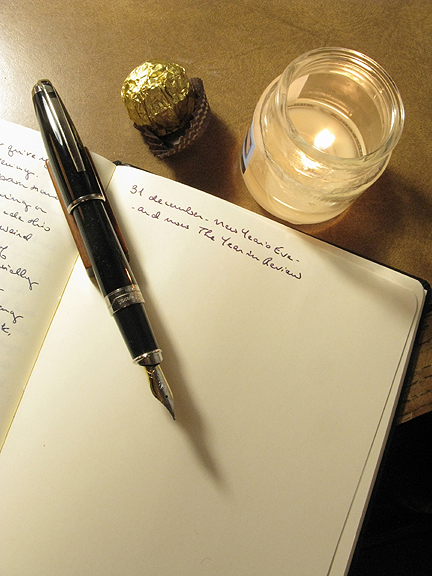
A practice I created, patterned after Time magazine’s “Year in Review,” was to write my own version in my journal. Though I began writing in the late ‘90s, at the turn of the millennium, I recapped my experience of the entirety of the 1990s. I’ve since journal-written my years in review, along with parallel decades, always setting time aside close to New Year’s Eve to do this. Indeed and true to the concept of tradition, my Year in the Review is always to be handwritten. Suffice it to say, using this medium, 2024 has been a year that ran on fumes. But it was also the year of finding a vital measure of high ground in this region’s unrelenting housing crisis. Truly, “how precious did that grace appear,” albeit after twenty months of desperate, tireless searching and traipsing. Living in a safe and civilized apartment building is a blessing counted daily; “'tis grace has brought me safe thus far and,” inevitably I believe, “grace will lead me home.” This was a major development during a very, very hardworked year. And now the first quarter of the 21st century begins to give way to the second. In 2025 I’ll mark the 19th year of La Vie Graphite with pencilled gratitude. Being able to continue writing is itself cause for gratitude, along with loving to write, and I look forward to more ideas and adventures. I’m also thankful for the readership, while at the same time aware that my years of essays and imagery have yet to find their most receptive audience. But I carry on. Appropriate to these points, I’ve just serendipitously learned that Pope Francis has authored a year of observances and community action based upon the virtue of hope.
2
The quarter-century observances will revolve around being Pilgrims of Hope, both as individuals and more broadly as communities. The basic idea can become constructive practices for anyone of any denomination,”looking to the future with an open spirit, a trusting heart, and far-sighted vision.” Pope Francis titled his document Spes Non Confundit (Hope Does Not Despair), applying words of the Apostle Paul (Romans 5:5). I prefer something closer to the Latin, the more persistent: Hope That Will Not Be Confounded. That’s a challenge to be taken head-on, as there are more than enough reasons to be dissuaded. That’s central to the point; hope is the way to holiness, but the way is rough, often ungratifying, and surely not passive. While steeply pitching my whole self forward into the torrents, I’m convinced the efforts are worthwhile.
Aligning personal renewal and outward generosity with the Resurrection, Pope Francis joined steadfast faith with expectant hope for healing and reconciliation. Not treated superficially, the profoundest expression of hope looks beyond things of this world: When wholeheartedly lived, this buoyancy can transform our vision of the future and produce a foundation upon which our lives can transcend the ephemeral. As you’ve been raised with Christ, wrote Paul, strive toward things above. Lifestaking confidence stands out from fingercrossing tentativeness. Aspiration is a very serious matter that demands all the strength of character I’ve got. Confident faith drives us to rise above our trials and difficulties, inspiring us to continue pressing forward in our vocations. Inward direction and a sense of purpose are benefits in a life that exemplifies hope- all of which bring to mind the vital attribute of mercy. Sincere, entrusting hope not only embraces divine mercy, it also seeks to be outwardly merciful. Rather than being an impossible idealism, the life of faith is entirely practicable. And expandable. Contemplation and action need one another; in fact they want one another.
3
“Let us be strongly encouraged to seize the hope that is set before us,” Pope Francis wrote, referencing the Epistle to the Hebrews; “We have this hope, a sure and steadfast anchor of the soul, a hope that enters the inner sanctuary...” Holding fast to hope, actively keeping faith, is essential- all the more amidst the instability of troubled times. Pope Francis observed, “The image of the anchor is eloquent... The storms that buffet us will never prevail, for we are firmly anchored in the hope born of grace, which enables us to live in Christ and to overcome.” When we lose hope, our dignity is impaired. Confident trust inspires me to continue pressing forward and persevering. Profound hope is stronger than disappointments and setbacks- and this needs to be the case, speaking for my humbled self. And thus hope and aspiration barrel through hardships and exhaustion, because they must.
From reflection to application, hope is tied to intention, as pilgrimage is a form of motion through this world, with grace in mind. For many years, I’ve treated the entirety of life as a pilgrimage that comprises countless eras, scenarios, days, and steps. For the jubilee year, Pope Francis recommends the compelling balance of earnestly internalizing hope, along with the physical effort of moving forward. In the example of pilgrimage sojourning, the purpose is to rediscover simplicity, silence, and physical intention in the context of visiting sacred sites. Places of significance take many forms, and there is no set duration for a pilgrimage. My suggestion for those among us who must tirelessly work full-time is to make “working jubilee steps,” such as walking to an available sanctuary. Simplest is best, such as turning off the lit screens and finding a secluded perch. To sanctify (sanctus) is by definition to intentionally set apart something for the pursuit of holiness. On occasional research days in Boston, I’ll set down my projects, and navigate the congested sidewalks to any of numerous shrines and churches I know that are open. The immediate silence always strikes a beautiful contrast away from the city streets. Even the most pedestrian of pilgrimages are responses to the grandest of callings from eternal sources.
Thursday, December 30, 2021
newness
“Even so, we also should walk in newness of life.”
~ Romans 6:4
My voyage with journaling began in July 1994. Later on, graduate school caused my written entries to be regrettably intermittent. After 2000 I came to depend upon daily documentation and reflection, and the practice continues to this day. Throughout my years of writing, I’ve used the days leading up to New Year’s Eve to create retrospective “year in review” summaries. At first, I made the lengthy journal entries into Time Magazine- style features, as in “the year that was.” After a few years, these summaries became something I fashioned into several days of shorter journal entries, giving equal treatment both to events and to impressions. Without writing, telling the months and years apart would be even more difficult and surely blurred. The covid era surely represents this. It’s a snowball of largely dissimilar months, whose grip set in by the Ides of March 2020. Since then, living has been amidst minefields and restrictions. Thinking back to the world before that date, I remind myself that “everything was at least two years ago.” In keeping with my own custom, I’ve begun gathering my handwritten thoughts to recap the year which- if anything- feels as though it’s in Month 23. It is indeed a looking back, but always attempts at forward motion- traction or not.
The contrast is appropriate, connecting the establishing of winter and long nights with a season traditionally marked by newness. The Christmas holiday season has also long been relentlessly exploited commercially, with advertising beginning many weeks before Advent. Pandemic life has muted some of the competitive spending drives, forcing diminished budgets and smaller gatherings- if any. Yet the week between the western/Gregorian calendar Christmas and New Year’s Day continues to be a liminal span for various forms of reflection. The plague rages on. Will the coming year be an improvement over the one just past? How to look forward with anticipatory hope, in the bleak midwinter?
My self-determined directive is to continue seeking light in the darkness of these times, while trying to tangibly exemplify that light. For nearly two years, it has been impossible to travel or to even buy some weekdays off to rejuvenate. My semiannual pilgrimage retreats of many, many years have had to be compressed into a few occasional hours during a weekend so that I can continue being gainfully employed. Pushing back for the cause of spiritual health has also stretched nights into times of carved-out silence and study. Not doing this actually worsens the exhaustion. Admittedly, this is a trial that must be endured.
Newness begins with a thirst for promise, even for the haggard and worn. One recent midnight while preparing for the subsequent reveille that would return me to the same darkness, I methodically set up my coffeemaker and what I’d need to make next day’s entry as effortless as possible. Thinking of the combination of obligations and wishes while tidying my writing table, I remembered how an old friend used to call himself “a kid on Christmas morning,” and how that attitude helped him stay inspired. I wouldn’t describe myself as such, but there was something I liked about that sentiment. A soul’s renewal is as much a mystery as is the desire for newness. Do we inherently sense the hope of renewal? It is a fascinating thought how we seem to naturally find our own renewal- or at least the will to seek out our rejuvenation. Is this somehow built into our nature? I think we reflexively salvage the pieces we can find of our existence. The recent devastating natural disasters remind us of this. Victims who escape with their lives are looking for remnants from their households, their histories, and where their continua left off- at the times when their worlds were interrupted so they can recommence. In the less-cataclysmic scenarios, there somehow exists a natural drive to pick up and continue on. I believe this to be more than survival instinct, but the reinforcement of the holy spirit of new life. While more than enough reasons can be enumerated to give up hope, wondering about what is actually improving in our midst, we still tend to resume our searches for better and more meaningful lives.
During this year’s holiday season, I’ve noticed myself bristling more than usual at overused Christmas songs. They brought neither comfort nor joy, even to this believer. I fled to the consolations of Telemann, Bach, and how the occasion is quietly known as the feast of the incarnation. Yes, indeed, there is the commemoration of the Nativity. Not to be lost is the parallel aspect and infusion of the Divine within all whose lives return the embrace. Incarnation manifests to an ordinary human as transformation, and the latter builds an inner strength to be grateful while bearing up against hardship. Enduring the plagues in late 14th century Holland, Gerard Groote wrote, “May it never be that tribulation produce in us a faint heart; a faint heart, confusion; and confusion, the desperation that destroys.” Ancient texts accompanying this season include the name Immanuel, which in Hebrew means God is with us. Over the years, I’ve come to reverently refer to the So Near. As I’ve learned from the monks of Weston Priory whose doxology is to the Creator, Word, and Spirit of New Life, I understand the value of finding meaning beyond overused expressions.
The current provisional journey is embedded within an incalculable pilgrimage. Trying to take stock of the good that is, of the silent graces too easily overlooked, I try to be attuned to available inspiration. What is within my reach? What don’t I know that I need to know? Are we to search for newness, or enable renewal to find us? I wonder to what extent the spirit of rekindling is based upon unseen certitudes of which we could be innately aware. Perhaps there is a balance of proportion between a person’s determination, and a providence over which there is no control. And within that sense of resoluteness, does it begin with one’s desire to give rise to renewal, or are we brought to think about it from beyond ourselves? Do I procure the lamp and illuminate it, or is the already burning light catching my attention first? Unsure of what to make of the broader ailing world, as well as my own daunting setbacks, my thoughts turn to how all of this is about endurance. The transitory present is an impermanent trial. Distances and times between now and turns in my fortunes are impossible to tell. Opportunities remain out of reach, but hope remains available. Hopefulness increases the will to endure. When St. Paul wrote about how “hope maketh not ashamed,” he wanted his readers to confidently animate conscientious faith. Newness must ever be kept in mind. And kept in mind and practice with unwavering insistence.
Sunday, March 29, 2020
ties that bind
“We share our mutual woes;
Our mutual burdens bear;
And often for each other flows
The sympathizing tear.”
~ John Fawcett (18th C.), Blest be the Tie that Binds.
While I’d been amidst a fairly usual chaotic swirl blending together employment commitments, teaching projects, studying, writing, and travel planning- all of these things came to a sudden halt. The waves of pandemic from afar have found their ways to places like Maine; it’s everywhere, and everything has had to change. Because this crisis is completely global- leaving politics aside- each one of us has a unique perspective. Obviously, the larger numbers and compounded tragedies are in densely-populated places, yet the symptoms are the same in every place. The coronavirus manifested in Maine from scattered cases to increased numbers in the more populated southern counties. Watching what was happening in the Boston area, 120 miles south of Portland, we could all see how serious this is, with the closures and lockdowns taking effect almost pre-emptively. Only 2½ weeks ago, people were out and about, doing business, though wary of what might lie ahead. By the 16th of March, the shuttering of most businesses and places of community began taking effect in this region.
Above: Boston: The day after I took this photo, business closures began.
Below: Letter-writing.
These words are being written during the citywide shelter-in-place order. Downtown Portland has been eerily desolate and silent for nearly 2 weeks. The absence of air traffic is reminiscent of the days after September 11, 2001. The completely silent streets remind me of the hush of a snow blizzard, but without the windrattled windows and the muffled grind of snowplows. It’s also warm outside. Our parlance now comprises expressions such as social distancing, self-isolation, quarantining, and bunkering. The airport word, curbside, now refers to food services. Churches use the term ungathered worship. Many of us have become proficient with teleconferencing. Employment has become frighteningly tenuous, and my workdays have been by remote access for 2 weeks. As with 9/11, it is a time to take stock of what remains intact and find what is good- basic as it may be. But this is unlike 9/11, as the end of this protracted crucible is not in sight.
Along with all the new terminology and habits generated by these times, there are our own words. Many of you may be hearing words like strange, weird, bizarre, surreal, and unprecedented as much as I am hearing them. And maybe you’re not audibly hearing the words, but reading them instead through social media which has notably intensified. Each one of us has a story. As an instructor of writing and philosophy, as well as a full-time archivist, I’ve been encouraging those I know and mentor to write their perspectives. I’m doing this, too, while trying to figure out my compromised daily routines. Our personal narratives are serving us now as stabilizing forces, and ways to make sense of the present. These journal entries are also pointed toward the future: it’s where we can dream ahead and create a documentary record for later reference. And certainly, in our writing we can remember. I’ve written about life before 3 weeks ago, missing my favorite people, libraries, cafés, diners, events, and the many other places of social gathering.
Before I could assemble coherent thoughts in my journal, and while figuring out how to continue my job from my dining table, I thought of my friends and letter-writing. To my friends on a social media outlet, a simple offer of writing them real paper postal letters generated dozens of responses. I’ve answered each request with a personal letter. Receiving a letter at one’s door, manually and personally written, is a kind of permissible visit in these alienating times. Before all the “nonessential” stores closed, I bought a stack of post cards and stickers to add to the letters. While trying to find an efficient work routine, each day begins with my 5 minute walk to the neighborhood post office to drop off the letters written the night before. The postmaster has become a good friend, and our morning chats, from at least 6 feet away, have provided comic relief for the both of us. He doesn’t see many people, either. The letters have gone to a variety of states and countries, and in 2 weeks I’ve written more than 40 personal letters. With journal writing, I’m encouraging my friends to reach out with writing as well. “Letters mingle souls,” John Donne famously said, “for thus friends absent speak.”
Postcard cheers from Maine,
complete with lighthouses, pines, and a big potato.
...and the ubiquitous Maine lobster:
Along with acclimating to this desolate new reality, with its lexicon of expressions unknown a month ago, intense emotions are also absorbed. Those of us healthy enough to function through this must live against stresses such as anxiety, fear, uncertainty about the future, and what amounts to heavy sadness. It is of paramount importance to keep in mind the nurturing ties that bind us with our loved ones. And then there are the casualties of this terrible plague, their families and friends. To stay the course, we are finding the distractions that keep us going- perhaps a 60-foot distance away from network news. My friends tell me about the movies and serials they are watching. Musicians are offering online shows. One of my longtime healthy diversions continues to be the study of philosophy. I learn and am transported. This is a test of faith that calls upon all spiritual reserves. As horizons narrow, I push back by expanding mind and soul. Several friends have asked me to keep writing essays. That is something I’ve always loved doing, though in these times it takes an extra push to carry on.